Pages

Showing posts with label Dragonfly. Show all posts

Wednesday, 21 December 2011

20/12/2011: Sungai Sedim (Kedah)


I have only gone a short way up the Gunung Bintang access road when I came across a splendid male Siberian Blue Robin foraging just up ahead and this is a species I long to have in my archives. At this early hour the lighting was terribly poor and I had an impossible time trying to focus my camera on the bird. Then something scared the living daylights out of the Robin because it suddenly dived into the undergrowth while emitting alarm notes. And I was pretty sure it wasn’t me. While I was still trying to figure out what took place, I noticed a slithery movement on the road and it was the culprit that made me miss my shot – a Variable Reed Snake. However, it was too small to possibly hunt the Robin but I guess it was a case of better be safe than sorry for the Robin.


That little episode got things rolling for this trip and what a trip it turned out to be. During my 5-hour visit, I managed to record two lifers and more than 60 species including a few very notable records. Unfortunately, the key word here is record. My first lifer, a female White-throated Rock-thrush, stayed in sight long enough for a positive identification only. I did manage to take a shot of my second lifer, the Brown-chested Jungle-flycatcher, but the image turned out to be pretty insignificant. Not only because of the poor quality but it only showed the back of the bird.

I could hardly contain my excitement when I came across a pair of foraging Chestnut-backed Scimitar-babblers. Apart from the fact that this is the first time I have seen this species here, they are truly striking birds and always a delight to observe. I guess you just have to take my word for it…


This male Orange-breasted Trogon on a slightly exposed perch was probably the best bird image of the trip.


A total of 4 Hornbills were recorded at the locality today. The Rhinoceros and Bushy-crested Hornbills were heard calling. A pair of White-crowned Hornbills flew just above overhead with the dense forest canopy between my camera and them. It has been almost 8 years since my first visit to this forest reserve and the distinctive calls of the Helmeted Hornbill can be heard on almost every visit. You can only imagine the amount of pleading and swearing that went down when I took this shot of this amazing bird.


One image did turn out quite to my liking but it was not of a bird. This beautiful Dragonfly was resting about eye level at the forest edge and the green foliage provided the prefect background.


This millipede making its way about some thickets wrapped things up for a memorable trip despite the disappointments from a photographer’s point of view.


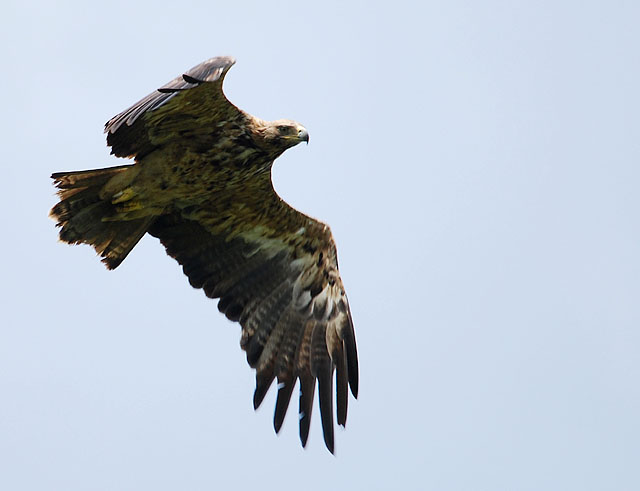
On the way home, I made a quick detour into the paddy fields at Kubang Semang to check on the Temminck’s Stints only to find the patch been completely planted with new paddy shoots. However, an immature Eastern Imperial Eagle circling over the fields put on quite a performance and unlike photographing forest birds, it is almost impossible to miss a bird as huge as this right out in the open.


Tuesday, 15 November 2011

12/11/2011: Mainland Penang

It was a rather wet and gloomy morning as I entered the marshlands at Pulau Burung. Weather of this nature does have its affect on both birder and birds. From the look of things, I could sure use a good cup of coffee and so could this Common Sandpiper.

Loud splashing along the river mouth diverted my attention temporarily away from the birds and the reason behind the commotion was a family of otters. The dim lighting and constant movement of these graceful animals prevented me from obtaining any real good shots.

It is good to see the resident Lesser Whistling-ducks are enjoying one successful season after another here. This is probably the last stronghold for this species in my home state of Penang and that is pretty sad considering the fact it is quite common elsewhere.

I decided to stop my car next to a patch of slightly flooded red soil as I noticed there were quite a few Little Ringed Plovers foraging in the vicinity. It did not take long for them to get used to my car and I managed to capture some pretty decent shots as they gradually came closer.

Excitement grew when I picked out a few greyish-looking stints but they turned out to be Red-necked Stints (first winter birds, I think) and not the much rarer Temminck’s Stint as I had hoped for. Although Red-necked Stints usually occur along coastal habitats, they do sometimes show up inland, right fellas?
That was until Dave corrected me after I posted this blog entry because the wader in this photo is a Little Stint and finally, I can include this species into my life list without feeling any guilt. It is extremely difficult to distinguish the two species in the field especially in non-breeding plumage and the skills needed are perhaps just a little beyond me for now. Thanks, Dave.

Basically, the rarer Little Stint (much overlooked due to its similarities to the Red-necked Stint) has a somewhat thinner bill, longer legs, a smaller head that is positioned slightly higher on the body and rounder overall appearance.

The tide was just about right when I arrived at my second destination – the mudflats of Batu Kawan. A rather confiding Pacific Golden Plover was a good enough reason for me to stop my car and waited for it to get accustomed to my presence. Judging from the images I obtained today, I must make it a point to visit this locality just before the next spring migration to catch this species in their outstanding breeding plumage.

This is one…

long…

worm…

A few Lesser Sand-plovers also gave a good performance when they foraged near my stationery car. Common, small and nondescript but with a whole lot of attitude.

I even managed to gain the trust of the usually wary Common Redshank and it was shortly after that I discovered the highlight of the day. I was so preoccupied with photographing these commoner waders that I almost miss my lifer – a Grey-tailed Tattler, that I could not determine if it just came in or was there the whole time. Unfortunately, for some unknown reason, it did not stay long enough after I had it in my sights to obtain any images. Just a pretty good view of its wholly grey upperparts as it was flying away from me. This is my second consecutive lifer (a first winter male Blue-and-White Flycatcher last week) that has slipped past my camera but most fortunately, not my binoculars.

A lapse of concentration…

and this adult White-bellied Sea-eagle flies off hungry.

The paddy fields at Kubang Semang did not provide much to ease my disappointment with the tattler until I came across a pair of Red Collared Doves foraging on some exposed mud. The male looks like a subadult as it has yet to fully sport the splendid red plumage of an adult male.

The female is very plain looking and to an unwary birder, can be overlooked as a Spotted Dove. I must admit if not for the male bird, there is a high possibility I could have drove past the foraging pair.

The Pond-herons are back but not in usual high numbers yet.

Reflections of wings and inspiration – Great Egret…

I may not be much of an insect person but this striking dragonfly feeding on these snail eggs does make a rather interesting portrait.

Wednesday, 25 August 2010

21/08/2010: Sungai Sedim (Kedah)

It was back to this locality again due to the great results we enjoyed from our last visit. At the entrance as well as other parts of the forest reserve, we came across quite a number of the yellow “police-line” ribbon. It is a warning that this area is closed to public due to the leptospirosis outbreak. This bacterial disease is not new but recent deaths in Pahang have captured the nation’s attention. Since you can only be infected through open wounds or skin injuries that come in direct contact with any freshwater source or soil that is contaminated with this deadly bacterium, it was birding as usual for the three of us. Muin decided to join us this time round as he wanted to capture some images of the White-crowned Hornbills. We arrived at the car park just in time to wait for the hornbills’ daily visit to the fruiting tree. While waiting for the hornbills to show up, we tried our luck at another nearby fruiting tree that was attracting not hornbills but a whole lot of bulbuls.
We had an unexpected surprise when a female Diard’s Trogon decided to fly in and join the bulbuls. This forest jewel is much shyer than the bulbuls and as expected, she did not stay as long as the other patrons. Luckily, I did manage to obtain a few decent images during that short period of time although the lighting was still quite dim.
With the departure of the trogon, we diverted our attention back to the bulbuls. By then, the fruiting tree was already teeming with them. We managed to identify a total of seven species altogether. Due to the high number of bulbuls present and the tedious task of separating some similar-looking ones, it is possible we could have missed out on a couple of species. However, one particular species stood out from the rest this morning simply because it stayed the longest and came down the lowest – the Finsch’s Bulbul.
There are only a few birding localities where this is species is regularly recorded and this locality happens to be one of its strongholds. It can be relatively uncommon elsewhere. It has a very distinct call that once learned, is easily recognizable. If calls are not your forte, there is always the yellow throat to help distinguish it from other species.
Here are some of the other bulbuls that I managed to photograph from this morning’s fiesta. It was not an easy task despite having a “bulbul magnet” around. Anyway, there were quite a number of all-brown bulbuls flitting about. The one with the diagnostic pale iris is the Cream-vented Bulbul.
The Spectacled Bulbul is quite similar looking but wears an orange ring around its red eyes instead.
This is a Buff-vented Bulbul - just my take my word for it….
The Grey-bellied Bulbul is one of the most stunning representatives of the bulbul family but unfortunately, my photographs of the bird do it no justice at all. Now if you can’t identify a Grey-bellied Bulbul, then I guess it is time to really consider if birding is for you. There is just no way can this bulbul be mistaken for anything else.
The White-crowned Hornbills did make an appearance eventually and much to Muin’s delight, started to gorge on the fruiting tree. However, they did not stay long although this time there was no worker around. The male bird stole the limelight today by providing the most photography opportunities.
At times, it looks as though he is playing with his food…
The immature male remained partially hidden most of the time and received a lot less attention from me…
Besides, I was trying to determine if during my last visit I made a mistake of identifying the third bird in the flock as another immature when the logical answer is that it should be a female. Today’s observation pretty much settled any doubts I have over its identity. The almost completely black underparts typical of female birds were clearly noted. The third hornbill is indeed a female and this flock is one happy family.
The “unusual” Asian Brown Flycatcher which made all of us (including Dave during his visit) quite reluctant to put it down as what it is due to the slight plumage variance, was still hunting in the same locality.
It is not only the drab-looking birds that often look very similar to each other but the colourful ones as well. It can be quite a challenge when it comes to separating the male of Brown-throated from the male Red-throated Sunbird. Anyway, I’m pretty sure that this bloke is a Red-throated Sunbird.
The Red-billed Malkoha is certainly the most striking of all malkohas but this beauty often goes unnoticed because it tends to keep to the upper reaches of the canopy level.
We were lucky in a way to enjoy a second encounter with the Diard’s Trogon later on in the form of a handsome male. Typical of the species, we were given a tough time trying to obtain decent images and this is all I have to show in the end. And I thought that this morning’s female was being difficult…
The Fluffy-backed Tit-babblers can be quite the performers and I have had quite a few memorable experiences with them in the past. When a lone bird alighted on a slightly exposed perch and showed no signs of darting back into the undergrowth anytime soon, I knew we were in for a treat.
Pretty soon a second bird, presumably his mate, joined him with on the same perch. I am also assuming that the first bird is a male because of its tendency to raise its crown feathers. Anyway when the two of them got together, that was when the real performance unfolded and we had the best seats in the house.
All I can say is that the seductive swaying of bodies and eruption of vocal cords was truly a captivating display and it was a real privilege to be able to observe this dynamic duo in action.
Black-crested Bulbuls, along with a few other species, will occur in much lower elevations but this occurrence is restricted to only the northern parts of Peninsula Malaysia.
The male Blue-winged Leafbird is another gorgeous forest bird that is not uncommon but good photography opportunities are very far to come by.
This male Verditer Flycatcher appeared quite arrogant and relaxed on his perch despite all the attention we were giving him. I guess he knew that we pose no real danger to him at that distance.
In between the birds, I did manage to find the time to appreciate some of the other resident of the forest like this moth.
Dragonflies are quite an interesting and attractive group of insects. I’m rather poor, as usual, when it comes to anything else other than the birds. I know that there is more to life than just birds. Maybe I will develop more interest and passion for other wildlife as well as plants later in life but for the time being I am still, very much, a bird-person.