Pages

Showing posts with label Penang. Show all posts

Monday, 18 May 2026

Birds, butterflies and golden babies...


The eBird Global Big Day is an annual event with a worthy cause as the data collected will be used for bird conservation research. Unfortunately, I usually cannot fully commit to this endeavour but I do try my best. For this year, time constraint and unfavourable weather conditions are some of the obstacles I faced. I did put in a couple hours at a local patch and the forest around the Air Itam Dam was the selected site this year.


There are relatively few babblers surviving here in Penang Island. Trapped on an island that is developing at a rapid pace, these birds are truly put to the test. However in the central hilly region, one species has endured – the Grey-throated Babbler. Being vocal by nature, it is recorded on most visits here. It will take some effort to actually see the bird well and even more so to obtain a decent photograph. And I have no qualms about today’s result.


A male Orange-bellied Flowerpecker provided some vibrance and colours to this short birding endeavour. And a lucky capture when he briefly alighted on an exposed perch elevated the encounter to another level.


The Greater Racket-tailed Drongo is rather spectacular for a common species. My obsession with its namesake has been a lifelong affair and it should come as no surprise that the bird had my undivided attention. It has a habit of following tree dwelling mammals around as the movement of the latter will usually flush out prey for the former. In return, the former acts as sentry. An effective partnership to say the least.


I knew that the Greater Racket-tailed Drongo was following a troop of Dusky Langurs on this occasion but I did not pay much attention these common but beautiful primates until I was done with the former. And to my delight, there were at least two babies present. Many species of langurs have golden babies and the Dusky Langur is one of them.


I hate to admit it but the little ones, oozing with cuteness, overshadowed their feathered associate this time.


Another forest denizen that still calls the Pearl of the Orient home is the Asian Fairy Bluebird. A name like that will have a lot to live up to and the striking male bird does fail in that aspect.


I often find it difficult to obtain good views and decent photographs of this beautiful bird. I cannot recall the last time I had such a memorable encounter with the Asian Fairy Bluebird. So, it was another significant record for today. His duller mate was somewhere around but human nature had me focusing only on the handsome male.


A stunning Malayan Lacewing also had my attention briefly. There is more to life than only birds, you know. At least that is what I keep telling myself.


When the sun finally decided to show itself, it added a soaring White-bellied Sea-Eagle into my so-called Big Day checklist.


The final bird of this post is the Crested Myna. Penang Island has been a stronghold for this previously introduced species and at this particular site, it is the commonest myna species. A local speciality wrapped things up for this time and hopefully, this re-ignition of my birding blog will continue its course.


Monday, 6 April 2026

A tale of two twitches


Before my birding tour in central Thailand ended, it came to my attention that Yellow-breasted Buntings were also seen and photographed at the Bluethroat site back in Penang. To have two mega rarities literally together of which one is critically endangered and a global lifer for me was too good to be true surely. But the images surfacing in social media say otherwise. Well, my pending visit to the locality escalated from gradually to urgently. I had ample time at the airport when I waited for my flight back to Penang. Normal folks would be homesick and all that but I am a birder and we are a breed apart. As I sipped my over-priced coffee at one the cafes, there was only one mind on my mind – Yellow-breasted Buntings. A plan was formed before I boarded the plane. By the time I climbed onto bed, it was midnight. At the break of dawn, I found myself at the grasslands of Kubang Semang in mainland Penang for my first twitch in years. I have not had so much excitement in my birding life for a long time and it was invigorating to say the least.

It was a Monday and the chosen day was also part of the plan. A mega like the Bluethroat will have any place in Peninsular Malaysia crowded especially when the bird is stable and regular. Add another mega into the mix and you do the math. It was empty when James and I arrived at the site. Just as I was about to pat myself on the back, other like-minded ‘bird’ people started pouring in. And I guess a working Monday is not much of a hindrance after all. The male Bluethroat, as expected, did not take long to reveal his stunning presence. Having just experienced a similar encounter less than twenty-four hours ago, the usual thrill of a successful twitch was a little lacking.


All my years of birding has taught me quite a number of things and taking birds for granted is not one of them. I continued to shower the Bluethroat with attention while James and a few others who have spent enough time with the Bluethroat last week, were on the lookout for the Yellow-breasted Buntings.


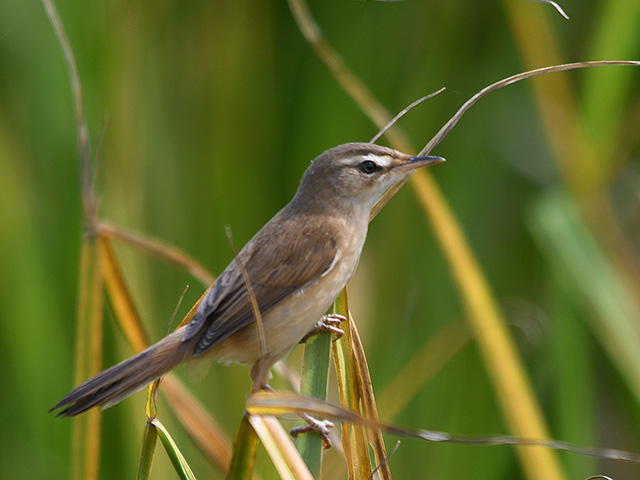
An Oriental Reed-Warbler wandered into view and this common but at times elusive migrant, warranted some attention as well.


When anxiety set in, I set everything aside and focused all my attention in finding the main reason behind this rare weekday excursion. It was a hive of bird activities at this patch of grasslands. As fate would have it, I have the Baya Weavers to thank for this bustling atmosphere. And I do not mean it in a good way. The similarities between a female Baya Weaver and the buntings were undeniable. Inevitably, every movement by the former will have my bins locked onto them and there were about a dozen of them around.


The Munias can never to be mistaken for the buntings but their movement will occasionally distract me from my quest. The majority of these adorable birds were White-headed Munias. On any other day I would have invested some time and effort to document them but today is not the day.


The same can be said about the Black-headed Munias.


As the day grew hotter, fatigue and frustration heightened. I was distracted by the Baya Weavers so often that I can now recognise their jizz in an instance. And a lone bird foraging at a short distance do not strike me as one of them. Before I could switch to my camera, my lifer took off but I alerted the rest of its presence nevertheless. Soon after, a Yellow-breasted Bunting popped into view and there was no denying its identity now. However, there was no icing to the cake. I can blame it on my gear or even old age but it will not change the fact that this horrible image was all I have to show at the end of the encounter.


The outcome of the twitch was a bitter pill to swallow. I am well aware I could have just as easily missed the Yellow-breasted Bunting altogether. I refuse to believe that my experience with this species will be nothing more than a case of so close and yet so far. No, there has got to be more and I have to make sure of that. Four gruelling work days had to pass before a re-visit was possible. The resident Bronze-winged Jacana which used to be a rarity, was the first to greet me during my second attempt at the critically endangered Yellow-breasted Buntings.


The present status of this vagrant is a sad tale indeed. It used to be common where it naturally occurs but common does not mean invincible if share your home with humans. Rampant trapping and hunting have driven the Yellow-breasted Bunting to the brink of extinction. The world does not need another example like the Passenger Pigeon to show just how fragile the wellbeing of wildlife can be. And now, there are at least three individuals wintering in my neck of woods. It will be a shame if I do not give it my all to connect with this species before it is too late. Minutes turned to hours and still no signs of the celebrity birds despite the number of eyes looking for them. Naturally, I was not alone as it was the weekend after all.


Nothing is ever a sure thing when it comes to birding. It does not matter how skilled you are or how meticulous is your planning and strategies. If the bird does not want to be seen or photographed, there is nothing you can do about it. Fortunately, luck was on my side and a Yellow-breasted Bunting suddenly decided to alight in front of me. There is a God after all.


From the images posted on social media, one of the birds was an adult male and the other two were either first winter or female birds in different stages of moult. The individual that I was staring was not the adult male and that was the only thing I can be sure of at that time. Opinions from knowledgeable friends and resources online indicated that it was a female. Although not as striking as a male bird, she has more than enough captivation to leave a lasting impressive.


Best of all, she was obliging enough to allow all those present to obtain photographic memories of the encounter. And all the earlier ill feelings she and her kin caused, was forgiven.


Almost immediately after she retreated, a second bird was spotted. However, it could not live up to the first encounter due to the distance. The second bird also turned out to be a female but her underparts are more heavily streaked and lacking the colour intensity.


When she took flight, another individual followed and I can only assume was the first female. And that concluded my observation of the Yellow-breasted Buntings. I found my closure in the end and the world is a beautiful place once again.


Just in case you are wondering, the handsome male Bluethroat was still around and performing for a number of admirers since morning. However, it was the female Bluethroat that caught my eye today. It is common knowledge that the duller female was the shyer of the two at this location. Anyway, it was a record shot more than anything else but completed my observation of the rare Bluethroats as well.


A surprisingly confiding Yellow-bellied Prinia held me back from my making my journey home. Like what I mentioned earlier, nothing in birding should ever be taken for granted and even the commonest species deserve some attention especially if they are performing well like this.


Friday, 22 December 2023

A Manchurian for Christmas


It is common knowledge that our forests are under threat but the devastation does not end there. Wetland habitats suffer a similar fate. In my home state of Penang, I am running out of wetlands to visit. And for someone with a soft spot for water birds, it is utterly depressing. The marshlands at Batu Kawan would have been my saviour if it has not been slated for development in the near future. At the break dawn, my companions and I plodded along the soft laterite access road cutting through a construction site. It may not sound much like a birding trip but that is what one has to endure in order to reach the said wetlands. Sad but true...


I may not speak for everyone but the sight of a congregation of large water birds never ceases to amaze. Flock by flock of water birds arrive at this feeding ground from their roosts in the surrounding vicinity. For the record, this location probably has the highest density of Purple Herons and Grey Herons in Penang and the numbers are incredible. I opted to observe rather than photograph because that is where the true value lies and this image of a lone Grey Heron may not be able to fully convey the moment.


The advancement in digital cameras of late is undeniable but they do not come cheap. So, for the time being I still rely on pressing the shutter and pray for at least one frame to turn out decent. However, there is a limit to how much one can achieve through prayers especially for a flight shot in dim lighting like this taunting Cinnamon Bittern making its way to breakfast.


One has to be observant to pick out the small but adorable Long-toed Stint from all the blobs of mud, debris and vegetation present in the wetlands. The distance may have robbed me of some of the joy but the Long-toed Stints have their way to gain my affections.


A trio of drabber looking stints dashed across our field of view haphazardly and alighted on a distant sandbank. Our initial guess was spot on when they turned out to be Temminck’s Stints in the end. This species is an uncommon winter visitor to our land and more than capable to excite even the most seasoned birder.


My encounter with the rare Common Ringed Plover here last season left much to be desired. Naturally, all Little Ringed Plovers were scrutinized for a possible re-occurrence of the former but I could not attain the closure I seek.


The Black-winged Stilts graced the location in good numbers with their elegant presence. The new generation of birders and bird photographers may not be aware that this bird was once a rarity in Malaysia but I certainly do. Decades may have passed. Exhilaration may have been reduced. One of my all-time favourites, the bird remains.


They are conspicuous not only because of their contrasting colouration but vocal nature as well. More often than not, they drown out most other species that share their watery domain. This temporary sanctuary will host the Black-winged Stilts and the rest for at least one more season. I am no soothsayer but unless a miracle takes place, the demise of this locality is just a matter of time.


It is safe to say it is no longer unusual to record Little Cormorants in the northern half of the peninsular. A big flock resting together after a morning’s hunt is an impressive sight. One that I am still trying to get used to.


Garganeys, on the other hand, are unusual with sporadic winter records throughout the years. And to have four individuals together at a single spot close to home should be my early Christmas judging on how slow things have been for this year.


Apparently, the Lesser Whistling Ducks have had enough of the overwhelming stench and toxic at the marshland next to the Pulau Burung landfill and are now taking refuge here. I wish there was a way I could warn them not to get too comfortable because the good life they are now enjoying is not going to last.


There is a good reason behind the name of the Greater Painted-Snipe. The female bird (yes, female bird) is vibrantly coloured and stunning. There is also a reason why she seldom reveals her true beauty for evolution has made her particularly elusive.


Wetland habitats are not without their dangers. Raptors are always on the lookout for prey and today, a male Eastern Marsh Harrier was on the hunt. Harriers are generally uncommon at this location but this individual seemed to have decided on his wintering ground this season. His malicious presence will not be welcomed by other wildlife but it certainly added value to our excursion.


Executing a mid-flight scratch to get rid of an annoying itch…


The Zebra Dove is about bite-size for the Eastern Marsh Harrier and its tendency to perch in the open can be hazardous to its health.


The Long-tailed Shrike is predatory as well but on a smaller scale. This is one of the few places in Penang where this beautiful species resides and has been recorded regularly.


It is normally a shy bird despite occurring in scrub and open country habitats. Today, a pair was being more confiding than usual perhaps due to the approaching breeding season. Whatever the reason may be, I do not come across the Long-tailed Shrike often enough not be thrilled by their performance.


There was a significant change to the taxonomy of birds recently. More splits and renaming – as usual. Inevitably, I try my best to keep myself updated for Malaysian species. Among the changes, the Intermediate Egret is now called the Medium Egret which I cannot help but to chuckle when I first found out. I do not know how to put it but it just sounds odd. Will the Little Egret and Great Egret be renamed as to go with the flow?  Anyway here is the bird, with no regards that it is now probably the most joked-about bird wherever it occurs, looking all so poised at our second location of the day which is the Permatang Pauh paddy fields.


Searching for a little brown job in dense vegetation is not every one’s cup of tea. I will usually give it a pass but my companions convinced me otherwise. A lot of thought and strategy was put into the approach this time and we managed to persuade two Manchurian Reed-warblers to settle into a small clump of reeds. In fact, the smallest clump in the vicinity and just next to the access road. I could almost taste success when these globally vulnerable migrants put the human observers in their place and reminded them just how difficult reed-warblers can be if they choose to be.


When the vegetation finally gave way to a less obstructed view, it was the lighting’s turn to dampened our photographic efforts. Murphy's Law at work again.


However, birders can be exceedingly stubborn and determine especially with failure looming. An unexpected turn of luck eventually had the Manchurian Reed-warbler alighting on a relatively open perch with decent lighting. If this is not proof of the existence of a higher being, I do not know what is. As we were enjoying our moment of triumph, the reed-loving warblers gradually made their way out of sight but not out of memory. A fitting end to a rewarding outing and I am relieve there is no negative conclusion to this posting for a change. Perhaps, it is the magic of Christmas at work.


Speaking of which, MERRY CHRISTMAS & HAPPY NEW YEAR to everyone!