Pages

Showing posts with label Openbill. Show all posts

Saturday, 13 June 2026

Not so ordinary garden birds...


My birding endeavours take me to all kinds of locations ranging from spectacular mountain tops and lush tropical rainforests to bleak coastal mudflats. However, there is one type of habitat that I will try to avoid and that is habitats with humans. Wherever there are humans, there will usually be situations. Situations that I can do without when I am enjoying my birding. I guess there is some truth when some consider me to be somewhat anti-social but I will not be losing any sleep over that. Before I carried away with this, I better get back to the birds. That is what this blog is all about after all. A quiet neighbourhood in the outskirts of Taiping became the centre of attention when the presence of Common Hoopoes was discovered. This enigmatic species is still considered rare here in Peninsular Malaysia with irregular records throughout the years. I have personally recorded this species as far back as 2003 and it is not new to me. But at this particular location, it appears to be thriving and that is good enough a reason for a visit.


With my companions Hor Kee and Rodney, we arrived at our destination just after dawn. The first bird that caught my attention was a Crested Goshawk surveying its domain from a lofty perch. This stunning raptor was a great way to start off the day and I began to develop a good feeling about this modest location.


A pair of Oriental Pied Hornbills compounded the feeling as they wandered about the housing area. No matter how many times I have recorded this species living alongside humans, it still evokes the same amount of excitement.


I guess the same can be said about Lineated Barbets but on a lesser scale. Well, very few things in life can rival the awe of hornbills and that is the brutal truth. From the look of things, the barbets have also found sanctuary here and the population is set to increase.


A lone Asian Openbill casually foraging within a house compound certainly took me by surprise. There is no doubt this species has come a long way since when they first started to colonize Peninsular Malaysia back in 2010. But this cool fellow is taking it to a whole new level.


Pink-necked Pigeons occur even in my own home compound and I would find it odd if I do not come across them here. Here is a male feeling a little dismay that the lighting condition and my photographic effort did not do much justice to his true appeal.


Another common species of built-up areas is the Asian Glossy Starlings. Electrical cables are predominant in any housing area and birds have a tendency to use them as perches. For birders, this behaviour eases our main mission in life which is to find and observe.


For a bird photographer, these man-made perches hold little value for their photographic effort. This applies to even a striking species like the Blue-throated Bee-eater. In my eyes (and the bird’s), the cable is a strategic point for it to launch aerial assaults on flying insects. If it good enough for the bird, it is good enough for my camera.


The Red-whiskered Bulbul is a species you do not get to see in a lot of neighbourhoods. So, it was heartening to see one here. There is a possibility of escapees for the beautiful bird as it is a popular cage bird. Either way it will not cause any major scientific impact if I get the status wrong for this individual.


I stated earlier birds on cables are more conspicuous and to proof my point, that is how we got our first Common Hoopoe of the day. This may be normal sight in neighbouring countries like Thailand but in my own, it will take some getting used to.


Eventually, we managed to locate a flock of at least five birds consisting of adults and sub-adults as feeding still took place within the flock. During my documentation of the birds, I could not really tell any differences between the birds. All of them were striking and charismatic.


When I scrutinized my photographs back home, I noticed that all the birds I shot had slightly shorter bills. Only then did I realize that maybe both the adult birds managed to evade my photographic efforts.  


The discomfort of a “human-habitat” started to take its toll and we shifted to the second destination of the trip which is the foothills of Bukit Larut. Soon after our arrival, we were greeted by the diagnostic territorial call of the Banded Broadbill. It took a little effort but the result was rewarding. Often hidden by the cover of the forest canopy, a good view like this is a real godsend to me.


I could not believe it when another broadbill species decided to show well after the first encounter. The Black-and-yellow Broadbill can be confiding at times but the individual today has surpassed that point.


The full black collar indicated that it was a male bird and that feature is only the difference between the sexes. He is a truly exquisite creature of the forest.


A few fruiting trees in the vicinity were in season and they attracted the usual groups of bulbuls. Among them was a female Blue-winged Leafbird and she was the only that managed to find her way into my memory card.


The Verditer Flycatcher is a species that I have not seen for a long while now. When one decided to hawk for insects nearby, I was elated. It may be the duller female but the prolonged encounter was fair compensation.


I know I always lament how frustrating forest birding can be but apparently, not today. Another female bird provided a memorable encounter and she was a Raffles’s Malkoha. Initially she played hard to get, typical of most desirable ladies. On a more serious note, malkohas are usually difficult subject for photography and the Raffles’s Malkoha is no different. But the good girl performed unexpectedly well in the end and made every birder present fell head over heels for her.


Here is one final image of the alluring Raffles’s Malkoha to wrap things up this time. The foothills of a colonial hill station and a surprisingly birdy neighbourhood certainly rose up to the occasion and provided ample material for another entry to my birding blog.


Tuesday, 11 October 2022

A not-so-big Big Day


Today was the slated October Big Day but weather of late here in my home state of Penang has not been favourable for this global birding event. As I made my way across the narrow Straits of Malacca, I could see alarming thunder clouds starting to form in the horizon. I have not participated full-heartedly for past few Big Days due to time constraints and this time, it looked like Mother Nature will be the one determining the duration of my endeavour. The swamp forest of Air Hitam Dalam was the selected location. Being a major birding site closest to home was the main reason for this selection.


The harsh vocalizations of Brown Shrikes were prominent on this cold and gloomy morning. Autumn migration is well on its way and the presence of these common migrants was not unexpected.


I also came across a juvenile Tiger Shrike in the vicinity and this species is more of a passage migrant than a winter visitor to this site.


A pair of Olive-winged Bulbuls decided to join in the chorus and their calls are definitely easier to the ears.


Intermittent sunshine brought hope to my cause and it also brought out a pair of Greater Coucals to sunbathe and preen. The pair was tolerant to my presence which is not always the case. I took the time to appreciate their good deed with the Nipah fronds provided an interesting backdrop for my captures.


As the weather improved, I could hear the calls of Blue-tailed Bee-eaters overhead. It did not take long to locate these graceful species as they were out hunting for flying insects.


Flocks of Asian Openbills soared across the sky as they move from one location to another in search of their favourite morsel – snails.


Common as it might be, the call of the Yellow-vented Bulbul is still bubbly and sweet. As scrublands is one of its preferred habitats, a healthy population resides in this area.


Another vocal species that was out and about was the Common Iora. A pair was causing a real ruckus among the low bushes and with a little perseverance (and luck), I managed to obtain what should be the photo of the day for me. In non-breeding plumage, both sexes are very similar to each other and I would assume the paler individual on the right is the female.


One of the most striking species you can find living nearby or even within human settlements is the male Pink-necked Pigeon. And to have two in a single frame had me trekking along the muddy riverbank for a better image.


The male Common Flameback that occurs in similar habitats, is a worthy rival to the former in terms of aesthetic appeal. Unfortunately, today he was hesitant to reveal his true beauty.


Like an oversized feather squirrel, a Green-billed Malkoha scurried along the canopy level with much haste leaving me with nothing more than images of empty branches. However a second bird, presumably its mate, stayed put just long enough for a couple of shutter clicks and the images turned out better than I had anticipated.


I see Brahminy Kites on wings more often than at rest. Despite the less-than-ideal shooting condition, this encounter with one of the resident kites perched on a lofty tree crown was rather enjoyable.


Going into the fourth hour of my Big Day, the weather started to turn for the worse. The sky darkened and the winds started to pick up momentum. Retreat was the only logical solution as I really did not fancy riding across the Penang Bridge during a thunderstorm. A Water Monitor Lizard made me delay my journey home. Although this massive reptile does not alter the outcome of my Big Day, it was impressive enough to conclude my blog post for this time.


Thursday, 16 December 2021

A world record holder


The morning was bright and beautiful as I made my way across the Straits of Malacca. Initially, I just wanted to do some casual birding on the island but not a single locality came to mind. Utterly fatigued from the insane work load of my fulltime occupation, to make a long trip today was simply out of the question. The next best thing was to visit a local patch in mainland Penang and since choice is never a luxury there as well, I found myself wandering about the network of concrete boardwalks at Air Hitam Dalam again.


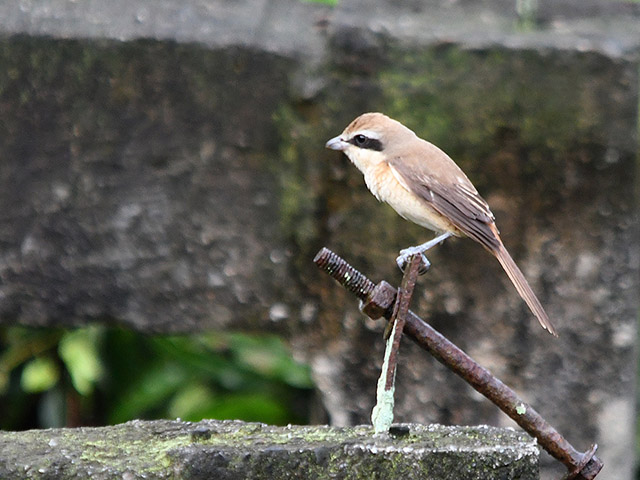
Perched conspicuously at the edge of the freshwater swamp forest was a Brown Shrike on the hunt. This common migrant can hardly be considered a sought-after species but the composition was so inviting and the bird, exceptionally obliging.  


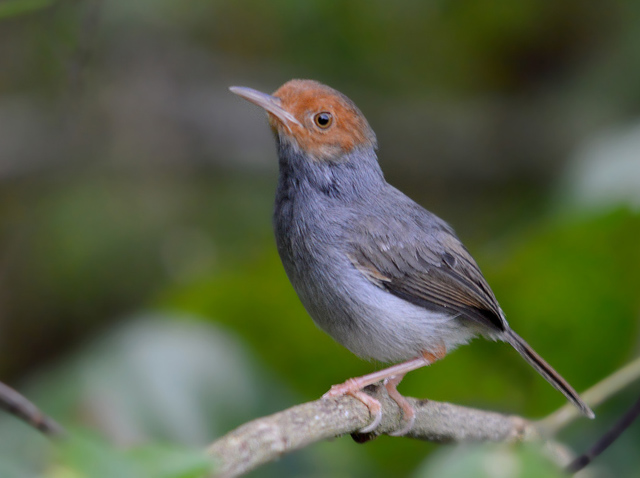
I found the forest eerily quiet today. This birding haunt has lost much of its luster of late – just like most other sites I frequently visit. As my footsteps grew heavier, my thoughts started to drift until a vocalizing Ashy Tailorbird shattered the silence. It took some effort and patience before I found the bird and it turned out to be a handsome male. It is amazing that a small bird like the Ashy Tailorbird can cause such a ruckus. He certainly had the place all to himself this morning and that indirectly increased the decibel of his persistent territorial call.


The Air Hitam Dalam Educational Forest is a small site and with absolutely no relevance at all, it is also home to the tiny but deadly Black-thighed Falconets. The top of this particular dead tree is not exactly ideal to capture the smallest bird of prey in the world due to its height but it is one of their favourite perches. And sure enough, I could just make out a single bird present with my naked eye upon my approach.


It was joined later by another of its kin and judging from the amount of public affection exhibited, they are most likely a breeding pair. Like all raptors, the larger bird is most likely the fairer sex. There is no denying the stunning beauty of Black-thighed Falconets and naturally, I found it hard to pull myself away from the lovebirds.


However, do not be fooled by the adorable appearance of the Black-thighed Falconet. It is an accomplished predator in its own right and this unfortunate dragonfly found that out a little too late.


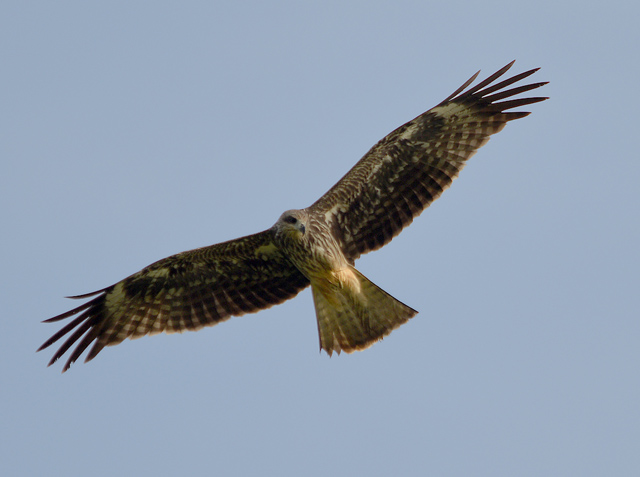
At this site, a congregation of raptors leisurely soaring about can only be the wintering Black Kites. I quickly repositioned myself in order to have the lighting in my favour. About a dozen of these raptors were present today and a few of them circled exhilaratingly close overhead.


Sleek and elegant, the Black Kites floated and swerved their way to become one of the main highlights of this short trip. The sunny condition aided my photographic efforts. And the number of images shared here in this post will be able to accurately illustrate my feelings during the encounter.


One last photograph for good measure...


Unlike the winter visitors, there is only one resident pair of Brahminy Kites here and the rising temperature set them soaring about the vicinity as well. Although they are more vibrantly coloured, the Brahminy Kites did not provide much opportunity for this quality to be admired as they were skittish as usual.


Raptors are one of my favourite birds and I am sure I do not speak for myself. Their ferocity and majesty are often incomparable. When the piercing call of the Crested Serpent-Eagle filled the vicinity, I could hardly contain my excitement. The presence of so many raptors in such a short time can be overwhelming to say the least and I intently watched this eagle with a taste for cold-blooded prey conduct an aerial patrol of its domain.


Although it is not a bird of prey, the Asian Openbill casts a familiar silhouette in the sky during this time of day. This stork that can sometimes number up to a hundred strong, soars effortlessly on its immense wings and is quite a sight to behold.


Like the Asian Openbill, the Little Cormorant is also a recent colonizer to Peninsular Malaysia that is settling in well indeed. This lone bird, presumably taking a breather after raiding the commercial fish ponds, drew my gaze back to ground level. Big flocks are not commonly encountered in my home state and more often than not, it is particularly wary of human presence. Luckily, there was a lot of objects to help hide my human form as I stalked this skilled hunter.


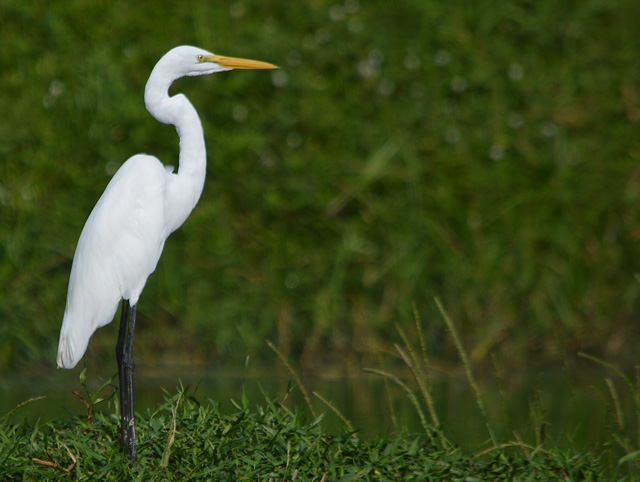
Egrets of all shape and sizes also loiter around the ponds with the same intentions. Like the name implies, the Great Egret is by far the largest and undeniably regal.


The Little Egret may not be the smallest by it is still dwarfed by the presence of the Great Egret.


An adult Purple Heron tried its best to remain inconspicuous while resting at the edge of the fish farm but its plumage colouration was just too attractive not to take notice.


Decades of birding should have made me an observant man and yet, I did not realize there was an adult Grey Heron in the vicinity until it took flight set off no doubt by my intrusion. It alighted on a nearby tree and this lucky shot of the landing turned out better than I had anticipated.


Some movement among a patch of long grass turned out to be a pair of White-rumped Munias feeding on grass seeds. The availability of food made them reasonably confiding and I took the time to observe the feast. Munias are considered to pests by the agricultural industry but to me, they are just living things trying to survive in this hostile world.


Due to its abundant nature, the Pacific Swallow is usually ignored. That is a real shame because when seen in good light, this aerial specialist is strikingly beautiful and streamlined to perfection.


I have had enough share of leech bites to know when I have fallen victim again to this blood-sucking parasite. It may have been a long time since the last time but there was no mistaking the squishy feeling between my toes. As I was about to attend to this little inconvenience, the cheerful song of the Black-naped Oriole distracted me from the task at hand. The leech bite can wait but this stunning bird will not. Although it even occurs in residential areas, I find it difficult to obtain decent images. And here, along the line of tall riverine trees, it is not any easier.


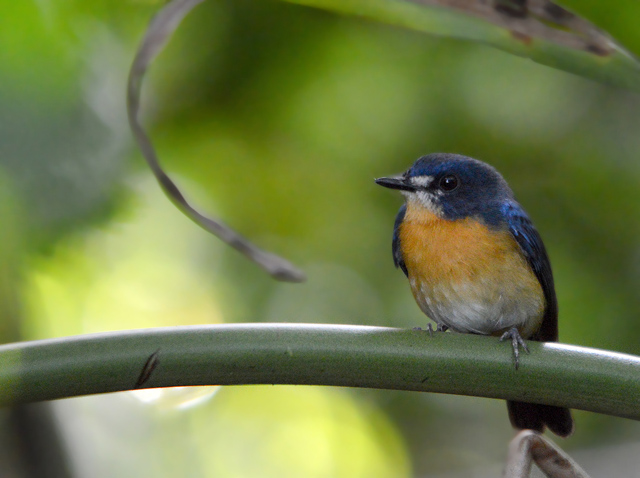
I would have walked past this female Mangrove Blue-Flycatcher on the way to my parked car if not for her short burst of song. The forest undergrowth can sometimes be a challenging environment for photography and my modest gear could not capture her true beauty on this occasion. This species is not as prominent here as it used to be and that is disheartening. But her presence today meant that there is still hope and what better to end a birding excursion than on a positive note.