Pages

Showing posts with label Crake. Show all posts

Tuesday, 19 April 2022

Better late than never


There was only one reason I found myself at the swamp forest of Air Hitam Dalam in mainland Penang for the second consecutive time and it was to attempt for the rare migratory Slaty-legged Crake again. In fact, it could well be my final try as spring migration will draw to a close soon. This species would be a significant addition to my life list and naturally, anxiety was high despite my calm appearance. After all birding is about luck and lady luck has been unkind to me so far.


As I patiently waited for the distinguished visitor to reveal itself, I tried my best not to be distracted by other species present in the vicinity. But a little brown job flitting about the foliage of the forest could not be taken lightly especially at this time of the year. During passage, one has no idea what might decide to make a stopover at one of the few remaining forests in mainland Penang. Upon further scrutiny, it turned out to be an Asian Brown Flycatcher. It may be a common migrant to this part of the world but a confiding individual like this deserves some attention.


The resident pair of Mangrove Blue Flycatchers serenaded the locality with their pleasant territorial calls. The striking colouration possessed by these birds also helped to pass the time during my tedious wait for the Slaty-legged Crake.


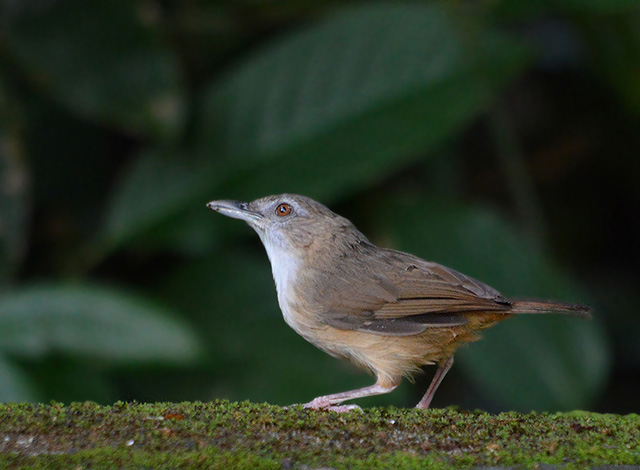
There is not much aesthetic appeal to be found on the Abbott’s Babbler but an adult bird with a recently fledged juvenile in tow indicated yet another successful breeding season for this robust undergrowth dweller.


A Blue-winged Pitta in full view would have normally made my day because pittas are such amazing creatures. However, I was a man on a mission today and the stunning beauty of the Blue-winged Pitta did not have the usual influence over my emotions.


I sighed in relief when the Slaty-legged Crake finally strolled into view. It was a young bird as it lacks the colour intensity of the adult birds. Not that it mattered. I was transfixed on the rhythmic gait of the crake. The exhilaration was intense and I struggled to keep my hands steady as I accumulated digital memories of the encounter.


Almost as soon as it appeared, the rare migrant disappeared back into the swampy undergrowth and the performance was over. I managed to obtain the images I wanted but most importantly, acquired a lifer which is a rare thing for me nowadays.


My companion and I decided the explore the surrounding areas but by then, the temperature had started to soar. A lone Dollarbird seemed unperturbed by the scorching heat and took no effort to seek some shade. Inevitably, the harsh lighting made photography of this attractive bird difficult.


April is the best time to catch the Pond-Herons in their breeding plumages before they undergo the journey back north to breed. We recorded all three species on this trip but unfortunately, none were confiding enough for any memorable photographs. This mediocre image of an Indian Pond-Heron foraging in a sea of paddy stalks still managed to wriggle its way into this blog post. Being the rarest of them all has got absolutely nothing whatsoever to do with it.


The scrubland habitat was ideal for Red-wattled Lapwings and we found several individuals in the vicinity. The absence of any other notable species cut short our exploration here and we turned our attention to the coast.


The timing of our arrival at Kota Kuala Muda was ideal with the rising tide pushing the waders and other water fowl to the high tide roost. However, it was a case of so close and yet so far. There was no safe walking access to the roost and inevitably, we made our way as far as the sandy beach was willing to take us.


We had some consolation in the form of Common Terns. A few of these graceful coastal terns decided to roost on the beach and they provided the best photographic opportunities here.


One of them has a deformed lower mandible but judging from its overall appearance, life goes on as normal for this determined individual.


Some waders were also found roosting close to shore but the heat wave was too overwhelming for any decent photographs. Nevertheless, the sight and sounds of thousands of roosting water birds is always a breath-taking affair. As Hor Kee did a final sweep of the roosting flocks for any surprises with his scope, I took the time to enjoy the spectacle before we wrapped things up for the day.


Monday, 5 July 2021

A lily-trotting rarity


I have not been out birding as often as I used to but reports of a pair of Bronze-winged Jacanas at the marshlands of Batu Kawan awoken something in me that has been dormant for too long. It was just a matter of time before I made my way to seek out this scarce resident. Unlike in neighbouring Thailand, only a couple of sites in the northern state of Perlis is where this species has been recorded with any regularity in recent years.

It was a gloomy morning and with no signs of the jacanas upon arrival, the atmosphere was less than cheerful for my company and other like-minded birders. A White-browed Crake almost had us fooled when it caused some movement among the floating vegetation. But a Bronze-winged Jacana is just too stunning to be mistaken for anything else.


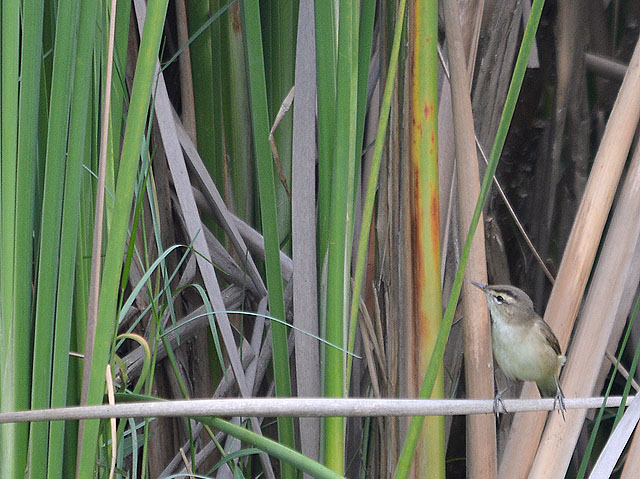
Migratory Reed-Warblers, as the name implies, find refuge here in the reeds as well. However, they can hide remarkably well if they want to. Today, only the Black-browed Reed-Warbler managed to find its way into my memory card.


When the celebrity birds finally revealed themselves, the joy was short-lived. Perhaps the presence of too many humans did not go well with the Bronze-winged Jacanas and they kept a safe distance throughout our observation. The poor lighting condition only compounded my dismay. Emotions aside, there is no denying the significance of this first state record. Enjoying the true resplendence of this lily trotter will just have to wait another day.


The pair was showing signs of breeding and we were even given a short courtship display. Inevitably, throng of bird photographers came for these beautiful water birds and some were overly enthusiastic and creative in their quest.  Shortly after our visit, Malaysia came under lockdown again due to the pandemic. I guess it was a blessing in disguise as the stricter movement control order gave the Bronze-winged Jacanas a chance to raise a family in peace. At the time of writing, the chicks have long fledged despite all the disturbances the nesting pair had to endure initially.


Without any indications of improvement shots for Bronze-winged Jacanas, I started to give the other species present their due attention. Unfortunately, there were not many around. A lone Asian Openbill was close enough for a record shot but not close enough to evoke anything else.


My best effort today should be of this adult Purple Heron resting all so elegantly among the reeds. It remained unperturbed by my presence and on a trip where good images are hard to come by, this common but striking heron provided the magic.


A good number was present in the vicinity today including juveniles pointing to a successful nesting season. Penang, my home state, is one of the busiest in the country. It is constantly being developed and sometimes at an alarming rate. Call me a pessimist but I can see no happily ever after for the colonies of Purple Herons here. It is just a matter of time before development displaces this wildlife refuge.


The absence of some of the usual water birds today was disheartening and the walk along the access road was long and tedious. A Malayan Pied-Fantail literally stopped me at my tracks when it suddenly alighted on the road not far from me. It was not exactly in pristine condition. Probably had a rough day so far as well but it did well enough to brighten up the day.


Chestnut Munias are the commonest munia species here and a small flock foraging along the edge of the reeds had my undivided attention. Like the Fantail, they were confiding and provided some cheer before the rains concluded the trip.


Three months have past since that gloomy morning with the Bronze-winged Jacanas. Due to the increased severity of the coronavirus in the country, it was my last birding excursion. It is a dark time now and life is shrouded with uncertainties. However, I always believe nothing lasts forever. Not even a global pandemic. To wrap things up for this time is not an image but rather, a cliché quote by Friedrich Nietzsche - that which does not kill us makes us stronger.

Wednesday, 24 March 2021

Birding blues...


At first light, I found myself soaking in a spectacular sunrise and the overwhelming aroma of the biggest landfill in the state. With the restriction of interstate travel still very much in place, there are limited choices as to where Hor Kee and I could venture to and I guess Pulau Burung is as good a site as any here in Penang. Anyway, the Asian Koels dominated the dawn chorus this time as it is still breeding season for these parasitic cuckoos. Despite being for than a foot long, they have a remarkable ability to stay out of sight. Hence, an image of the sunrise...


We scanned the larvae-infested lakes hoping for any uncommon migrants but there were none to be found. As usual, the flocks of Lesser Whistling-Ducks filled the locality with their presence and whistling calls. Of late the weather has been sweltering but at this hour, the sun’s penetrating rays have yet to reach their full potency and provide the much desired golden hues for photography.


The Little Grebes were also in good numbers today. Beautiful and adorable, they will always have my attention whenever they wander within the comfort zone of my gear. The lakes surrounding the landfill here is probably the only remaining wetlands in the state that is still rich in bird life. And that is something I am most grateful.


For a species so elegant, the call of the Black-winged Stilt leaves much to be desired. Judging from the vocalizations today throughout the vicinity, the Stilts have found sanctuary here again and are thriving. After all these years, I still find it hard to resist their charm.


Crakes are usually difficult to see well – usually. This morning, we had at least 3 White-browed Crakes that frequently abandoned their skulking nature and provided good views. Despite fortune being in our favour, the Crakes are small and active birds. Following their movement was not easy and only a handful of the images turned out reasonable.


The Javan Pond-Heron is a regular migrant and every season (around this time of the year when it is identifiable), a number will be recorded especially from the northern states of the peninsular. This individual, stalking at the edge of the lake, was only in partial breeding plumage but with enough traces of its true identity.


A foraging male Olive-backed Sunbird momentarily diverted my attention from the water birds. A few of the trees next to the lake was in bloom and the nectar addict was having his sugar fix. The lighting was harsh and the hyperactive Sunbird hardly provided any photographic opportunities.


Red-wattled Lapwings are a regular feature here. These striking waders prefer the grassy river bank to forage and rest. As long as you stay in your vehicle, your presence is usually tolerated and all hell will not break loose.


A relatively confiding snipe shared the foraging ground of the Lapwings today. Although good views were obtained, it remained to be just another “Swintail” Snipe at the end due to the lack of evidence to proof otherwise.


The Greater Painted-Snipe is an intriguing species that I sorely lack field experiences. Its somewhat crepuscular and shy nature is the reason why. Today, however, we came across 3 individuals and 2 were in the open. Naturally, all were the duller males. To have a spectacular female in full view would have been phenomenal but things like that do not often take place in the real world. Anyway, one of males appeared to be absolutely relax in this untypical behaviour and the lighting condition was the only let down of this memorable encounter.


We left the Painted-Snipe to his morning siesta and heads towards the nearby state park of Bukit Panchor. Spring will see the Blue-throated Bee-eaters replacing the Blue-tailed Bee-eater here in Peninsular Malaysia. The former being a breeding visitor and the latter, a winter visitor. A few of these striking birds were seen hunting near the park entrance.


I cannot really recall my last visit to this locality and that would make it years. One thing about this location is that the habitat may be pristine enough but there are less birds here than you would normally expect. But it was not like this always. Once upon a time, the forest here was home to some truly incredible birds like the near-mythical Giant Pitta and you could also hear the far-carrying call of the amazing Great Argus on a regular basis. Once upon a time...


I do have to admit that the vegetation here is dense and it is not the easiest of sites to bird. We did come across some birds and a few bird waves but almost everything eluded my camera. A pair of Checker-throated Woodpeckers were foraging quite close to the access trail and provided a rare opportunity for me to actually put my camera to use. You know that I am scraping the bottom of the barrel when an image of this quality is included in my blog post.


A flock of White-bellied Erpornis exhibited little fear of our presence which is quite typical of the species. Being inquisitive and charming, it normally brightens up any forest excursion. And one even stayed still long enough for its image to be taken.


One of main highlights our visit here shares the sky with the birds but it is not a bird. A hut that was initially built to provide shelter for weary trekkers has been taken up by group of fruit bats (if any reader happens to know the exact species, please enlighten me). These winged mammals have a bad reputation which is totally uncalled for. I find these nocturnal creatures intriguing and like all other wildlife, deserves our respect and admiration.


On the way out of the park, a Stripe-throated Bulbul was exceptional vocal along the forest edge. By that time, it was blistering hot but it did not deter us from taking some time to appreciate this lovely bird before calling a day. The birding today may not have been exceptional but it is always good to be able to just get out into the field.


Friday, 27 March 2020

Reaping rewards from the reeds - Part 1


The break of dawn today seemed more radiant than usual as the sun rose above the massive ongoing development on the horizon. Not much of a dawn chorus at the marshlands of Batu Kawan though. That was fine because song birds were not in the itinerary today. An exceptionally dark coloured bittern was and I decided to adopt the wait-and-strike approach used by this family of water birds to get what they seek. If it is good enough for the bitterns, surely it must be good enough for me.


I positioned myself strategically where I last hit the jackpot at this birding hotspot. One of the reasons I am constantly drawn to this locality is the birding conditions (apart from the abundance of water birds) where the hunt takes place from the comforts of your vehicle.


With my mobile hide in place, it did not take long for the first bird to stroll into view. Maybe stroll is not quite the word to use for the Ruddy-breasted Crake’s hasty pace. Scoot is more like it and with the sun barely up, my modest photography setup was struggling to keep up.


Crakes are known to be most active at first light. So, I really have no right to be swearing. But my only companions today were the birds. I guess there was no harm venting out my frustrations verbally. As for the Ruddy-breasted Crakes (yes, more than one), they could not be bothered by the profanities streaming out of this huge metal box and just carried on with their lives.


One of crakes wandered close to my position during the encounter. If not for some obstructing vegetation, it would have been my best effort of the day for this usually elusive marsh dweller.


The White-browed Crake is another regular here but I found it to be shyer and tends to keep a distance. Except when the urge to terrorize the Ruddy-breasted Crake arises again. That is when all hell breaks loose. Similar in size but not in character, the former will be chasing the latter all around the stakeout but these pursuits do not last long. When the dust settles, in this case water and mud, both parties will commence to feed again. This aggressive behaviour exhibited by the White-browed Crake was new to me but then again, I hardly had any field experience before with crakes of different species feeding so close to each other.


Next to my stationary vehicle, there was a bunch of low lying vegetation. I have noticed the Pallas’s Grasshopper-Warbler skulking around during all of my excursions here so far. Today was no different except that I did not have to make sure my foreign guests have had a good look at the bird first. No, today was all about me and I wholeheartedly attempted to obtain some reasonable images of this sneaky fellow.


It seems that this warbler is a creature of habit and will always forage in a particular spot but as fate would have it, that particular spot consists of a spider web of dead twigs. Coupled with the poor lighting of early morning and the active nature of the subject, photography was tough despite the close proximity.


Throughout my time at the stakeout, the Pallas’s Grasshopper-Warbler (I can only assume there was only one individual) teased me a number of times during its forays out in the open. When the lighting improved, the cursed twigs were still an issue but I am happy with the images that I managed to obtain. For here in Peninsular Malaysia, this is one of the ultimate skulkers of the birding world.


One of the things birding has taught me is to always expect the unexpected. I was so used to the routine of the Pallas’s Grasshopper-Warbler that I almost ignored the appearance of the much rarer Dusky Warbler. I could almost tell from behaviour that it was a different bird because it was not as skulking. Both warblers are migrants to Malaysia but there are relatively few confirmed records of the Dusky Warbler. This scarce migrant prefers to winter among vegetation next to bodies of water. And here at the marshlands of Batu Kawan, the habitat is absolutely ideal.


My last encounter with the Dusky Warbler was years ago and today, I finally managed to obtain images of this plain but distinguished winter visitor. The term Little Brown Job (LBJ) suits it perfectly but even so, the brief encounter today was one of the highlights of this birding excursion. Waiting for the birds to come to you from your vehicle beats doing it from a stuffy hide but it is still a strain. However, there are things that you can achieve that would be difficult with normal birding strategies and documenting a Dusky Warbler is a good example.


Another LBJ was seen skulking around but this time, it was among the reeds on the far side of the stakeout. I could tell it was one of the smaller Reed-warblers but effort was required to ascertain its identity. Black-browed Reed-Warbler would be the usual candidate as it is commoner than the Manchurian Reed-Warbler. After further scrutiny, my initial hunch was right but the Black-browed Reed-Warbler did not provide any opportunities for improvement shots.


I actually found myself surrounded by warblers at the stakeout today and none more conspicuous than the rowdy Oriental Reed-Warbler. It is a big bird when compared to the other warblers here and much to my delight, it was not taking any effort to conceal itself. Announcing its return to the stakeout with a series of harsh notes every single time, it was impossible to even overlook this common migrant.


My mobile hide probably played a role for its confiding behaviour and I enjoyed my best encounters with the Oriental Reed-Warbler to date. Completely disregarding my intrusion, it went about foraging without hesitation. It was a series of prolonged observations as the bird will take short breaks somewhere hidden from view before joining me again. Thanks to the good lighting condition, I was able to follow the movements of the bird reasonably well with my modest photographic equipment and obtained a number of good images.


The Oriental Reed-Warbler explored every nook and crevice in the vicinity and from what I can see, there is no shortage of food here. And this should explain my good fortune and rewarding encounters with warblers here.


Another warbler that held my attention today was a male Common Tailorbird. Renowned for their sewing skills, these warblers build cup nests by literally sewing one big leaf or two leaves together. As the name implies, the Common Tailorbird is the most often encountered representative of this genus of birds because it has adapted well to survive alongside Man. You can hear their persistent calls in gardens, parks, orchards and as well as scrublands, marshlands – you catch my drift, right?


The dried twigs next to my stationary vehicle was a regular spot for the tailorbird as well, returning to forage time and time again. Unlike a certain skulker, this handsome male preferred the top most twigs where my view was relatively unobstructed. He was also a natural in front of a camera and I even had to restrain myself from being too preoccupied with him and risk missing out on other rarer species.


I know that it is a common species and appearance wise, there is not much to boast but to me every bird has its own appeal. And this obliging Common Tailorbird certainly has his. Just look at that tail!


One of the commonest warblers in Peninsular Malaysia is the Yellow-bellied Prinia. It occurs in a wide variety of habitats but scrublands and reed beds are where it thrives. The relentless vocalizations of the prinia is usually the first indication of its presence. With a little patience, you can be rewarded with decent views as well. As expected, the marshlands of Batu Kawan has a healthy population of Yellow-bellied Prinias. However it only appeared once at the stakeout and the moment it stopped for breather, I made sure I had something to show at the end of it all.


My vehicle had parked itself at the stakeout long enough for the birds let down their guard. A Spotted Dove just dropped down on a perch right in front of me and started to coo out his territorial call. I am assuming it is a male as the sexes are identical but generally, only male species are capable of such careless behaviour. It was only when my continuous shutter clicks broke the silence did he realized there was a frigging human in the vehicle and flew off immediately.


I could hear the feverish calls of the Plaintive Cuckoo throughout my visit here today. Even if the sexes were not dimorphic, I still would have guessed this individual that wandered across my field of view was a female because generally, only female species are capable of exhibiting such finicky behaviour. And she looked suspiciously at my vehicle the whole time. One shot was all that I could muster before she retreated back to the dense vegetation.


As the morning got warmer, the crakes were back to their normal elusive behaviour but that did not signal my time at the stakeout was coming to an end. There are not so many egrets to be found living of this locality which was a bit of a surprise. The adjacent mangroves will probably harbour more of these elegant water birds and the only egret that made it to my memory card today was a Little Egret that dropped in briefly at the stakeout.


Some of the Pond-Herons are starting to sport their summer plumages in anticipation of the journey back to their breeding grounds. This lone bird that hunted in the vicinity showed just enough of its breeding colours for me to safely conclude that it was a Chinese Pond-Heron. Regardless of what some may claim, there is no way to differentiate Pond-Herons in non-breeding plumages. For these birds, you will not lose any credibility if you put your records down as Pond-Heron spp. until they start revealing their splendid breeding plumages. Better that than having the local eBird reviewer barking you to provide supporting evidence or amend your record.


Although the bittern hunting technique worked like a charm today, I was disappointed again by the elusive Black Bittern. At one point during my wait, a male Cinnamon Bittern flew across and alighted deep among the reeds. I did not give it much thought after as that is usually the end of it when it comes to this stunning water fowl. About half an hour later, I could not believe my eyes when the male Cinnamon Bittern slowly stalked his way to the edge of the reeds until he was in plain sight. I guess it really took a bittern to catch a bittern after all.


Although it was not the bittern I was hoping for, this male Cinnamon Bittern was a good enough compensation. My earlier conclusion that the stakeout was rich in food was reaffirmed by the bittern. The availability of food here drew him out from reeds and into the open. Minutes later, he found success but I was too slow to capture the entire hunt.


After gulping down his prey, he lingered around to show off his splendour before gradually disappearing into his watery realm again. When things finally started to quiet down at the stakeout, I decided to explore the rest of the marshlands here.


The visit here has been exceptional so far and it reminded me of the glory days at the marshlands of Pulau Burung. It is depressing what the place has now become and through the years, the wound may have healed but the scar remains. I wrote an article about this site a long time ago and the ended with this sentence, I hope the day will never come when the ballerinas of the marsh are forced to perform one last time in the audience of angels before departing from a diminishing paradise and never to return again. Well, that day certainly came. Anyway, to find out how I fared for the remaining half of the trip will be covered in the next post. And if I have to break a half-day excursion into a 2-part post, you can pretty much guess the outcome.