Pages

Showing posts with label Godwit. Show all posts

Sunday, 1 April 2018

The savage sea


I decided to visit Sungai Burung in Penang Island with whatever time I have left after work before meeting Hor Kee for some wader watching later by boat on the mainland. I was hoping to catch the Grey-tailed Tattler before it flies back to its breeding ground up north but a brief view was all that was given today. The commoner Terek Sandpiper was much more obliging today but there was little I could do about the harsh lighting as the noon hour was fast approaching.


The Chinese Pond-Herons were coming into their breeding colours nicely. With no signs of the other two rarer Pond-Herons, this time the commonest one was given its due attention and admiration.


The Brahminy Kite may be the commonest raptor in coastal areas but a full-fledged adult is still a striking bird. On a day when things are far from exciting, this scavenging bird of prey is a welcomed sight.


This Jungle Myna made me look twice as the colouration of this individual was very similar to that of a Javan Myna. There are still no records of the Javan Myna that I know of here in Penang but at the pace it is spreading up north, it should be only a matter of time.


After I quick lunch, I met up with my companions to embark on a rented boat to observe waders along the Bagan Ajam – Teluk Air Tawar coastline. It was a hot day but the heat was the least of my worries. The sea condition was less than favourable and the choppy waters drenched us despite all the efforts of our boatman to keep us dry. The constant rocking of the boat also made it difficult for photography. Luckily, our group had relatively strong sea legs or this wader excursion would have been a very short one. When we finally made our way to the waders, I tried my best to obtain some images in this testing condition. Godwits, both Black-tailed and Bar-tailed, have remarkable breeding plumages. Combined with the sheer size of the birds, stood out from their drab companions.


The Black-tailed Godwit provided better photographic opportunities and for that I am most grateful.


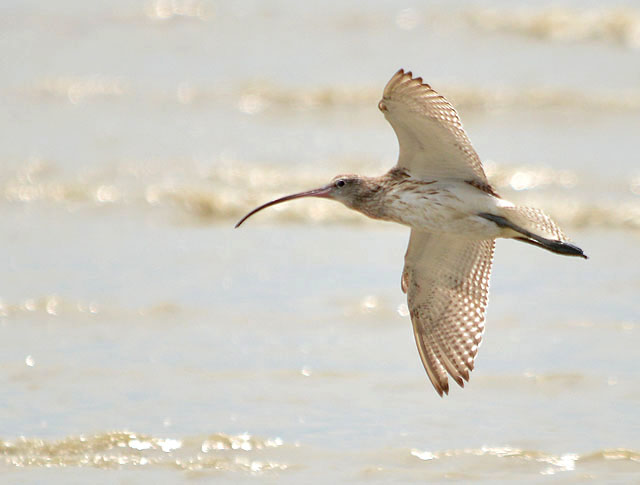
I often wonder if it is necessary to include “Far” in the Far Eastern Curlew’s name. Well, after all these years this is the only type of images I have of this scarce migrant. There is no more doubt about the name anymore. However, even at this distance the long decurved bill of the two birds resting on a mud bank still looked amazing.


A number of Brown-headed Gulls in their smart breeding plumages were also recorded today.


Some of them were using the concrete poles of the clam farms to rest and that gave us an opportunity for a more intimate observation.


The regular users of the poles, the terns, did not seem troubled by the presence of the larger gulls. Even the mighty Greater Crested Terns were dwarfed by them. Due to the strong waves, the boat could not remain at ideal shooting positions for long and that hampered our efforts for better images.


Not to be outdone by the gulls, some of them were sporting their full breeding plumages as well...


The Whiskered Terns are truly striking in their breeding plumages. I could not obtain any images of them in flight as they followed our boat today. I am grateful the sea did not rob me of all attempts to photograph this tern.


Birds may not be part of the White-bellied Sea-Eagle’s diet but I guess it is still intimidating for the terns to have a predator resting at such close proximity.


Back at the estuary, the boat ride was much more comfortable as we were protected by the mangroves. Humans are not the only ones who find shelter here. A number of egrets were seen resting here as they wait for the receding tide to exposed nutritious morsels to feed. The Great Egret, as the name implies, is the largest species presence and the most conspicuous.


The last bird for this marine adventure was a Javan Pond-Heron. Looking absolutely gorgeous in full breeding plumage, this blonde bombshell is all ready to fly back north for the breeding season. This may well be my last visit to the mudflats as the migratory is about to end. This season did not produce any truly significant moments for me. Hopefully, I will do better in the next one.


The checklist of birds recorded:
1. Sungai Burung
2. Teluk Air Tawar

Tuesday, 29 November 2016

The one that didn't get away

Air Hitam Dalam has been struggling to return back to its former self after the uprooting of one of its main trees. This morning’s birding excursion was off to a very slow start. My guests this time were from England and they have been residing here in Malaysia for the past 6 years and have a significant number of our bird species under their belt. And that only made matters worse. Under performing birding sites can be stressful. Even a family of Mangrove Blue Flycatcher could not improve the situation much. The next location was the mudflats of Bagan Belat where my guests were hoping for their first ever Nordmann’s Greenshank and I was determined to see their wish fulfilled after the disappointing start. The weather was beautiful and the tide ideal but despite a careful search, no Nordmann’s Greenshanks were found. Fortunately, the mass gathering of waders at this high tide roost was a spectacle by itself.


Asian Dowitchers have been showing well so far this season and today was no exception. A reasonably big flock was foraging along the tide line together with Black-tailed and Bar-tailed Godwits. This presented a good opportunity to compare the differences between the dowitcher and the godwits – especially when the former is relatively foreign to my guests.


A trio of Black-tailed Godwits sweep the coastal waters for nutritious morsels at their winter sanctuary…


The arrival of a few Brown-headed Gulls to the roost diverted our attention from the waders momentarily. I cannot help it but I do not forget bad experiences easily. The bitter memory of dipping out on the Black-tailed Gull here a few weeks earlier resurfaced to torment my thoughts.


The distinctive call of the Coppersmith Barbet started to resonate nearby our position. A quick search at the nearby trees revealed this adorable little bird. In an avian-scape of browns and greys, the vivid colours of this barbet was a welcomed sight.


The paddy fields in Permatang Pauh holds a few would-be lifers for my guests and finally, they were not to be denied. To be able to enjoy three lifers at a single location will turn any ordinary trip to an exceptional one. One good turn deserves another and in return for the lifers I found for them, my guests spotted Penang’s second Glossy Ibis which was discovered here yesterday by Hor Kee. This peculiar water bird was foraging at a distance and the lighting was harsh. However, I would not be able to forgive myself if I did not even attempt to obtain some images from this encounter because the last this species showed up in my home state, it stayed for only one day and I missed it on the second day. And this rare migrant is a fine way to conclude this half day excursion despite the slow start.

Wednesday, 21 October 2015

The flooded forest (17/10/2015)

It has been a while since my last visit to the swamp forest of Air Hitam Dalam in northern mainland Penang. Upon my arrival, the first thing that caught my attention was the amount of water that has covered the forest floor. It is no Amazon basin but to me, it is still a little piece of natural paradise not too far from home.


The rise in water level did not have much effect on the birds as the rear car park is still quite a centre of activity. I spent more time than usual at the car park today because of a small but striking migrant that performed well here last week for a few privileged birders - the Black-backed Kingfisher. But it was a no show by this dwarf kingfisher today. Abbott's Babblers are usually secretive birds that tend to keep to the cover of the forest undergrowth. The only indication of their presence is their tri-syllabic call. Well, try telling that to this one...


Are birds capable of daydreaming? It looked like this female Ashy Tailorbird was and she remained stationery for quite a long period of time considering she is one of the most active species found here.


This Lineated Barbet was feeling a little smug as it almost got the better of me. It was on an exposed perch in front of me but I was too preoccupied with a Green-billed Malkoha that was moving about nearby to notice it. Then, James Neoh came along and casually made a remark of what a nice perch the Lineated Barbet was posing on. Thanks, bro...


Common as this barbet may be at this locality but its preference for the canopy levels often prevents good photographic opportunities. One on an exposed perch not too steep in angle is definitely worth a second shot.


The deafening calls of the Hill Myna are not often heard at this locality. Seeing that it is a local rarity, I did my best to locate the bird and I did. However, the only slightly unobstructed view was a distant one and yet again, I could only obtain record shots of this the largest of the mynas. Its ability to mimic human speech makes it a much sought-after cage bird and being kept in a cage is no way for this remarkable bird to live. That did not come out right. Being kept in a cage is no way for any bird to live.


I always have a soft spot for the Black-thighed Falconet. Not only is it adorable but its mannerism is also captivating at times. It does occur in small family groups and allo preening is a common practice among these tiny raptors.


This show of public affection is a relished activity. The expression of the bird on the receiving end says it all. One good turn...


Deserves another...


Air Hitam Dalam is one of the main roosting areas for the migratory Black Kites. Only a handful was seen today and they are probably the early arrivals. In the weeks to come, their numbers will increase significantly and dozens will call this place home for the winter months.


By mid-day, another yearning drew me from the swamp forest to the nearby coastal mudflats. The migratory waders are back and it is time once again to scan the coastlines for this fascinating group of birds. I made myself comfortable on the rocky outcrop of Bagan Belat and patiently waited for the rising tide to push my subjects closer to me.


The Common Redshanks were the first to come within reasonable shooting range but the harsh afternoon sun and shimmering heat wave made photography difficult. And thanks to a considerate neighbouring country, I now also have to deal with the haze as well.


Despite the abundance of food, Common Redshanks have a tendency to squabble and snatch each other's catch.


The Eurasian Curlews, on the other hand, behaved like the regal creatures that they are and there will always be an air of elegance and majesty about them.


Even their massive size could not withstand the rising waters and gradually, they moved closer to shore. Their occasional short burst of flight gave me a chance to capture them in flight.


A flock of lanky waders also made its way closer to shore and upon further scrutiny, turned out to be Black-tailed Godwits. Although it is not uncommon throughout its wintering range here in Malaysia, it is not often encountered at this range here in Penang. Naturally, they had my undivided attention.


In flight, it is easy to see why they are called Black-tailed Godwits...


This lone Terek Sandpiper came reasonably close to my position and stroll past my field of view a few times. It was only after the godwits left the scene did I started to pay it some attention. No hard feelings, ya?


We often come across common names of birds that do not truly reflect their appearance or character. Then there are those common names that really hit the nail on the head like the Common Sandpiper. It is undoubtedly the commonest of our waders. It may not occur in very big numbers at a single locality like some of the other waders but it occurs everywhere. And I mean everywhere. With that, I concluded my first visit to the mudflats for the season and it is good to be back. 

Tuesday, 27 January 2015

Giving back...(24/01/2015)

The Asian Waterbird Census (AWC) is an annual event coordinated by Wetlands International. Each year in January, volunteers from across Asia and Australasia will conduct the AWC in their respective countries. I am no scientist but I derive endless fascination from birds. That is why whenever I can, I do my part and help out in some conservation work. The AWC and My Garden Birdwatch (MYGB) are just some of the citizen scientist projects that I commit myself to. For the AWC this year, we did counts at two sites. Together with Dave and Hor Kee, we started off the first count at the sandy shores of Kuala Muda in mainland Penang.


Once we got ourselves comfortable, it was down to business. Here, on the exposed sandbars, a high concentration of terns rest in between feedings and tides. Egrets and a small number of waders will also use these resting stations. The count was conducted from the shore and it was a fair distance from the birds. There is no point to risk spooking the birds when doing a count. Stationery birds are much easier to count than flying ones - believe me. By mid morning, we concluded the count here. It was a good session as there were about 3,000 terns present consisting mostly of Common Terns and as well as a few Brown-headed Gulls.


The resident dark-morphed Pacific Reef Egret provided the photographic highlight for me after the count. This coastal species is the rarest egret after the globally endangered Chinese Egret in Peninsula Malaysia. The coastline here is one of the few spots in Penang where it is regularly encountered.


The elevated rocky outcrops next to the coastline where the egret had landed to forage provided the ideal cover for me to sneak up on my subject and successfully obtained my best images of this species to date. Being the only the egret in Malaysia with two colour morphs makes it unique and it is a species that I have always wanted to obtain good images. Looks like I got my wish today...


We had a few hours to kill before the next session of our AWC. The nearby paddy field was a very inviting option to pass the time. Upon our arrival, a flock of about 60 Asian Openbills were seen riding the thermals further confirming the fact that these enigmatic storks are still present in my home state. The paddy fields had quite a number of egrets about. Here is an image depicting the differences between the Great Egret and the Intermediate Egret.


I had a frustrating time trying to obtain decent shots of the Red-throated Pipit during my last birding trip that is at the grasslands of Chuping in Perlis. We came across a handful of these uncommon migrants again today but unfortunately, they are not any better than their northern comrades. I will get you guys one day...


Our second AWC session was by boat as we counted roosting waders along the Bagan Belat Important Bird Area (IBA) coastline which was not too far from the first count site. We were joined by Choo Eng and a few others including representatives from the local council. It is part of the Malaysian Nature Society's effort to get this site protected and turned it into some kind of an ecological reserve for tourists and future generations to enjoy - with the help of the local council.


Our 'guests' were in for a treat as we came across a few high tide roosts that had thousands of waterbirds. As we were doing the count on a boat, good images of individual species were difficult to obtain due to the distance and the constant rocking of the boat.


No matter what the distance, the Eurasian Curlew is almost impossible to miss because it is one of the largest waders in Malaysia and with a bill that is almost as long as its body.


A flock of Bar-tailed Godwits was looking very comfortable roosting at the water's edge. This is another species that spots an impressive looking bill.


Flocks of Common Redshanks are another species that were easy to pick out because of their vocal nature and distinct colouration.


This distant shot is of a flock of Common Greenshanks and Marsh Sandpipers. There were no Nordmann's Greenshanks here as initially thought (Thanks, Dave for the correction).


The Asian Dowitcher is another scarce winter migrant to Malaysia and deserves just as much attention.


Larger waterbirds were easier subjects for our guests to observe and appreciate. The resident Grey Herons were certainly one of them.


The Great Egrets also did their part to help keep the boat trip interesting...


We, on the other hand, required no such motivation to earn our undivided attention. The presence of 10,000 waders was more than what we could ever ask for. This was certainly a much better session of our AWC - as expected. Another exciting discovery was the 300 Brown-headed Gulls resting at one of the high tide roosts. This is probably the highest concentration of gulls in Malaysia.


A few of the gulls were quite near to our boat and they provided some great photographic opportunities.


This is a juvenile as it lacks the characteristic wing 'mirrors' of the adult bird.


Some were also swimming in the vicinity like this juvenile that has just caught quite a sizable meal. Beginner's luck, perhaps?


And if that was not enough, there were at least three of the much rarer Black-headed Gulls present as well. This adult bird was flying not too far from our boat and provided the only image I could obtain of them.


Initially, only the commoner terns were counted like this Common Tern...


That was until our boat passed some mussel farms out at sea. Consisting of cement poles jutting out from the water, they provided the perfect perches for the sea-loving terns to rest on.


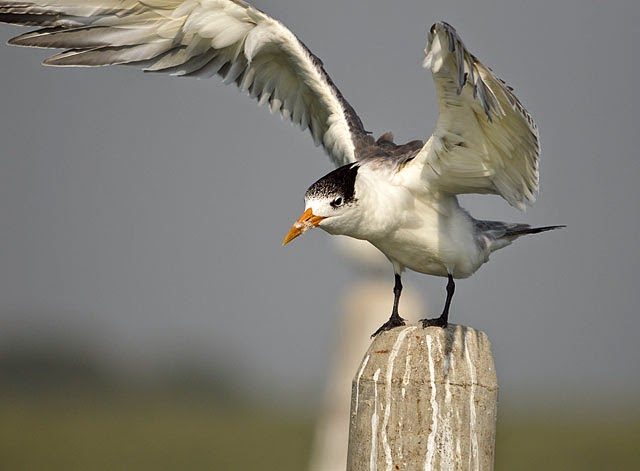
The majority of the terns recorded here were the Great Crested Terns - much to our delight.


Beautiful and majestic even in non-breeding plumage, this uncommon species provided the photographic highlights for the afternoon session.


The poles were quite crowded as there were about 55 Great Crested Terns present in the vicinity. Squabbles for space were inevitable…


Among the Great Crested Terns, there was a lone Lesser Crested Tern which is the rarer of the two species. It was almost too good to be true as I have had very little photographic opportunities with both species in the past. And now, here they are together at the same spot and so obliging. Truly a magical moment…


The Common Terns that were also making full use of the poles and are dwarfed by the larger Crested Terns. The former are outnumbered here because they prefer roosting on the sandbanks of Kuala Muda where we conducted the first session of the count.


A lone Whiskered Terns was present as well and I took a few shots of this widespread marsh tern just as we were about to head back to the jetty. This year's AWC was probably the most memorable and rewarding one that I have ever had. It just goes to show that it does pay to give back to Mother Nature once in a while.