Pages

Showing posts with label Coucal. Show all posts

Tuesday, 11 October 2022

A not-so-big Big Day


Today was the slated October Big Day but weather of late here in my home state of Penang has not been favourable for this global birding event. As I made my way across the narrow Straits of Malacca, I could see alarming thunder clouds starting to form in the horizon. I have not participated full-heartedly for past few Big Days due to time constraints and this time, it looked like Mother Nature will be the one determining the duration of my endeavour. The swamp forest of Air Hitam Dalam was the selected location. Being a major birding site closest to home was the main reason for this selection.


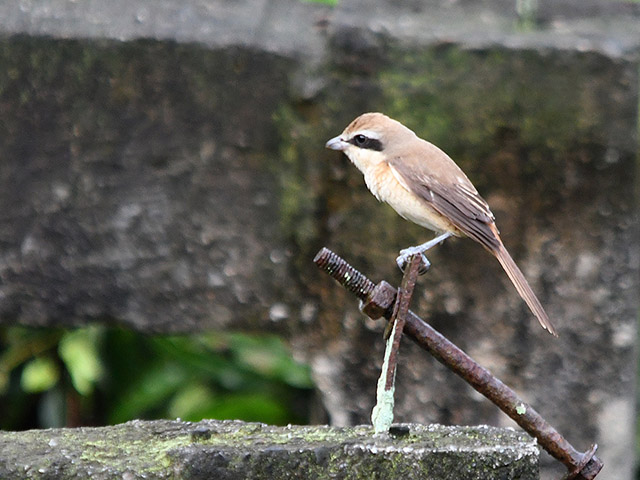
The harsh vocalizations of Brown Shrikes were prominent on this cold and gloomy morning. Autumn migration is well on its way and the presence of these common migrants was not unexpected.


I also came across a juvenile Tiger Shrike in the vicinity and this species is more of a passage migrant than a winter visitor to this site.


A pair of Olive-winged Bulbuls decided to join in the chorus and their calls are definitely easier to the ears.


Intermittent sunshine brought hope to my cause and it also brought out a pair of Greater Coucals to sunbathe and preen. The pair was tolerant to my presence which is not always the case. I took the time to appreciate their good deed with the Nipah fronds provided an interesting backdrop for my captures.


As the weather improved, I could hear the calls of Blue-tailed Bee-eaters overhead. It did not take long to locate these graceful species as they were out hunting for flying insects.


Flocks of Asian Openbills soared across the sky as they move from one location to another in search of their favourite morsel – snails.


Common as it might be, the call of the Yellow-vented Bulbul is still bubbly and sweet. As scrublands is one of its preferred habitats, a healthy population resides in this area.


Another vocal species that was out and about was the Common Iora. A pair was causing a real ruckus among the low bushes and with a little perseverance (and luck), I managed to obtain what should be the photo of the day for me. In non-breeding plumage, both sexes are very similar to each other and I would assume the paler individual on the right is the female.


One of the most striking species you can find living nearby or even within human settlements is the male Pink-necked Pigeon. And to have two in a single frame had me trekking along the muddy riverbank for a better image.


The male Common Flameback that occurs in similar habitats, is a worthy rival to the former in terms of aesthetic appeal. Unfortunately, today he was hesitant to reveal his true beauty.


Like an oversized feather squirrel, a Green-billed Malkoha scurried along the canopy level with much haste leaving me with nothing more than images of empty branches. However a second bird, presumably its mate, stayed put just long enough for a couple of shutter clicks and the images turned out better than I had anticipated.


I see Brahminy Kites on wings more often than at rest. Despite the less-than-ideal shooting condition, this encounter with one of the resident kites perched on a lofty tree crown was rather enjoyable.


Going into the fourth hour of my Big Day, the weather started to turn for the worse. The sky darkened and the winds started to pick up momentum. Retreat was the only logical solution as I really did not fancy riding across the Penang Bridge during a thunderstorm. A Water Monitor Lizard made me delay my journey home. Although this massive reptile does not alter the outcome of my Big Day, it was impressive enough to conclude my blog post for this time.


Thursday, 18 March 2021

A morning with five kings


The breaking of dawn saw flocks of Asian Openbills emerging from their roosts to forage within nearby vicinities and beyond. A few decided to try their luck along the river skirting the Air Hitam Dalam Educational Forest. The Malaysian government has loosened the movement control order allowing me travel within my home state and I found myself back at this locality for a few hours of much-needed birding. Of late, I am feeling somewhat like a caged bird with all the restrictions in placed.


When I turned around to let the Openbills carry on with their daily routine, I found that the storks were not the only ones being watched. A village cat has taken a keen interest in my presence. A friendly gesture of clicking my tongue was all it took to have the feline rushing over and showering with me affection.


The morning, as expected, was sunny and beautiful. I decided to try my luck along the river trail with my new companion in toll. The walk, however refreshing it may be, failed to produce any unexpected species.


I cannot recall ever seeing the migratory Whiskered Tern hunt above the murky water here before but one was certainly at it today.


A dead tree on the river bank must be to its liking as the elegant water fowl frequently returned to rest and preen in between forays.


Two pairs of Collared Kingfishers were proclaiming territories along this short stretch of riverside forest and between them, particularly drowned out all other sounds with their raucous vocalizations. Unfortunately, good views were hard to come by. The birds were restless probably due to the presence of rival birds.


I could also hear a pair of Stork-billed Kingfishers calling persistently nearby. For a change it was not too hard to trace the call back to the source this time and the massive Stork-billed Kingfisher, is always a sight to behold. By the end of the trip, I managed to rack up 3 more species of Kingfishers (Black-capped, White-throated and Common Kingfisher) making these striking birds one of the main highlights.


A Crested Serpent-Eagle surveyed its domain from a lofty perch. Looking quite majestic against the clear blue sky, I naturally took the time to enjoy the view. At this hour, food was probably on its mind. Reptiles mainly form its diet but I suppose anything it can overpower will be in the menu as well.


With the migratory season coming to an end, the Black Kites that grace this locality with their presence will soon undergo the long journey back to their breeding grounds. A flock of 7 birds flew towards my direction before dispersing to the nearby paddy fields to hunt. I suppose this would be my last sighting for this season.


The commercial fish ponds next to the reserve attract water birds like egrets and herons for obvious reasons. It is a private property but the owner do not usually mind my intrusion. Of all the species present today, the smallest one outshined the others with its lovely breeding plumage. In fact, the Cattle Egret is the only one found here in Malaysia that develops some plumage colouration when it is time to breed.


The Cattle Egret shared the limelight with a few Chinese Pond-Herons that were also looking their best in breeding colours. The Herons were more suspicious of my presence and it took effort to gain enough of their trust in order to obtain some images.


A banana leaf was somehow able to provide this non-breeding plumaged Pond-Heron with a sense of security. The partial concealment and angle of the Heron did not make it an appealing capture despite my close proximity.


Waders do not occur in good numbers at this location and even this Wood Sandpiper, one of the commonest species, might actually be a new site record for me.


The tendency to burst out alarm calls of the Red-wattled Lapwing will often reveal its presence. But not this one. It stood briefly on the embankment and just coolly strolled away upon my approach. When the Lapwing was finally out of sight, I decided to take my leave before I outstay my welcome here at the ponds.


In the freshwater swamp forest proper, there was not many opportunities for photography. A Mangrove Blue Flycatcher was singing from the darkest part of the undergrowth and when I eventually obtained full view of the bird, a handsome male, he had my undivided attention.


And he was not alone. The sole Indochinese Blue Flycatcher was also in the vicinity and it is always heartening to see her still doing well after all these years.


As I made my way to the car park area, I was surprise to see a pair of Greater Coucals confidingly loitering about the rubbish dump area. They were in search of food and I do not think this species scavenges. They were probably after scavengers there.


I do not come across this beautiful bird so close and in the open like this often enough and this opportunity was much welcomed. I made myself as unintimidating to the pair as possible nearby and savoured the moment. On this occasion, both the birder and photographer in me were utterly satisfied.


The Greater Coucals provided glimpses of this site’s former glory days and just about enough to keep me hopeful that one day the Air Hitam Dalam Educational Forest that I love so deeply at one point in time will rise up once again.


Wednesday, 19 February 2020

Experiences count too


It is customary for me to get to know my guests before we partake on our birding excursions. Apart from being hospitable, it allows me to better plan for the excursion. My latest guest is from the US and is an avid birder. Nothing out of the ordinary until he mentioned he has seen more than 5,000 species of birds, conduct birding tours to Central America and written two birding books about certain species found in the region. To say that I was anxious while on the way to pick up Joe for our first day of birding would be an understatement even though this is his maiden birding trip to Southeast Asia.

On route to our first destination, the mangroves of Sungai Batu in Kedah state, I came to know that Costa Rica is one of his favourite birding destinations where it is not too difficult to surpass 250 species for a big day. Thankfully, it also came to my knowledge that pittas are one of his targets (and almost every other visiting birder as a matter of fact) and I knew exactly where to get one. It was a beautiful morning upon our arrival and soon, we found ourselves in the company of the feathered residents of this swampy domain. One of them is a common but beautiful rail – the White-breasted Waterhen. This species is known to be aggressive at stakeouts but today, it was very well behaved.


Most species were new to my guest and as the lifers started to pour in for him, there was one bird in particular that we were eagerly anticipating its arrival. Like an answered prayer, from the corner of my eye I caught a flash of colours hopping along the muddy terrain and I have enough field experience to tell what bird it was from its jizz. And a quick gesture of the hand had Joe staring at the direction of the approaching Mangrove Pitta.


Joe and I have something in common and that we are both very passionate about birds and birding. His reaction towards his first Asian Pitta is proof why pittas are such remarkable birds and every encounter, magical. Something that I always swear by. It was an exhilarating moment even for someone who has seen almost half of the world’s birds as the Mangrove Pitta revealed its full splendour and charisma right in front of us.


The Little Cormorant is a recent colonizer from Thailand but their numbers are nothing near the Asian Openbills’ phenomenal invasion to our country. It is shy by nature but I found that it can be confiding when sunning itself. I have a soft spot for sizeable water birds and the Little Cormorant fits the criteria. Judging from Joe’s efforts for better shots of this sleek water fowl, I guess we have another thing in common.


The Little Cormorant was surprisingly comfortable despite our intrusion. Soaking in the sun and preening away, this is one of the friendliest Little Cormorants I have ever encountered here in Malaysia.


From there, we made our way further north and as we started our casual trek into the pristine forest of Bukit Wang, the majestic trees of this birding hotspot made quite an impression on Joe. The birds are important to him but sometimes, experiences matter just as much. In the presence of these giants of the natural world, he was in awe. But when the territorial calls of the Chestnut-necklaced Partridge shattered the serenity of the locality, the birds took back the reins as this game bird is one of the rarest bird species in the country. A little effort and luck later, we managed to locate the partridge in the gloomy understorey of the forest. It was a mesmerizing sight. Half hidden among the shadow and undergrowth, the partridge belted out its loud and haunting call. The vocalization is usually the first indication of its presence but unfortunately, it is a sound very few sites in the country have.


The adorable Short-tailed Babblers performed well despite only appearing later in the day. Scurrying around the leaf litter of the forest floor, these terrestrial species is a pure delight to observe and photograph.


Another denizen of the forest understorey is this migratory male Chinese Blue Flycatcher. Spring migration will soon commence and this uncommon migrant may or may not return to this site the next season. Only time will tell.


There was one last location to visit before calling it a day. Things have started to pick up at the swamp forest of Air Hitam Dalam and it was a good choice to wind down after a day of birding. We did not have to wander far before we came across the first notable species of bird. The Square-tailed Drongo-Cuckoo is a regular migrant to this locality. Although it was a distant shot on a manmade perch, the bird possess enough finesse to have our undivided attention.


Then, the unexpected took place. Rain clouds swept in from distant skies and engulfed the vicinity. We took shelter in one of the gazebos overlooking the river as the raindrops fell onto the dry earth with much velocity. It has been more than a month since we last had rain like this and luckily, it was short lived. When it trickled to a stop, the migratory Black Kites started to stir again from their usual roosting trees across the river. When one of these elegant raptors alighted on an exposed to dry itself, it signalled the end of the downpour.


The usually elusive Greater Coucal was out of its comfort zone as it was trying to recover from the unexpected rain. Somehow, the colouration of this beautiful cuckoo set against the dry palm frond made the photo stood out for me. Although this photo lacked quality in certain areas, it has an appeal that I find hard to resist. It could also be due to the fact that we had a few brief encounters with the Greater Coucal earlier in the day in which none offered more than a quick look. But this individual stayed put long enough for even its image to be obtained. Another experience worthy of praise? It certainly was and best of all, it involved a bird.


It was a memorable first day of birding for my American guest. Apart from the birds, other wildlife we encountered throughout the day played their part in the success of the trip. Here at Air Hitam Dalam, the Plaintain Squirrel should be the only species of squirrel to occur. There is a healthy population within the borders of this park and they can be seen on every visit. Its adorable outlook may not work as effectively on a local like me than it would on a foreign visitor. But this image of one just lazing on a tree branch and enjoying the cool post-rain condition is as good as any to wrap things up for the day. Tomorrow we will be heading south and hopefully, be able to maintain today’s momentum of cracking birds and good experiences. That will be covered in my next post.