Hor
Kee came back from Chuping last Sunday with some exciting results and the
sighting of the Racket-tailed Treepie was the one that really caught my eye. It
has been a decade since my one and only sighting of this enigmatic but scarce
northern species. And I have been hunting for a chance to obtain its image ever
since. This was my third visit to Chuping this season and I was really hoping
for something extraordinary this time. In the end, I dipped out on any would-be
lifers and treepies as well but even so, Chuping still provided a memorable
trip. I did not only have Choo Eng as my companion this time but Hor Kee as
well.
I
mentioned in one of my previous posts that the Asian Pied Starling has been
officially removed from the Malaysian checklist and they performed well during
that visit. Much to my delight, the starlings put on another splendid
performance for the visiting birders again. Since this is one of the few places
where it is regularly seen, I took as many images as they were willing to
provide.


The
status of the Red Collared Dove is also shrouded with uncertainty. Initially,
the birds that occur in the Peninsula Malaysia were either escapees or
introduced birds. Recently, there is a strong indication that the birds that
occur in the northern region of Peninsula Malaysia are natural colonizers from
the north. Like the starlings, Chuping is one of the few strongholds for these
beautiful doves. Here, they congregate in exceptionally high numbers and for the
record we counted no less than 300 of them today.

There
are a few other high-numbering sightings as well this trip. The migratory
Black Drongo is common in suitable open country habitats throughout Peninsula
Malaysia but today in Chuping, it is second only to the doves with an
impressive figure of more than 100 individuals. With so many present, you would
have thought I would be able to muster a better image than this one. However, the Black
Drongo is usually a skittish bird despite occurring in open areas and they are
not one that finds strength in numbers.

The
Black-winged Kite is a petite raptor also found in open country and scrubland
habitats. What it lacks in size and tenacity, it makes up in grace and beauty.
A hovering bird is quite a sight and my poor attempt at capturing the moment
does it no justice. It is normally found singly or in pairs. However when it
comes to Chuping, you can throw the rule book out the window. Along a single
electrical cable between two pylons, we counted 17 individuals.

We
also bumped into KC and Swee Yian from the MNS Perak Branch Bird Group shortly
after our arrival at the locality. It was great to meet up with them again
after such a long time.

A
circling Oriental Honey-buzzard caught our full attention. This species with
its highly varied plumage can sometimes be mistaken for something else and vice versa. We just wanted to be sure since we are at the hottest spot in Peninsula
Malaysia in terms of rare migrants (and temperature).


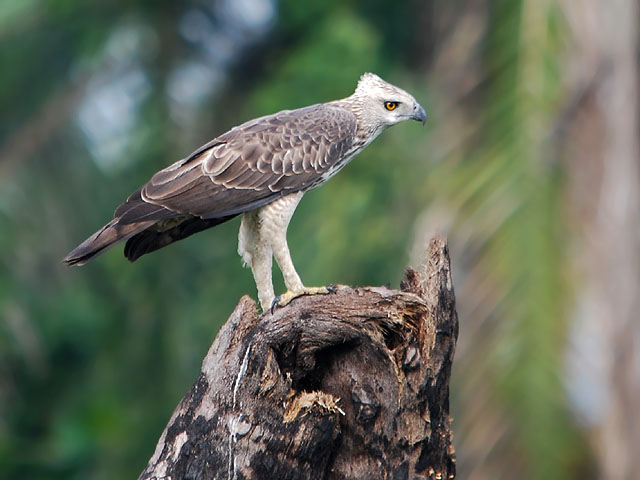
Raptors
ruled the day at Chuping as we stumbled onto the path of migrating Black
Bazas. These are probably the last few to pass through as the raptor migration
period was already tailing off.


Among
the Bazas, there was also a lone Grey-faced Buzzard and it was my first of the
season. The distance prevented me from obtaining better images of this striking
species. I guess there's always next time...

The
grasslands here play host to wintering harriers every season and it is one of
the best places to observe these graceful raptors. The Eastern Marsh Harriers and Pied
Harriers are the two species found here so far. Today, the smaller Pied Harrier
outperformed its larger cousin. I managed to obtain images of all three of its
normal plumage variances. To start things off is this strikingly-marked male
quartering his domain in search of breakfast.


A
confiding female did her hunting close to our stationery vehicle for a prolonged
period of time.

The juvenile is substantially different from the adults. Its overall dark plumage also makes it quite recognizable which is something you do not get to enjoy in most juvenile raptors.

Here is a male Eastern Marsh Harrier and not a female Pied Harrier as I had initially put it down as (thanks, Dave!).

Chuping is also a regular wintering ground for another exceptional raptor. Rare throughout the rest of the Peninsula, the Common Kestrel is undoubtedly one of the star birds of this birding hotspot. Today's encounter was the best so far because we managed to observe a female bird preying upon what looked like an insect. And I managed to obtain the best image of this falcon to date.
Chuping is also a regular wintering ground for another exceptional raptor. Rare throughout the rest of the Peninsula, the Common Kestrel is undoubtedly one of the star birds of this birding hotspot. Today's encounter was the best so far because we managed to observe a female bird preying upon what looked like an insect. And I managed to obtain the best image of this falcon to date.


We
came across a total of 3 individuals throughout the trip. Unfortunately, this female
perched on a dead tree was slightly blocked and our attempt to re-position our
vehicle saw our subject gliding away towards the far horizon.

A
small little mammal foraging along the access trail turned out to be a
mongoose. Typical of the species, no second chance was given for improvement
shots as it scrambled back into cover once it sensed our presence.

My
third visit to the Little Cormorants’ pond finally yielded a reasonably close
shot. This lone bird was slightly more confiding than usual as it rested among the
reeds. So, I guess third time's a charm after all.

The
pond provided another pleasant surprise in the form of a female Pygmy
Cotton Goose. This species, together with the Lesser Whistling Duck, are the
only resident ducks in the Peninsula. However, the goose is a rarer bird and I
have only recorded it on only a few other occasions elsewhere. It was personal
new record for this site and a fitting end to another great trip to the great grasslands
of Chuping.

As
we were on the road heading back to Penang, Hor Kee received a text message
from KC. They just had a family of 3 Racket-tailed Treepies at the exact
location where we were searching for them just before we decided to call it a
day. I guess if it is not meant to be, it is not meant to be...