Pages

Thursday, 22 December 2011

21/12/2011: Mainland Penang


I was back at the marshlands of Pulau Burung at the break of dawn but despite the good weather, there was nothing much about this time. All the scarce migrants like the Garganeys and Little Stints were no where to be seen. After about an hour, I decided to search for greener pastures elsewhere. I cannot recall the exact reason why I chose to visit Batu Kawan but it turned out to be one of the most crucial decisions that I have ever made in my life.

Upon my arrival, there was this particular dead tree with quite a few large birds resting on it. However, two of them had somewhat odd body shapes. Once I had my binos on them, their identification was crystal clear even at that distance – Oriental Darters! Apart from the historical records, there has been only one confirmed sighting of this enigmatic waterbird in Peninsula Malaysia and that was last year at Kinta Nature Park in Perak. I then quickly took a few record shots just to make sure I have photographic evidence in case the birds decide to disappear before I could get closer. I guess I have learned my lesson well from all my previous rarity sighting records where I was not able to support my finds with photographs and inevitably, resulted quite negatively on me.


Anyway, they were reasonably tame as I got as close as I possibly could by car. Using my car as a hide, I took quite a number of shots and the Darters were more than happy to oblige. As far as I could tell, both of them appeared to be adults birds in non-breeding plumage and there was not much difference in terms of colour and size.


The Darters were exhibiting their typical behaviour of drying itself and preening on exposed perches like this dead tree. It is most probably they had completed their morning hunt when I came across them. Much to my delight, my presence did not seem to bother them at all and I was given the opportunity to observe them going about their normal routine.


Looks like Christmas is early again for me this year and this lifer is one that I have been keeping an eye out for as long as I could remember. It fulfills most of the criteria that I look for in a bird that is worthy to be considered a mega lifer. It’s rare and it’s big and furthermore, it’s a waterbird. And even the moderate quality of the images due the distance and lighting did not seem to matter all that much. What is important is the fact that I was lucky enough to be at the right place and the right time to enjoy certainly one of my best birding moments ever. Merry Christmas and I hope you guys will enjoy your stay here…


Unfortunately, my encounter came to an abrupt end when a marauding White-bellied Sea-eagle came a little too close for comfort and caused the waterbirds in the vicinity to panic and flee - including the Darters. In flight, their long narrow wings carry them with ease and their necks are held outstretched. They stayed relatively close to each other as they flew and disappeared from sight among some vegetation at the far distance. I am not sure if the 'handshake' effect of these flying shots are due to my camera settings at that time or I was still recovering from all the excitement. Anyway despite a careful search of the area, I failed to relocate the Darters again.


And so, I finally had the time to pay homage to the other birds present. The marshlands here are quite rich in birdlife and there are always quite a number of large waterbirds around like this subadult Grey Heron.

The plumage of this juvenile Purple Heron blends rather well among the adjacent grasslands.

During the migratory season, there will be a large influx of Egrets to the locality and the Great Egret is one of the four species that have been recorded here.

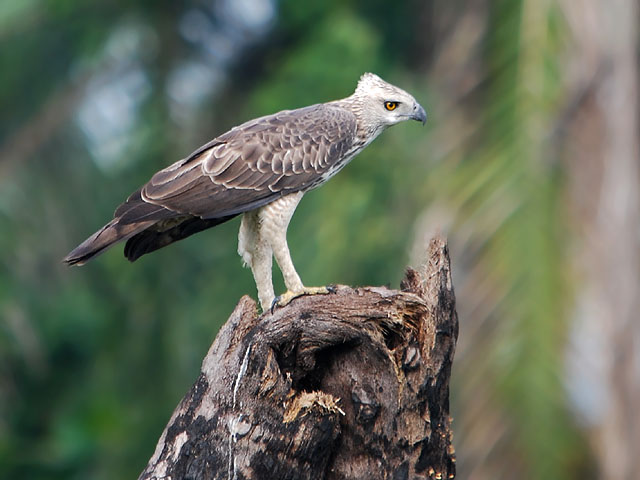
The Changeable Hawk-eagle is another common sight at the marshlands and I photographed this one while it was contemplating what to have for breakfast from a dead tree stump.

As for the waders, not many were around. The Red-wattled Lapwings are quite conspicuous and their presence usually does not go unnoticed.

This Terek Sandpiper was rather wary of my approaching car and I had no choice but to photograph it from a distance.

My next destination was the scrublands and mangroves of Juru. The Black-capped Kingfisher is one the most striking of our commoner kingfishers. However, it is terribly shy and this shot is one of the better ones I have managed to obtain so far.

The Brahminy Kite is a common resident along the mangrove belt here and two were seen patrolling the skies today.

At my last destination, the Sungai Dua paddy fields, I spent some time photographing this rather confiding Blue-tailed Bee-eater that was posing so elegantly against a nice green background.

At one of houses next to the fields, I also managed to photograph this Mongoose foraging inside its compound. Although it is not uncommon, this small but deadly predator is seldom seen in the open for long periods of time.

Wednesday, 21 December 2011

20/12/2011: Sungai Sedim (Kedah)


I have only gone a short way up the Gunung Bintang access road when I came across a splendid male Siberian Blue Robin foraging just up ahead and this is a species I long to have in my archives. At this early hour the lighting was terribly poor and I had an impossible time trying to focus my camera on the bird. Then something scared the living daylights out of the Robin because it suddenly dived into the undergrowth while emitting alarm notes. And I was pretty sure it wasn’t me. While I was still trying to figure out what took place, I noticed a slithery movement on the road and it was the culprit that made me miss my shot – a Variable Reed Snake. However, it was too small to possibly hunt the Robin but I guess it was a case of better be safe than sorry for the Robin.


That little episode got things rolling for this trip and what a trip it turned out to be. During my 5-hour visit, I managed to record two lifers and more than 60 species including a few very notable records. Unfortunately, the key word here is record. My first lifer, a female White-throated Rock-thrush, stayed in sight long enough for a positive identification only. I did manage to take a shot of my second lifer, the Brown-chested Jungle-flycatcher, but the image turned out to be pretty insignificant. Not only because of the poor quality but it only showed the back of the bird.

I could hardly contain my excitement when I came across a pair of foraging Chestnut-backed Scimitar-babblers. Apart from the fact that this is the first time I have seen this species here, they are truly striking birds and always a delight to observe. I guess you just have to take my word for it…


This male Orange-breasted Trogon on a slightly exposed perch was probably the best bird image of the trip.


A total of 4 Hornbills were recorded at the locality today. The Rhinoceros and Bushy-crested Hornbills were heard calling. A pair of White-crowned Hornbills flew just above overhead with the dense forest canopy between my camera and them. It has been almost 8 years since my first visit to this forest reserve and the distinctive calls of the Helmeted Hornbill can be heard on almost every visit. You can only imagine the amount of pleading and swearing that went down when I took this shot of this amazing bird.


One image did turn out quite to my liking but it was not of a bird. This beautiful Dragonfly was resting about eye level at the forest edge and the green foliage provided the prefect background.


This millipede making its way about some thickets wrapped things up for a memorable trip despite the disappointments from a photographer’s point of view.


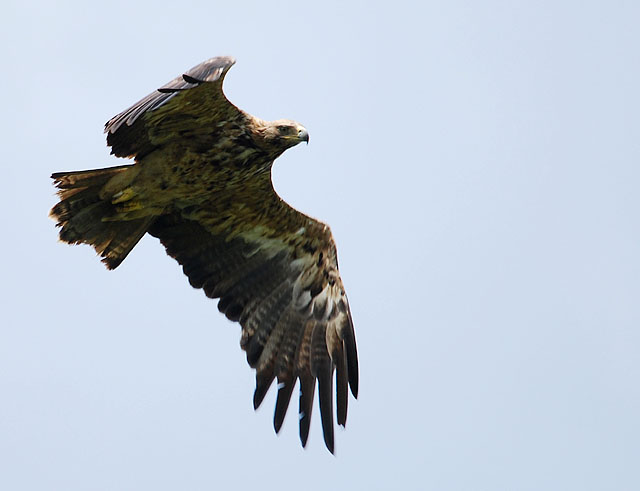
On the way home, I made a quick detour into the paddy fields at Kubang Semang to check on the Temminck’s Stints only to find the patch been completely planted with new paddy shoots. However, an immature Eastern Imperial Eagle circling over the fields put on quite a performance and unlike photographing forest birds, it is almost impossible to miss a bird as huge as this right out in the open.


Monday, 19 December 2011

17/12/2011: Mainland Penang


Upon my arrival at the marshlands at Pulau Burung, I spotted the silhouette of a large raptor perched on an electrical cable and it turned out to be one of the resident Changeable Hawk-eagles. Using the cable as a lookout point to hunt, it particularly ignored my presence and concentrated fully on the task at hand. Unfortunately, the lighting conditions prevented me from obtaining better shots and that was a real shame as this is probably the closest I have ever been with this bird of prey.


Whilst photographing the eagle, a second eagle alighted on the cable that was directly above my car but out of my field of view. There was nothing I could do to about it because at that close distance, any movement from me or my car will certainly spook the eagle. After a few minutes, the second eagle probably did not feel comfortable in my presence and flew off. And I continued to admire and photograph the first eagle to my heart’s content.


I was delighted to see the two Garganeys settling in well here and hopefully, in time to come will gradually become less wary. Until then, distance observations like today will just have to do.


Meanwhile at the ‘Little Stint Corner’, there was a high level of bird activity. The Little Stints were foraging along the slightly flooded patches as usual. Unlike my previous visit, the stints came quite close to my stationery car and provided a fair share of good photographic opportunities.


The Long-toed Stints are also another regular at this patch and I guess the condition here really suits both these species of stints.


I find it a little odd that at this time of the year this Little Ringed Plover has not even started to moult into winter plumage. Perhaps it’s just a little reluctant to shed this striking plumage for the much duller one. 


At my second birding locality of the day, the paddy fields of Bandar PERDA, it was again a raptor that started things off. For the third consecutive season, the mighty Eastern Imperial Eagle is spending the winter here. Welcome back, big guy.


When I drove along the adjacent paddy fields of Kubang Semang, the Grey-headed Lapwings certainly made their presence felt with their alarm calls long before I actually laid eyes on the first flock of these uncommon but regular winter visitors.


The graceful Black-winged Stilts are also back for the winter and like the former, filled the locality with their distinct calls as well.


A slightly flooded and muddy patch of the paddy fields certainly appeared quite promising to me. When I got closer, my hunch was right and I noticed several waders foraging in the vicinity. There were the usual Little Ringed Plovers, a few Wood Sandpipers, Common Sandpipers and Long-toed Stints as well. As I was scrutinizing the waders, I thought to myself that I could sure use a Temminck’s Stint now. And one came into view.


I wasn’t sure if I was hallucinating until a second bird decided to join the first one. It saved me the task of having to pinch myself. This is my second only sighting of this rather uncommon species and it certainly became the highlight of the day. And just as I thought things can’t get any better, I spotted a lone third Temminck’s Stint foraging slightly further away. I have a feeling this migratory season will be a good one – a very good one indeed.

Tuesday, 13 December 2011

The Honeyguide


The Malaysian Honeyguide is undoubtedly one of the rarest and least documented resident bird species in Malaysia. During our maiden visit to the Bukit Wang forest reserve in Kedah back in 2010, Choo Eng heard the Honeyguide’s distinct call and it was the first indication of its occurrence here. In fact, the call is usually the only telltale sign of its presence because it usually takes some effort and a little luck to successfully trace the call back to the bird itself.

In time, we realized that it was a male bird and he has this habit of returning to the same spot to call for prolonged periods. This “singing perch” provided excellent views of the Honeyguide as he will be quite tolerant to human presence. Numerous birders from every corner of the country and beyond came to enjoy the opportunity to observe this rarity in the flesh and it is all courtesy of this particular behaviour.

The decision of the local council to repair a hut that was next the singing perch was the reason the Honeyguide kept out of sight momentarily at one time. I guess all the commotion was simply too much for the poor bird to tolerate. And just when it seems that all was lost, he reappeared at another singing perch about a few hundred meters from the original location. It is at this second location that most birders managed to obtain reasonably better images due to the easier shooting conditions there.

Now almost two years since our very first encounter, the bird has apparently left the area again. And from the look of things, this time it is for good. The actual reason behind the latest disappearance remains a mystery but one thing is for sure, the Malaysian Honeyguide is once again a rare denizen of our forest.