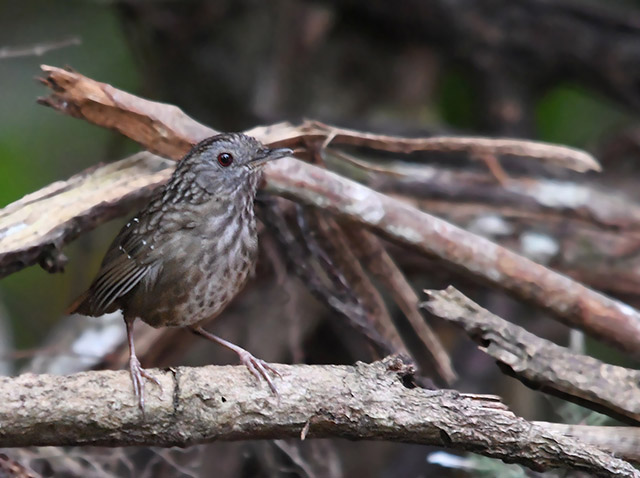
EarthLodge is one of the most remote birding spots in Peninsular Malaysia. It is located
along the Muda River deep in the wild interiors of Kedah state and certainly a haven for both wildlife and wildlife enthusiasts. It was a “working” holiday
for me because I have been commissioned by the founder of the establishment,
Hymeir, to guide a French couple. Although being a bird guide never feels
like work to me. The only access is by boat; electricity is by a generator that
runs for the first half of the night and there is not much use of your smart
phones here except for capturing memories of the trip. That is all part of the charms
of Earth Lodge. As we disembarked onto the muddy banks upon arrival, the sounds
of the forest greeted us to our home for the next few days.

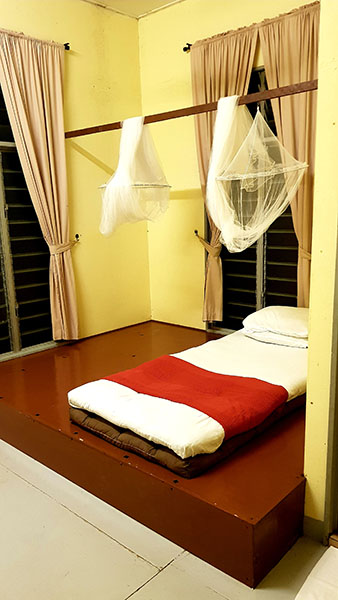
The
accommodations are reasonably comfortable and I have no complains about the
food provided either. My priorities have always simple and the deciding factor
for every location I that visit lies in how good is the birding.


We
had excursions by boat along the Muda River on a daily basis because that is the only
way to obtain a few of the main targets that included the mighty Asian Elephant
and during this time of the year, the migratory Plain-pouched Hornbills.

The
tusker is the mascot of Earth Lodge and since we are dealing with wildlife here,
nothing is guaranteed. And unfortunately, the closest we came to these giants
of the forest were their tracks and dung.

Thankfully,
we did not miss out on the Plain-pouched Hornbills. Although not really in the
numbers we were hoping for but a traveling flock set against the lush landscape
of the locality is quite breath-taking.

We
recorded every species of hornbills that occur in Malaysia during our stay here
except for the Bushy-crested Hornbill. Being the commonest species, it came as
no surprise that the Oriental Pied-Hornbill was the only other hornbill that I
managed to capture. Bird photography in Ulu Muda (the general area where Earth
Lodge is located) is challenging. The dense vegetation, the skittish
nature of most of the birds, the taxing humidity and in certain ways the
distraction of the leeches are just some of the contributing factors.

In
fact, the river cruises provided the best photographic opportunities of the
trip despite the constant swaying of the small boats that were used. The Lesser
Fish-Eagle is the most prominent raptor along the slow-flowing waters of the
Muda River and was recorded during every cruise. Its preference for exposed
perches overlooking the river eased efforts in locating this beautiful raptor.


Occasionally,
we will come across individuals that are more confiding than usual and that is
when the wilds of Ulu Muda truly come to life and flaunted their full glory.

Flocks
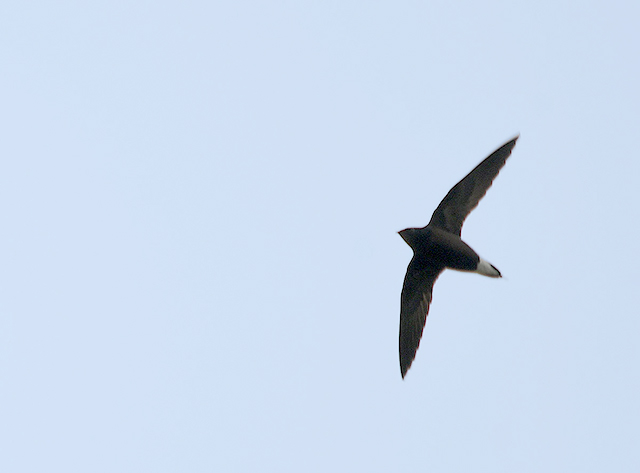
of Brown-backed Needletails will normally patrol above the river in the evenings
and they were a sight to behold. It is such a thrill to watch these huge swifts
slice across the sky with such ease and velocity. With audible wingbeats for added
dramatic effects, even the non-birders in our midst are left astound. My feeble
photographic attempts to capture one of the fastest birds in the world
inevitably left much to be desired.
The
discovery of a pair of roosting Dusky Eagle-Owls was not only the highlight of
the trip but one of the most significant chapters of my birding life. One of
the birds was more exposed than the other and it naturally had our undivided
attention. Our boatmen skillfully rowed us close to the flooded trees and the
blazing yellow iris of this nocturnal predator had everyone spellbound. The
Dusky Eagle-Owl is not new to me but this encounter, rocked my world...

When
the owl took flight, I initially thought the show was over. However, the best
was yet to come. It alighted on an exposed perch nearby and proceeded to
sunbathe. And now we had one of the rarest and largest species of owls here in
Malaysia right out in the open in broad daytime and appeared to be unperturbed
by our intrusion into its domain. It was almost too good to be true.

Throughout
my time at Earth Lodge, we recorded another three species of owls and frogmouths.
Seven nocturnal birds in a single trip is something I rarely have the privilege
to enjoy. However, none of the others came close to the episode with the Dusky
Eagle-Owl as they were only heard. The tiny Reddish Scops-Owl called practically
every night behind our lodges and my failure to locate the bird was a bitter
pill to swallow. Anyway, no one said owling is ever easy. Unless the owl unexpectedly
gives you a once in a lifetime experience like this obliging Dusky Eagle-Owl.


The
evening cruises usually conclude after sunset. And twilight in the
wilderness of Ulu Muda is mesmerizing and therapeutic. I can think of no
better way to unwind after a long day of birding than to sit back in our little
boats and soak in the ambience. We often seek solitude to escape the hectic modern-day
world and here in the embrace of Mother Nature, I have found mine.
.jpg)
.jpg)
Birding
along the forest trails here can be tough and frustrating typical of most
lowland forests in Peninsular Malaysia. Ulu Muda is home to a huge variety of
intriguing species including pittas, trogons, broadbills, woodpeckers and many others.
Like their nocturnal counterparts, these birds were more often heard than seen but
we faired relatively well. At the time of writing, the White-crowned Forktail was
the latest addition (no. 330 to be exact) to the checklist of Earth Lodge but
this striking stream dweller managed to evade my photographic efforts.

When
it comes to photography, priority is always given to my guests. That and the
challenging conditions here makes this image of a female Green Broadbill taken
along the forest trails the only one worth sharing.

The
compound of Earth Lodge is a treasure trove of birds. My French guests and I
spent a considerable amount of time just observing the birds passing through or
foraging in the vicinity. Since it is slightly more open, I had better luck
with my photographic efforts. There are a number of birds that are regularly
recorded here and the persistent vocalization of the Rufous-tailed Tailorbird is
a common sound of the lodge. A little effort is usually required to see this
little denizen and judging from this image, obtaining good photographs will
require a whole lot more.

Surprisingly,
bulbuls are not as common as I would have expected. Lone birds are occasionally
recorded like this Red-eyed Bulbul resting in the canopy level.

The
handsome male Blue-winged Leafbird will serenade the vicinity with his radiance
and vocal abilities whenever he makes an appearance. He was also one of the few birds
I encountered that was confiding enough for a close approach.

A
stream flows along one side of the lodge forming a natural border. This
riverine habitat shelters the alluring Black-and-red Broadbill but it seldom
reveals its name’s sake. I had to wait until my last morning at Earth Lodge to obtain
a decent image of it.

Birdwaves
sometimes sweep through just above the rooftops of the lodges. This natural phenomenon
is like no other but the frantic pace of most of the participants is beyond my
photographic abilities. During one such wave, a young male Rufous-winged
Philentoma must had struggled to keep up with the rest and took a breather on
an exposed perch along the lower storey of the forest.

As
expected, the presence of other wildlife helped complete the experience at
Earth Lodge. While owling around the lodge, we could not help noticing the
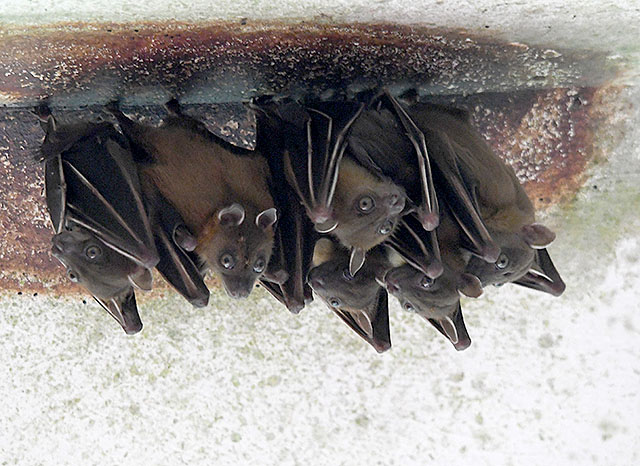
presence of bats as they made their way to and from their roosts which are
under the roofs. Eventually, we found a small group roosting in the daytime and
they turned out to be Forest Short-nosed Fruit Bats. In case you are wondering,
identification of this flying mammal was confirmed by my guest who unlike yours
truly has a much broader range of interest when it comes to wildlife. For him,
there is certainly more to life than just birds.
Affectionately
named Emma by Hymeir after the Latin name of the animal, the Forest Crested
Lizard can be exceptionally confiding and we encountered it on several
occasions. It tends to remain motionless for long periods of time and that made
it an excellent subject for photography. It did abandon its preference for tree
trunks at one time and the image turned out to be my favourite of this
beautiful lizard.

A
skink crawling about the dining-cum-assembly area had everyone’s attention
during one of the days. It was unfamiliar to me as well and I joined in
excitement. The cracks of a tree log provided just enough cover for this
delicate lizard to briefly remain still for its image to be taken. The Yellow Striped
Tree Skink is not only stunning but apparently, it is also relatively
scarce.

There
is nothing delicate about the Large Forest Gecko. As the name implies, it is a
true behemoth as far as geckos go. We came across not one but two of these
impressive lizards hunting on the outer wall of the lodges at night no doubt
attracted by the insects drawn to the lights. A katydid would make a tasty
snack for the gecko as this unwary individual is about to find out.

Insects,
to me, are of another world altogether and there is no shame in admitting it. Identification
can be a real nightmare even for some spectacular specimens like this
caterpillar going about its daily routine next to the walkway of the lodge.

As
a closing to a remarkable five days at Earth Lodge, here are snapshots of some
plants (yes, you read it right) that somehow managed to momentarily divert my attention from the birds.
A total of 122 species of birds were recorded from which almost half are heard
only. So, it was not exactly a walk in the park. It took determination,
patience and luck to glimpse into the secretive world of some of these species.
Nevertheless it is one of the most exhilarating and memorable birding
adventures I have had in a long time. Our daily checklists are in the links
below and they will give you an idea of what can be
expected. However, what the checklists cannot give is the magical essence of Earth Lodge.
For that, you have to visit this amazing place and experience it for yourself.
.jpg)
.jpg)