Pages

Tuesday, 14 February 2023

Pied lifers...


Birders share a common passion which is of course the birds. However, everyone has their own preferences and tastes. For me, it has always been water birds. I find it difficult to explain how a dull water bird is able to complete with a dazzling forest bird but that is how I am built. Anyway, not all water birds are boring. Some are unique and striking like the Pied Avocet. Even before the first Malaysian record was discovered a few years back in Borneo, it has been one of my dream birds. When Peninsular Malaysia’s first Pied Avocet popped up in Batu Kawan, my home state was back in the limelight again.


I managed to squeeze out thirty minutes on the eve of Chinese New Year to tick this mega lifer but a second trip was inevitable because a few seconds of watching this elegant wader in flight left much to be desired. For my second attempt, I had the luxury of time and was greeted by the ever-conspicuous flocks of Black-winged Stilts. It did not take long to locate the distinguished guest but the early morning light and distance was far from ideal for photography.


The Pied Avocet appeared to have settled in well at this wintering ground. It sported a plumage colouration that lack the intensity of a typical adult bird and I can only assume it is a youngster. The lighting gradually improved but unfortunately, not the distance. However, it did not deter me from relishing this encounter. It is a remarkable bird despite its common status elsewhere in the world. And the record shots obtained today will just have to do.


Feeding alongside the Pied Avocet was another rarity but unlike the former, the Pied Stilt is gradually becoming commoner.


I have had relatively few encounters with this species and this individual was given its due attention despite the presence of a much rarer bird.


Sounds unbelievable but there is a third rarity in the vicinity. The Common Ringed Plover is a rare migrant to our shores but caution is needed to distinguish it from the commoner Little Ringed Plover which were present in good numbers. When I finally had the target in my binoculars, both bird and birder were flushed by an over-zealous lorry driver. And there are still those who find it hard to understand why I am not much of a people person. This birding hotspot is slated for development and we actually have to go through an active construction site to reach the locality. Anyway, here is an image of a Little Ringed Plover probably thinking serve me right for ignoring it in the first place.


The Pied Avocet remained in view throughout my time here but not once reducing the distance between us. And I started paying attention to the other commoner birds that were present like this Wood Sandpiper before calling it a day.


Up in the north western tip of Peninsular Malaysia, there is yet another rare water bird waiting to be added into my Malaysian life list. The Eurasian Coot was discovered last year around Christmas and like the Pied Avocet, has found Malaysian hospitality very accommodating. Exactly one week after my Pied Avocet chapter, I found myself at the agricultural lands of Chuping scanning the aquatic vegetation of a big pond for any signs of my would-be lifer. I have recorded the Eurasian Coot before elsewhere in Asia where it is common but nothing is comparable to home soil experience.


It has been showing relatively well since its discovery. I tried to convince myself there should not be any complications and the chances of dipping out is low. But one thing I have learned from my years of birding is never to count your lifers before they are twitched. I searched this pond and the other two adjacent ones as well and all I could find were Eurasian Moorhens and Little Grebes. I guess this pair of Little Grebes was just as surprised as I was that I took the time to capture this mediocre image instead of continuing my search for the Eurasian Coot.


Shortly after, what appeared to be a Eurasian Moorhen with a pale frontal shield smugly swam into view and my life list gets another nudge in the right direction.


Unfortunately, distance again prevented me from obtaining any improvement shots despite the star bird showing long and well for the birder in me.


Chuping is now a pale shadow of its former self. It could be due to a number of reasons but I can bet my bottom dollar it is all caused by humans. A female Pied Harrier floating above the fields was a solemn reminder of the good old days. Another thing birding has taught me is to enjoy whatever it is while it lasts. Sad to say, I have now grown numb to losing good birding locations.


Having said that, this locality remains to be one of the best places to see the beautiful male Red Collared Dove and it has been quite a long time since my last encounter. There will be no reason for this species to stop thriving here as it can readily adapt to living alongside man.


Another species that will not be affected by all the human activities is the migratory Blue-tailed Bee-eater. It is common in open country habitat throughout the length of the peninsular and it is no different here in the vast open landscape of Chuping.


It has been an exhilarating couple of weeks for me and hopefully all this will get me back into the field more frequently. As a conclusion to this post, here is an image of my new ride taken at the Coot Pond and my maiden interstate travel with this beast of a bike was quite an experience as well. I guess motorcycles and the sense of freedom and thrill they provide are a close second to my birding adventures.


Wednesday, 11 January 2023

In search of a rare gull


The Important Bird Area of the Teluk Air Tawar – Bagan Belat coastline injected a dose of exhilaration into the local Penang birding community by playing host to a juvenile Lesser Black-backed Gull. It is undoubtedly a rare migrant to our shores and four enthusiastic birders including yours truly decided to try their luck for this would-be lifer. Birding at this locality is now mostly a maritime affair due to current landscape and restricted accessibility to roosting spots. And the local fishermen now have an additional source of income by ferrying birders around.


A beautiful sunrise, surprisingly, was the first thing to have my attention as we left the jetty. I guess age is making me more susceptible to other wonders of nature apart from birds.


Naturally, anything that remotely resembled a gull was given due attention and a flock of Brown-headed Gulls loitering along the edge of the tide got the ball rolling for this twitching endeavour.


The concrete poles of cockle farms in the vicinity are prized commodities among the gulls and other seabirds. And we decided to scrutinize these manmade perches for our target.


One of our companions caught sight of an odd one among the Brown-headed Gulls but we could not relocate it despite all the effort taken. However, we could still take comfort in observing the commoner Brown-headed Gulls in close proximity with the diffused lighting of the overcast sky as an added bonus.


The most conspicuous species in these congregations is usually the Great Crested Tern and it is no different today. If I should be so bold to add these cockle farms do provide the best photographic and observatory opportunities for this impressive member of the tern family.


Overshadowed by the immense presence of the Great Crested Terns, our attention span on this a lone Common Tern was inevitably brief. And a record shot of this common but elegant winter visitor in order to include it in this post was the least I could do.


There are an assortment of manmade poles sticking out of the water throughout the area and I guess they all should serve a purpose. And for this Whiskered Tern, it was the perfect vantage point to take a breather and watch the world go by.


Then came another non-birding moment during our twitch for the Lesser Black-backed Gull. I was drawn to the view of my island home surrounded by thick clouds from above. It is confirmed. I am diversifying.


The water was rather choppy today and my sea legs were put to the test. Constantly peering through my binoculars and camera did not help the situation. But birders on a twitching mission do not have time to be seasick especially when dipping out is almost a certainty. We resorted to scanning the vast mudflats but the tide is not exactly ideal. The low tide stacked the odds against us and roosting terns like this Whiskered Tern were the closest we got our target bird here.


The waders are back in good numbers again this season but unfortunately, they were spread out too far and too wide on the exposed mud. A few Curlew Sandpipers did wander relatively close to our boat as we entered a river mouth.


It is always a delight to see the adorable Red-necked Stint and this individual was too preoccupied with feeding than to take much notice of our presence. Hopefully, it is taking notice of other dangers present in the vicinity.


A juvenile Brahminy Kite patrolled the shore line for breakfast. This common raptor is predominantly a scavenger but if the opportunity presents itself, an unwary stint would make a good snack.


As expected, a number of Pond-Herons were also foraging along this muddy coastline. At this time of the year, the majority of them will still be sporting their dull non-breeding plumages.


The gleaming white plumages of the Great and Little Egrets make it hard to overlook these graceful water birds. A small flock hunting along the edge of the water convinced me to take a few shots before I carried on with the search for a rare gull.


One species that truly towers over the rest is the Lesser Adjutant. I am always grateful that this stork can still survive in my home state because it is one of my favourite water birds. This individual was rather suspicious of our approach and quickly made its way to a safer distance.


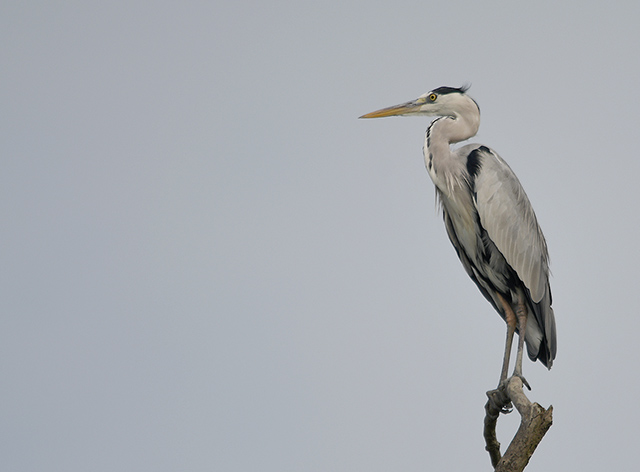
As we made our way back to the jetty, a Grey Heron on lofty perch greeted our return and provided the last encounter for the trip. Disappointment from dipping out on the Lesser Black-backed Gull was inevitable but that is all part of birding and we live to twitch another day.


Wednesday, 28 December 2022

Intriguing Land of Smiles


It has been more than two years since we last set foot on foreign soil and apart from donning face masks, boarding an plane out of Malaysia is pretty much the same as it used to be. A few hours later, we found ourselves in The Land of Smiles and our vacation in northern Thailand began. This was not a birding trip as I was with my better half and birds that I may encounter during our stay here in Chiang Rai and Chiang Mai would be a bonus. This part of the country is quite appealing and some of the views, spectacular. Needless to say, after what everyone has gone through, this little getaway was much anticipated. It has been a long time since I last saw that sparkle in her eyes and this trip certainly brought that out again.


Inevitably, I ended up shooting more typical images on this trip. But a short trip to the highest mountain in Thailand was part of our itinerary and my hopes for some decent birding lie with that highland retreat.


The first birding encounter of the trip took place right outside our hotel along one of the busiest parts of Chiang Rai town. A female White Wagtail was resting on the porch roof. It is a scarce migrant back home and was enough for me to tolerate all the stares of the locals as I tried my best to capture some images of this lovely bird.


Eventually I realized that the White Wagtail is relatively common here and a pair that I came across at the compound of the Chiang Rai’s renowned White Temple was exceptionally confiding as well. However, the pair was restless and time was a luxury I do not possess on this trip as we were part of a tour group.


The Great Myna is also common in northern Thailand but I did not put much effort into capturing its images. This species is spreading down to Peninsular Malaysia and I have had my share of encounters during excursions to Perlis state.


The Fah Lu Huang Garden at Doi Tung was another lush landscaped garden that we visited. The colours and beauty of all the flowers we encountered was much to my wife’s delight.


Me, on the other hand, struggled to obtain memorable birding experiences here. In the end, I had to settle with a couple of bulbuls. The Sooty-headed Bulbul does not occur in Peninsular Malaysia and naturally, had my undivided attention.


Although the Red-whiskered Bulbul is conspicuous with its vocal talents and wicked crest, photographic opportunities did not come easily.


There seems to be a preference to keep Mute Swans are ornamental birds here in northern Thailand and no less than two tourist destinations that we visited had these elegant water fowls as part of their attractions. I had a tough time explaining to the rest of the group why I am not spending more time photographing these domesticated swans...


The agricultural landscape at Singha Park certainly has potential and between the usual sightseeing activities, I managed to sneak off some for brief birding. On one occasion, I was caught red-handed while pursuing a Pied Bushchat at a patch of grassland.


My gut feeling proved to be right when I enjoyed what should be the bird of the trip. A stunning male Burmese Shrike was on the hunt and my lumbering intrusion did not seem to ruffle any feathers at all.


He was a creature of habit and returned to the same vantage point after each foray. The only issue was I was restricted to photographing him from this angle but it was undeniably a memorable experience.


Most lizards tend to blend in with their surroundings but I do not think the same can be said about the Blue Crested Lizard. Half the body, particularly the head region, looked as though this reptile has been dipped into a bucket of bright blue dye. I was transfixed on the lizard as it rested on a tree trunk and this lifer of another nature turned out to be one of the highlights of the trip.


The peak of Doi Inthanon is the highest point in Thailand and the 6°C temperature that greeted us upon our arrival makes it one of the coldest as well. And the views, should be up there among the best especially the alluring sea of clouds.


At the summit, I was given some time to wander around on my own. As expected, this locality was teeming with bird life and the time factor prevented me from truly appreciating all species that were present. I did not do much homework prior to the visit as not to raise too much expectations. However, I do know as a fact the stunning Mrs. Gould’s Sunbird calls this place home. A few sunbirds frolicking about a flowering tree had me sprinting down the access road until I reached the base of the tree. True enough, there was at least 3 Mrs. Gould’s Sunbirds present but the only one that finally made its way to my memory card was an immature male.


The Silver-eared Laughingthrush is a split from the Chestnut-crowned Laughingthrush complex just like the Malayan Laughingthrush back home. This lifer provided the best photographic opportunities for this highland excursion as the bird foraged for food confidingly close to a throng of tourist including yours truly.  


Harsh lighting and the active nature of a flock of Chestnut-tailed Minlas prevented me from including these adorable and striking birds into my photographic highlights for this visit to Doi Inthanon.


The distinct silhouette of a drongo resting on a tall tree persuaded me to put some effort in identifying the species. After further scrutiny, it turned out to be an Ashy Drongo. I am usually grateful for whatever I have been given but when I am in another country, a species that I can regularly encounter back home will not be able to evoke much emotions.


Northern Thailand is an intriguing place and the birds there even more so. This trip was nothing more than a teaser and if I have the chance, I would love to a have another one purely for birding. Some of the best moments from this vacation had nothing to do with birds. They were of my other passion in life which is making memories with the love of my life. And getting sprayed by the powerful Wachirathan Waterfall while getting our photo taken was certainly one such moment.