Pages

Saturday, 12 February 2011

07/02/2011: Mainland Penang

It was been about a month since my last visit to the marshlands at Pulau Burung. As my long festive holidays are drawing to an end, I decided to make a visit to this locality before stepping back into the working world and face yet another year of unreasonable clients and crazy datelines. Anyway back to the birds, the Lesser Whistling-ducks and their ducklings are doing just fine.

The Pacific Swallows are preparing to breed as a couple of birds were seen collecting nesting materials together.

Although I did not come across anything out of the ordinary this morning, I still had quite a rewarding time photographing the regulars as the lighting conditions were simply just right. Even the common Pond-heron provided some killer shots.

The Wood Sandpipers, as usual, are one of the best models around.

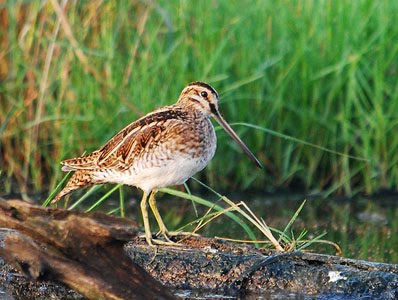
A Common Snipe foraging unobstructed by the vegetation is not something that is regularly encountered of late and deserves my undivided attention.
The White-browed Crakes were a little reluctant to forage in the open areas and remained partly hidden most of the time.

The Collared Kingfisher was the only one of the five kingfishers that I came across this morning that allowed me to take a few shots of it.

At the paddy fields in Permatang Nibong, the Asian Openbills are settling back again and have been recorded more regularly. Two of the storks still remained whiter than the rest of the flock.

Whenever I see an Aquila eagle circling in the sky, I would say a little prayer and hope to see a white pale bar cutting across the underwing. But the Steppe Eagle still remains elusive to me as another Greater Spotted Eagle gradually soared into full view.

Both the Eastern Marsh-harrier and Pied Harrier were seen hunting in the vicinity but I only managed to capture the latter. The female Pied Harrier can be a little confusing at times with the females of a few other rarer species but that was not the case today. Clear views cast away any doubts about her identity and hopes for a lifer.

The Tricoloured Munia is not that frequently encountered anymore in the field but the lighting conditions hindered my aim for obtaining better images of this species.

A confiding White-throated Kingfisher wrapped things up for my Chinese New Year birding excursions.

Thursday, 10 February 2011

05/02/2011: Bukit Wang (Kedah)

I finally found the time to some birding in the midst of celebrating the Chinese New Year. In my younger years, I would have plans like social functions, visiting of friends and families or even dating lined up for every single day of the New Year. Anyway those days are long gone and nowadays, I will usually have a couple of days to visit my feathered friends and spend some quality time with them instead. Anyway, Choo Eng, Kheng Hong and Hakim were my companions for the day as we headed up north to the forests of Bukit Wang.

We were delighted to come across the resident pair of Wallace’s Haw-eagles that Choo Eng and I discovered nesting last season. They were resting in the canopy level of a tree and at this distance the birds know that we are no threat to them. Fortunately for us, the foliage was rather sparse and we could observe these striking raptors with relative ease.

The juvenile from last season was in great condition too and still keeping itself close to the parent birds.

We spend quite a period of time with the family as this species is rather scarce and before the discovery of the nest, I have had only a handful of encounters. Hopefully, we would be expecting another successful season soon.

The resident Bat Hawks were also seen resting in one of their regular haunts. Typical of raptors, the male is slightly smaller than his mate.

A Crimson-breasted Flowerpecker offers a glimpse of the colourful birdlife that are regularly encountered at this locality but unfortunately not photographed often enough.

Thursday, 6 January 2011

03/01/2011: Tanjung Dawai (Kedah)

As our fishing boat steadily made its way into the blue yonder at the break of dawn, I prepared myself for my third pelagic trip. Mt companions for the trip, Dave and Choo Eng, also conducted a quick tour of this new boat that our fishermen friends were using.

It has more viewing areas for us to do birding and the top level even has an all-round view with seating platforms.

The weather was rather gloomy throughout the day with the occasional shower. There were pretty strong winds as well. This is the type of weather that birders wish for during sea bird watching as unexpected surprises could turn up. However, there were no lifers for me this time. But I did enjoy the encounters provided by the commoner species and in the end, it turned out to be quite a good outing. Whenever the fishermen cast their net and start work, the terns will also follow suit.

Both parties yielded the same rewards for their labour...

The Common Terns were the most numerous species for this trip.

There were quite a number of Black-naped Terns following our boat and I took full advantage of their presence to capture as many images as possible.

Their almost wholly white plumage and elegant appearance make them one of the most attractive tern species to be found in our waters. As for me, I find them to be most angelic and they are probably the closest I’ll ever come to angels.

I hardly took any images of the Little Terns as they were in smaller numbers today and did not fly past me that often.

Apart from a brief appearance by a lone Greater Crested Tern, the White-winged Terns were the only other species recorded for the trip.

Tuesday, 4 January 2011

31/12/2010: Mainland Penang

An unexpected public holiday given by the Prime Minister to commemorate Malaysia being crowned the new football champion of the ASEAN countries provided me with the opportunity to do some birding in the morning. At the marshlands in Pulau Burung, the Black-winged Stilts are starting to pair off as the breeding season is approaching. There were very few nests here during the previous season and hopefully, things will improve this time. One pair in particular was extremely confiding and being a sucker for these graceful waders, I started to fill my memory card with images upon images of the two of them.

As for the Lesser Whistling Ducks, it looks like this season was a good one because I could see quite a number of adorable little ducklings swimming alongside their parents.

A Brahminy Kite keeping a look-out for any potential breakfast from the top of a dead tree overlooking the marshlands.

This Striated Heron terrorizing little fishes from its hunting pole along the river mouth.

This Common Snipe was trying to remain motionless to avoid detection and I would have missed it had I not stop to make sure a funny looking Wood Sandpiper was not something else altogether.

And talking about Wood Sandpipers…

When a big flock of Whiskered Terns flew frantically around the marshlands in a tightly knit formation, it could only mean that a predator was hunting them. Upon further scrutiny, it turned out be a falcon that was chasing the terns. I tried my best to photograph the hunt but the distance and speed of the hunt was a little beyond the capabilities of my equipment. I did manage to capture a few record shots in the end and they showed a juvenile Peregrine Falcon with a Whiskered Tern held securely in its talons. Although I do feel sorry for the tern, this is all part of life and the falcon was just doing what it was meant to do – hunting other birds for food. My respect and admiration for Peregrines raised another notch after this display of skill, precision and deadly force.

Upon my arrival at the paddy fields in Kubang Semang, I came across one of the most enigmatic birds that can be found in this type of habitat – the Greater Painted-snipe. Unfortunately, it is also one of the most secretive as well. This is the second time ever that I have encountered the species in the wild but the distance was simply too great to produce any good images. It is quite a unique species as it is one of the few birds in the world where the gender roles have been reversed. The males are much duller-coloured than the females and on top of that, they brood and care for the chicks while the females do not play any part in it at all.

Excitement pumped through my veins when an Aquila eagle glided across my path and started to ride the hot air thermals. I was keeping my fingers crossed that it is my highly sought-after Steppe Eagle but it was not meant to be. Anyway, a soaring Greater Spotted Eagle still do it for me.

This Little Egret was so pre-occupied with hunting that it was not even bother about my presence. Since it was more than happy to perform for me and sporting its exquisite breeding plumes, I returned the favour by taking the time and effort to capture its images.

Small, unwary fishes are simply no match for this elegant but highly-efficient hunter…

The Grey-headed Lapwings were resting in the same area I found them during my last visit. They were probably the same birds as well because they were just as confiding as the previous encounter.

This Brown Shrike provided me with only one shot before darted further away.

This would have been a perfect shot if the White-throated Kingfisher was on a natural perch…

This image of 3 Great Egrets standing together would have been much better if they were standing just a little closer to each other.

My second juvenile Peregrine Falcon of the day wrapped things up this time as it flew across just as I was making my way out of the paddy fields.