Pages

Wednesday, 15 October 2014

Roll with the punches (11/10/2014)


This time's birding the focus was on terns and one of the best places in Penang for these angelic waterbirds is the coastline of Kuala Muda. Located at the northernmost tip of mainland Penang, big numbers of migratory terns will rest on the sandbanks near the shore every season. Again, timing your visit with the tide is essential here as well and that task was entrusted to Hor Kee. Unfortunately, the haze was bad morning and that made positive identification of the birds and obtaining sharp images of them a challenge. The terns were present in big numbers as expected but we needed to reduce the distance between us. This was where the adventure began because there was a 20 feet wide canal of water, sand and mud that we had to cross to reach our goal. I guess wading knee deep (in some spots, thigh deep) in mud to get to the sandbanks was bearable for what laid ahead. 


Mission accomplished!


An estimated 400 terns consisting of six different species were present in the vicinity. It was more than enough to get a couple of waterbird junkies high on adrenalin. The Greater Crested Terns towered over the rest and it looked like the earlier inconvenience was worth the trouble. Or so I thought. 


Our joy was short lived. Just we were about to get comfortable, a cockle collector came too close and put all the terns to flight. Well, birding, as in life, sometimes we just have to roll with the punches. 


The majority of the terns were White-winged Terns. Some of them still had traces of their breeding plumage. 


There were hardly any waders around. It has been like this for as long as I could recall. But when a pair of curlews flew overhead, it was just pure instinct to take a few shots. I did not expect much from the shots as the birds were a little too fast and thanks to the haze, the lighting and clarity will be out as well. When I finally got round to checking the images, I was surprised to see that I managed to capture both the Eurasian Curlew and the Far Eastern Curlew in a single frame. The latter is a much rarer species and this image depicts the underwing difference between the two species in which the latter has dark underwings.


The main disadvantage of having the longest bill of any wader is getting it cut off in photographs. This is just a self-preservation thing for me being careless enough to let this sort of thing happen.


The Pacific Reef Egret is uncommon here in Penang. The appearance of a dark morph bird on any outing is a bonus. I have yet to obtain any images that I could be proud of and from the looks of things, the hunt goes on...


Hor Kee spotted an “unusual” white egret flying towards the sandbanks from a distance. It then alighted on the far end of the sandbank and initially, we thought it was a white morph Pacific Reef Egret. Its presence was not welcomed by a Great Egret and the big fellow chased the smaller egret away almost immediately. Once back home, after much scrutiny and confirmation from Dave, we realized it was a Chinese Egret. A globally endangered species, this strictly coastal species winters irregularly here in Peninsula Malaysia and in very small numbers.


Here is a composite shot to show the proportion of the legs of the Chinese Egret compared to the dark morph Pacific Reef Egret.


When the tide finally covered most of the exposed sandbanks, we made our way to the swamp forest of Air Hitam Dalam. The migratory Yellow-rumped Flycatcher has been performing well of late and we wanted in on some of the action. And we were not to be disappointed. The male is a truly gorgeous bird. Enough said…


The resident Mangrove Blue Flycatchers were certainly not going to let this visiting flycatcher hog all the limelight without a fight. And what a fight they provided. The male took the first swing…


And the follow up by the female reinstated them back as the best performers of this little swamp forest.


Flycatchers seemed to the flavour of the day as the young male Asian Paradise Flycatcher that I saw a few weeks back wandered into our path.


Apart from the birds, other wildlife species are also thriving at this birding paradise. A Long-tailed Macaque and her baby wrapped things up for a surprisingly exciting trip despite the lack of good photographs from our muddy adventures at Kuala Muda.

Wednesday, 8 October 2014

Sugarland...(04/10/14)


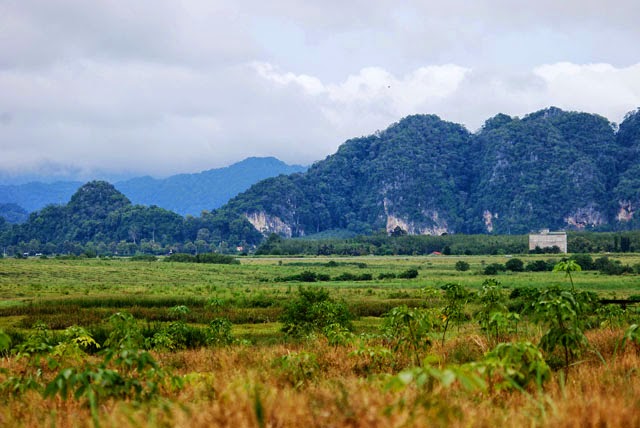
Chuping is known for its extensive sugarcane plantation and sugar refinery. It is also a sweet spot for birders as it provided a number of rarities including five first records for Peninsula Malaysia. However, the entire area is gradually being converted into rubber plantation. Once the sugarcane plantations and open grassland habitats disappear, so will the rarities and the rest of the migratory birds that find sanctuary here. It was raining when Hor Kee and I left Penang and in most parts of our car journey through the states of Kedah and Perlis. Chuping being the hottest place in Peninsula Malaysia, managed to keep the rain out but not the rain clouds. 


Raptors are one of the star attractions here and luckily, the overcast sky did not stop them from going about their business today. The first raptors to catch our attention were these Oriental Honey-buzzards undertaking their autumn migration south. This raptor is undoubtedly one of the most varied in terms of plumages and I usually rely on its body shape with its characteristic smallish head for identification. I will not even go near sexing and aging the birds. I am a simple man and I like to keep things simple. We counted only 15 birds which is a small number compared to the spectacle of hundreds that migrate over certain areas elsewhere in the peninsula. 


Harriers winter here in good numbers which makes Chuping one of the best places to observe these graceful raptors. We were fortunate enough to witness a mid-air squabble between two young Eastern Marsh Harriers. The identification of harriers can be confusing at times and these two were confirmed by Dave and Chaiyan after the trip. The individual being chased was second year subadult male and his pursuer was a first year juvenile. 


Unlike most raptors, the difference in the gender of adult harriers is very apparent and the males, I must add, are truly beautiful. This male Eastern Marsh Harrier is a fine example and he performed well for a couple of visiting birders today.


His buoyant flight and strikingly marked plumage set against the limestone outcrops is my definition of poetry in motion. This being the first time I was able to photograph an adult male this close made the encounter even more memorable. 


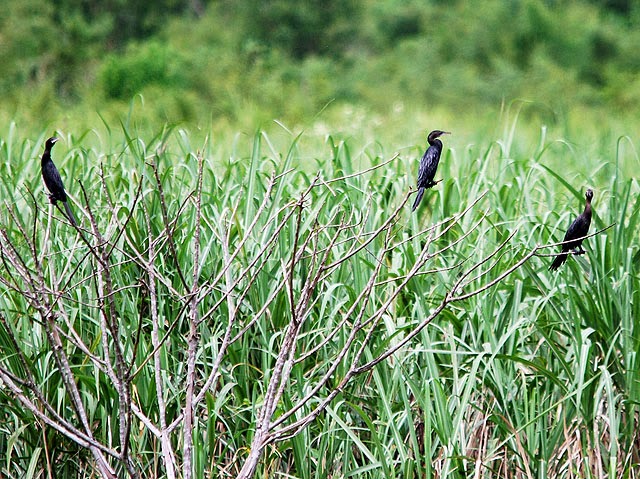
The Little Cormorant is a rare migrant to Peninsula Malaysia but for the past few seasons, it has been recorded more regularly. I have had two previous encounters with this species before but this is the first I managed to photograph it. There were at least five present at this pond today but none of them were close enough for any really good images. But I love cormorants and I guess a detour to this spot on my next visit is inevitable.


An adult Purple Heron eyeing our vehicle suspiciously as we drove past it along the maze-like network of dirt roads that cut through the plantation. Due to the lack of landmarks and the sheer size of the plantation, you can easily lose yourself here. Apart from the occasional plantation worker or birder, this place is virtually deserted. I have to be thankful my companions have a better sense of direction than me. Otherwise, we will be looking for a way out more than looking for vagrants at this birding locality.


There were quite a number of Zitting Cisticolas present this time and I cannot really recall if this grassland species was this abundant here in the past.


Red-wattled Lapwings tend to give away their presence due to their extremely vocal nature. Their loud calls are usually heard before you actually see the bird. This time it was a juvenile giving out the alarm calls.


It has become sort of a ritual to scrutinize every Paddyfield Pipit that one comes across in Chuping for an off-chance that it could turned out to be the much rarer Blyth's or Richard's Pipit. And to be totally honest, I will still most probably overlook the rarities because to me, the three of them look almost identical. 


No rare passerines were encountered today. In fact, things nearly came to a stand still once it was midday. This young Brown Shrike provided little compensation for the lack of noteworthy birds. 


Is the reign of Chuping as the most exciting birding spot in Peninsula Malaysia coming to an end? Have the rubber plantations caused too much damage to the habitat and driving away the birds? Questions like these pondered our minds as we slowly made our way back home through strong winds and heavy downpour. Hopefully, another visit later in the month will be able to put our worries to rest and produce a couple more first records for Peninsula Malaysia.

Wednesday, 1 October 2014

Blocking out the sun (27/09/2014)

I had to time my visit to the mudflats to coincide with the rising tide and the best time was late morning. So, it was back to forest birding again. I chose the site closest to Bagan Belat which was the swamp forest of Air Hitam Dalam. The world's friendliest Mangrove Blue Flycatchers live here, right in my home state of Penang. I even had to step back to take a shot of this stunning male because he was simply too close for my gear to focus!
 

Unfortunately, things were a little slower than what I had hoped for. Or maybe the past few trips have made my expectations soar too high for my own good. Anyway, only a couple of migrants were recorded despite the fact that the migratory season is in full swing. And to make matters worse, some of the residents were also absent. This Asian Paradise-flycatcher was probably the only other notable sighting. The yellow on the bill and the black colouration on the wings suggest that it is probably a young male. 


The migratory Forest Wagtails are back and there are usually a couple of them foraging at the car park area. This species remains skittish despite all the ‘incentives’ available here and rarely do you get the chance for a close approach.


This is an underexposed shot of the Abbott's Babbler that came out in the open for a brief moment. Wild bird photography can be downright cruel at times and all you are given is one chance. You just have to make sure you do not screw it up by having the wrong exposure settings. 


Looks like it is nesting season for the Plaintain Squirrels...


After a while, I decided to hop back onto my iron steed and scout the surrounding areas as my final attempt to salvage the trip. I did not go far when I came across a flock of Asian Openbills among the paddy fields. I decided to stop and spend some time with these storks as there was not much about. 


I also noticed quite a few of them were resting on the nearby trees as well…


Soon after, the skies darken and I thought it was the weather changing. But it turned to be because of more storks were gradually flying in from behind me. The sheer number of the storks literally blocked out the sun. There may be a bit of exaggeration here but I am just trying to get my point across. Some of them alighted when they reached the roost site while others, circled about before descending from the sky. 


Adults in breeding plumage…


Juvenile…


I suddenly found myself surrounded by Asian Openbills. The vicinity was getting a little cramped when the number of storks continued to multiply until there were about 300 individuals. Although this species has colonised Peninsula Malaysia for quite a while, it was still an exhilarating experience.


I have a tendency to lose track of time when I am out in the field. Tide, like time, waits for no man and I was running a little late to make it to the mudflats. Lucky for me, travelling on bike cuts travel time tremendously on most roads in Penang. It was scorching hot when I reached the mudflats but the tide was about right and that was all that really mattered. The variety of waders present was a little disappointing but one cannot expect every trip to be great, right? While waiting for the tide to do my dirty work for me, a pair of Mudskippers kept me entertained with their antics. 


The Curlew Sandpipers were as confiding as my last trip as they went about their muddy forays despite my presence. Although I try to be as inconspicuous as possible, I know that all the waders are well aware of my presence because they remind me with their suspicious stares from time to time.


A Common Redshank that still had its breeding plumage foraged quite close to the shore line this time and away from the rest of the flock. 


The adorable Broad-billed Sandpipers were present today and they were my first record for this season. A handful was foraging about halfway out the mudflats but a few did alight momentarily slightly nearer to my position. 


The Lesser Sand-plovers were all over the place - as usual. This lone juvenile bird was resting discreetly next to me when I took this shot. 


This is the high tide roost that most of the waders retreat to when the tide is at its highest. It makes the waders feel secure and they are able to roost in peace. They have chosen well because it is completely beyond access. Because there is no access I bet if I could somehow miraculously walk on mud and water to reach this place of sanctuary, I reckon there will be loads of  Nordmann's Greenshanks, Asian Dowitchers, Eastern Curlews, Spoon-billed Sandpipers and other rarities just waiting for me. Don't mind me. Spending too much time directly under the hot tropical sun can effect people in strange ways...