Pages

Friday, 25 February 2022

Koel, koel, koel...


The Chinese New Year is a festive time indeed. There are a few sounds that comes to mind during this time of the year like firecrackers, lion dances and, the territorial call of the Asian Koel. The breeding season of this parasitic cuckoo usually coincides and outlasts the celebrations and that is when they really let it rip. For the benefit of those who are not familiar with the vocal abilities of the Asian Koel, the call is loud and unbelievably persistent. Since it parasites on House Crows, it occurs in residential areas where the hosts thrive. It is not unknown for overly enthusiastic males to call right into the dead night to the extend of being labelled a public nuisance. But for me, the Asian Koel’s call (did I mentioned it was loud) and how it is delivered is something to marvel at.


For the past week, I noticed one of the resident male Asian Koels frequenting a young tree just outside the perimeter fencing of my humble residence. He was not exactly being discreet about his location as his territorial call echoed in the vicinity throughout the day. 


His presence gradually got me going against my better judgement and I found myself braving the usual stares when birding near or around other humans. Anyway once the neighbours finally figured out what I was after, I could then document this handsome Asian Koel in peace.


Over the weekend, my casual observation revealed some interesting behaviour. The tree was used as his regular calling point and he guarded this commodity with much aggression. Any bird so much as look in the direction of the tree will taste his wrath and lucky for me, it does not apply to birders. I have seen him chasing off Yellow-vented Bulbuls, Black-naped Orioles and Asian Glossy Starlings that did not know any better.


Like any story, there will always be a girl. All the effort and determination exhibited by the male Asian Koel is to attract a mate for the breeding season. And one finally gave in to his resounding vocals. As soon as she alighted on the tree, he started his game plan.


He repeatedly flew to an adjacent plant, plucked a fruit and offered it to his lady love. All this in one swift and smooth motion. I am quite sure he must have planned this all along. The calling point next to a food source was a good strategy. Heck, he may have even practiced the execution when not bursting out his territorial call. Anyway, I now have even greater admiration for this common but intriguing garden bird.


This male Asian Koel’s courtship was near perfect. I left the love birds to themselves when the evening light began to fail. The next day, he was back at the calling point – alone. I could not be certain now if the outcome was in his favour. At the time of writing, I could still hear his persistent territorial call and occasionally, a female’s as well. Although there is no closure to this tale, I am elated to be given the chance to momentarily wander into the life of these Asian Koels and further enrich my own with the experience.


Friday, 31 December 2021

Ending the year with some Christmas cheer


Christmas - that special time of the year when anything is possible or so they say. And what better time to set out for not one but two lifers than on Christmas Day itself. It has been nearly 15 months since I last increase my life list. Undoubtedly, this is the longest I have ever gone without a lifer and it is courtesy of the ongoing pandemic and all the travel restrictions. I had a little appetizer before the main course which was slated for the afternoon. Unfortunately, the Black Bittern that was showing well for others at the Penang Botanic Gardens was no where to be seen. It was not a good sign especially before a major twitching trip and a striking Blue-tailed Bee-eater did not possess enough finesse to lift my spirits. So much for the magic of Christmas so far.


The Pied Stilt looks very much like some variances of the Black-winged Stilt and this graceful wader was my first twitch of the trip. It is a recent colonizer from the south to Peninsular Malaysia and a few finally made their way up to Penang state as predicted. The paddy planting district of mainland Penang houses hundreds of wintering Black-winged Stilts. Relying on the information others have provided and faith, I scanned through the flocks looking for the odd ones out. Luckily, I had James’s help for this tedious task as he accompanied me on this excursion. It was a hot and sunny day and the heatwave was almost unbearable. And then among a flock of 50 or so, I noticed one sporting a distinctive black mane. It was far and the paddy stalks, tall. Upon further strenuous scrutiny, it was beyond doubt I was squinting at my first Pied Stilt.


I carefully trod onto the muddy bund with the hope of obtaining better images. The paddy field is not a place where one can easily sneak up to a bird and the magic of Christmas, like everything else in life, has its limits.


Time was of the essence on this occasion and as I was about to leave for my next destination, the Pied Stilt strolled into full view. It was still a dreadful effort but then again, I could have just as easily missed the bird among the sea of stilts and stalks. Thus, always be grateful of what you have being given.


We arrived at the jetty along the Penaga River just in time to join the rest to search for Malaysia’s second Black-faced Spoonbill by boat. There is not much I can add that Google cannot provide about this unique and globally endangered species except that it presses all the right buttons for me – a water bird that is big, beautiful and rare.


We found the Black-faced Spoonbill at the river mouth where it frequents. However, all the excitement and anticipation built up to this moment drowned away because the distinguished visitor was foraging at a spot where the possibility of reducing the distance was non-existence.


The only thing left to do was to wait and hope for the Black-faced Spoonbill to wander closer and it was a long and taxing wait. A juvenile White-bellied Sea-Eagle gilded in and momentarily distracted us from the depressing situation we were in. It may sound like I am contradicting myself. I got my double lifers, didn’t I? It really should not matter that I only managed record shots for this lifer as well. But I was really looking forward to a memorable experience with the spoonbill and a distant observation is not exactly what I had in mind.


Anyway, back to the eagle. A sudden change of pace caught everyone by surprise and I almost missed the opportunity of capturing this majestic raptor dive successfully for what appeared to be a snake. On any other given day, this would have left me on cloud nine. But the disappointment with the spoonbill could not be that easily forgotten.


Even the appearance of a juvenile Brahminy Kite soaring effortlessly in the clear blue sky did very little to brightened up the trip. Not when now that the Black-faced Spoonbill had gone hidden from sight as it rested behind a line of mangrove trees.


At that point in time, we decided to venture elsewhere and to return here again before the day is over. A Collared Kingfisher was also taking shelter from the scorching heat and perched among the foliage of the mangroves.


The Black-capped Kingfisher is one difficult bird to photograph because of its shy nature. I found out today that it is more tolerant to approach by boat than car and this individual continued to rest in the shade despite our intrusion. This common but striking migrant did reposition itself during our observation and the encounter gave us to courage to hope for better things to come before the end of the day.


It was the moment of truth and the boat circled back for one more attempt with the Black-faced Spoonbill. On a wing and a prayer, we are hoping that the receding tide will draw it out from hiding and forage along the water’s edge. Just like this Great Egret.


Even from a distance, there is no mistaking the foraging technique of the spoonbill as it sweeps for aquatic invertebrates. We cautiously approach and now at least, we can truly admire the unique and enigmatic Black-faced Spoonbill.


Before the trip, I gawked at some of the images that were posted on social media. Although my own efforts do not even come close but I am happy. Two lifers in one day is a rare feat for me and given the unprecedented period I had to endure without lifers, this is one of my best Christmas Days in a long time. I suppose every birder wishes for easily attained lifers. However, sometimes the drawbacks and drama in a way add value to the experience. There was certainly no shortage of that today.


Little did I know the Black-faced Spoonbill saved the best for last. As the last light of day gradually slid back into the horizon, we found our main target of this boat trip basking in the golden light of the setting sun. And I, just took a deep breath and soak in the view. From utter disappointment to total bliss. The magic of Christmas? You bet it is. At the time of writing, this vagrant has not been seen in two days. All the more reason to be grateful.


When we returned to the jetty, a few Black-crowned Night-Herons have emerged from their roost. As our day comes to a close, theirs have just only begun. These common nocturnal water birds wrapped things up for the day and what a day it has been. The Pied Stilt will most probably get commoner here in Malaysia but for now, it is certainly a significant record. The Black-faced Spoonbill was just amazing and I may not have another chance to see this rarity again in my homeland. 2021 may not have been an eventful year but the appearance of these two species in the final weeks of the year has now made it otherwise.


Thursday, 16 December 2021

A world record holder


The morning was bright and beautiful as I made my way across the Straits of Malacca. Initially, I just wanted to do some casual birding on the island but not a single locality came to mind. Utterly fatigued from the insane work load of my fulltime occupation, to make a long trip today was simply out of the question. The next best thing was to visit a local patch in mainland Penang and since choice is never a luxury there as well, I found myself wandering about the network of concrete boardwalks at Air Hitam Dalam again.


Perched conspicuously at the edge of the freshwater swamp forest was a Brown Shrike on the hunt. This common migrant can hardly be considered a sought-after species but the composition was so inviting and the bird, exceptionally obliging.  


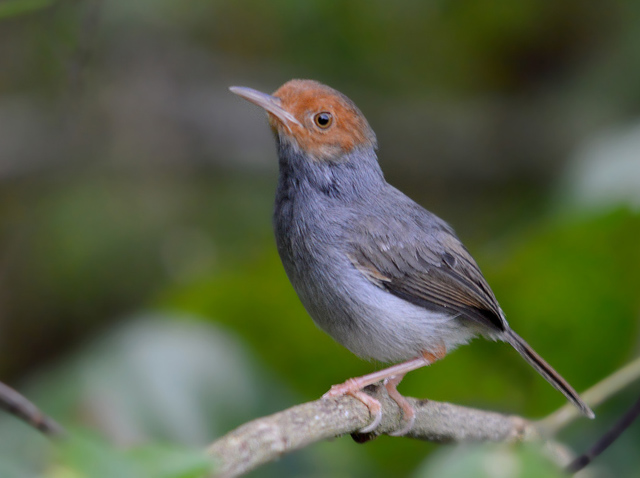
I found the forest eerily quiet today. This birding haunt has lost much of its luster of late – just like most other sites I frequently visit. As my footsteps grew heavier, my thoughts started to drift until a vocalizing Ashy Tailorbird shattered the silence. It took some effort and patience before I found the bird and it turned out to be a handsome male. It is amazing that a small bird like the Ashy Tailorbird can cause such a ruckus. He certainly had the place all to himself this morning and that indirectly increased the decibel of his persistent territorial call.


The Air Hitam Dalam Educational Forest is a small site and with absolutely no relevance at all, it is also home to the tiny but deadly Black-thighed Falconets. The top of this particular dead tree is not exactly ideal to capture the smallest bird of prey in the world due to its height but it is one of their favourite perches. And sure enough, I could just make out a single bird present with my naked eye upon my approach.


It was joined later by another of its kin and judging from the amount of public affection exhibited, they are most likely a breeding pair. Like all raptors, the larger bird is most likely the fairer sex. There is no denying the stunning beauty of Black-thighed Falconets and naturally, I found it hard to pull myself away from the lovebirds.


However, do not be fooled by the adorable appearance of the Black-thighed Falconet. It is an accomplished predator in its own right and this unfortunate dragonfly found that out a little too late.


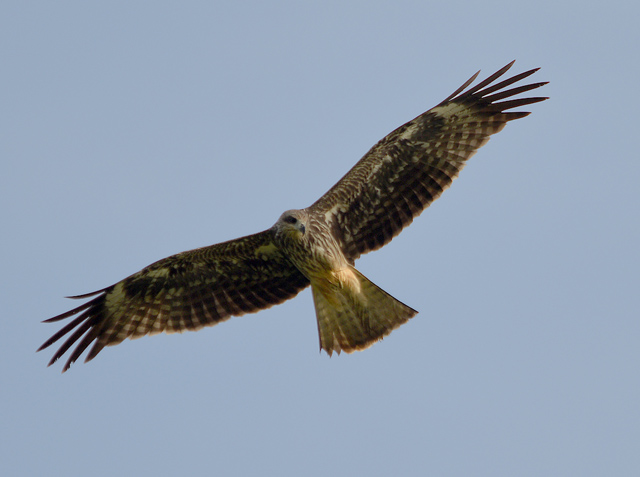
At this site, a congregation of raptors leisurely soaring about can only be the wintering Black Kites. I quickly repositioned myself in order to have the lighting in my favour. About a dozen of these raptors were present today and a few of them circled exhilaratingly close overhead.


Sleek and elegant, the Black Kites floated and swerved their way to become one of the main highlights of this short trip. The sunny condition aided my photographic efforts. And the number of images shared here in this post will be able to accurately illustrate my feelings during the encounter.


One last photograph for good measure...


Unlike the winter visitors, there is only one resident pair of Brahminy Kites here and the rising temperature set them soaring about the vicinity as well. Although they are more vibrantly coloured, the Brahminy Kites did not provide much opportunity for this quality to be admired as they were skittish as usual.


Raptors are one of my favourite birds and I am sure I do not speak for myself. Their ferocity and majesty are often incomparable. When the piercing call of the Crested Serpent-Eagle filled the vicinity, I could hardly contain my excitement. The presence of so many raptors in such a short time can be overwhelming to say the least and I intently watched this eagle with a taste for cold-blooded prey conduct an aerial patrol of its domain.


Although it is not a bird of prey, the Asian Openbill casts a familiar silhouette in the sky during this time of day. This stork that can sometimes number up to a hundred strong, soars effortlessly on its immense wings and is quite a sight to behold.


Like the Asian Openbill, the Little Cormorant is also a recent colonizer to Peninsular Malaysia that is settling in well indeed. This lone bird, presumably taking a breather after raiding the commercial fish ponds, drew my gaze back to ground level. Big flocks are not commonly encountered in my home state and more often than not, it is particularly wary of human presence. Luckily, there was a lot of objects to help hide my human form as I stalked this skilled hunter.


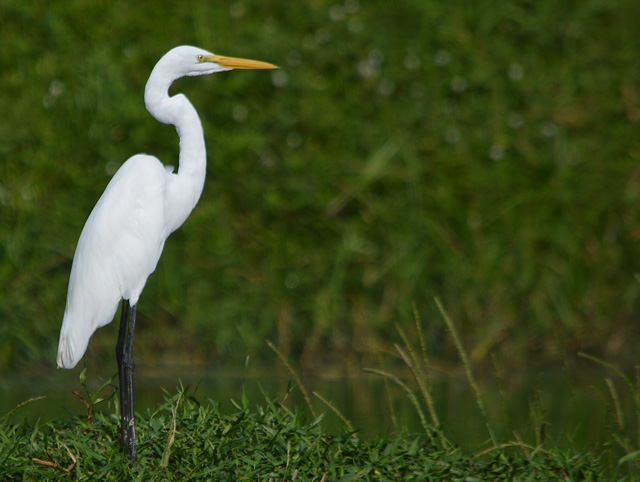
Egrets of all shape and sizes also loiter around the ponds with the same intentions. Like the name implies, the Great Egret is by far the largest and undeniably regal.


The Little Egret may not be the smallest by it is still dwarfed by the presence of the Great Egret.


An adult Purple Heron tried its best to remain inconspicuous while resting at the edge of the fish farm but its plumage colouration was just too attractive not to take notice.


Decades of birding should have made me an observant man and yet, I did not realize there was an adult Grey Heron in the vicinity until it took flight set off no doubt by my intrusion. It alighted on a nearby tree and this lucky shot of the landing turned out better than I had anticipated.


Some movement among a patch of long grass turned out to be a pair of White-rumped Munias feeding on grass seeds. The availability of food made them reasonably confiding and I took the time to observe the feast. Munias are considered to pests by the agricultural industry but to me, they are just living things trying to survive in this hostile world.


Due to its abundant nature, the Pacific Swallow is usually ignored. That is a real shame because when seen in good light, this aerial specialist is strikingly beautiful and streamlined to perfection.


I have had enough share of leech bites to know when I have fallen victim again to this blood-sucking parasite. It may have been a long time since the last time but there was no mistaking the squishy feeling between my toes. As I was about to attend to this little inconvenience, the cheerful song of the Black-naped Oriole distracted me from the task at hand. The leech bite can wait but this stunning bird will not. Although it even occurs in residential areas, I find it difficult to obtain decent images. And here, along the line of tall riverine trees, it is not any easier.


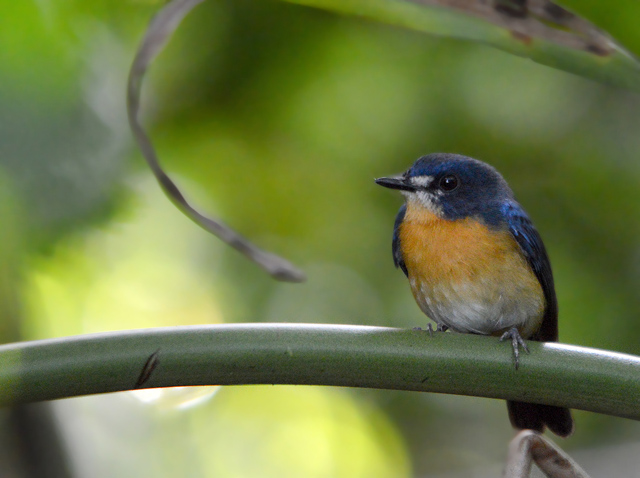
I would have walked past this female Mangrove Blue-Flycatcher on the way to my parked car if not for her short burst of song. The forest undergrowth can sometimes be a challenging environment for photography and my modest gear could not capture her true beauty on this occasion. This species is not as prominent here as it used to be and that is disheartening. But her presence today meant that there is still hope and what better to end a birding excursion than on a positive note.