Pages

Monday, 28 March 2011

26/03/2011: Bukit Palong (Kedah)

Despite the current wet spell, Choo Eng and I headed towards for this locality for hopefully, a few hour of birding. The weather held up and the discovery of a fruiting tree was an added bonus. A fruiting tree usually becomes a bird-magnet and several different species can be seen feeding on the fruits together. Although this tree was not too far away from the access road but the angle was a little too steep to produce any really great shots. The majority of the patrons here were Bulbuls consisting of the Black-headed, Red-eyed, Buff-vented, Streaked, Grey-bellied and Scaly-breasted. Unfortunately, only the Streaked Bulbul stayed put long enough for me to obtain a few reasonable shots.

The Blue-eared Barbet is always a welcome sight as it is seldom seen away from the dense foliage of the canopy levels. Its persistent and distinctive calls are normally the only tell tale sign of its presence. This fellow was seen foraging along a huge tree trunk and only the distance hampered my efforts of obtaining better images.

Most of the winter visitors have started their spring migrations but I guess a few are a little reluctant to end their tropical vacation just yet like this Dark-sided Flycatcher.

If ever there is a tree called the Fireball Tree, this would definitely be it.

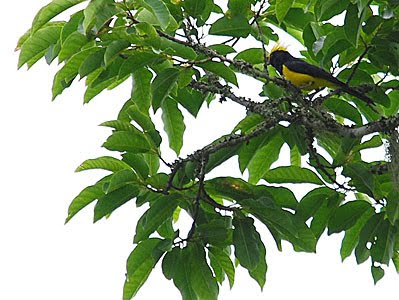
Sultan Tits are simply just awesome birds. I have been trying in vain to obtain good images of them ever since I took up photography. This forest jewel is not really common anywhere and possesses a striking colour combination of black and bright yellow. To top it all off, it wears a wicked yellow crest on its crown. And that, ladies and gentlemen, is the Sultan Tit. However, the distant record shots I managed to obtain does it no justice at all.
Although Parrots are poorly represented here in Malaysia, we certainly have one of the most adorable and charming species around – the Blue-crowned Hanging-parrot. Like the Sultan Tit, I hardly had any good photographic opportunities with this species as well. This trip’s record shots of a female bird will just have to do – for now.

Thursday, 24 March 2011

19/03/2011: Mainland Penang

After the morning’s birding at Sungai Sedim, I decided to swing by the barren lands of Penanti to check if the Oriental Pratincoles are back at their breeding ground. Much to my delight, I was not disappointed. Although the numbers now are a little less than those of past seasons, I’m just glad to see these graceful waders returning here annually to breed.

The Red-wattled Lapwings, on the other hand, are breeding in their usual healthy numbers. I can still remember I had to wait until I was in Langkawi to tick off this species from my life list because about 20 years ago, that locality was one of the best places to see it. Nowadays, every birder in Penang is quite accustomed to their presence and their signature alarm call.

The Blue-throated Bee-eaters are also back to breed nearby the barren lands. Of all the three open country Bee-eaters, I fancy this species the most because of the combination of the long tail streamers and the rich colours of its plumage.

Bon appetite…

A small flock of Jungle Mynas foraged quite close to my stationery car as I was watching the Bee-eaters. How can I resist when a subject, even if it is a commoner, is willing to provide a frame-filling image like this?

The timing was about right for observing Pond-herons in their respective breeding colours. However, I only manage to locate the commoner Chinese Pond-herons along the paddy fields of Permatang Nibong this time.

This female Pied Harrier seems to be in no hurry to start the long journey back to her breeding ground in the north and was seen quartering over the fields in search of prey. Shouldn’t you be making your way back home by now, my dear?

Most of the egrets have gone back north and the remaining few should follow suit anytime now. This Little Egret looks all set for the journey and I just love the way the wind carries its head plumes.

A lone Great Egret standing in the middle of a sea of paddy stalks carves a solemn figure as most of its compatriots have already left this wintering ground.

Tuesday, 22 March 2011

19/03/2011: Sungai Sedim (Kedah)

The morning started out quite slow with only the usual species making brief appearances until I came across a pair of Whiskered Treeswifts dive-bombing and screaming at a pair of rather large birds that has wandered too close to them. My guess for this show of aggression is that the Treeswifts are probably nesting nearby. When the intruders finally revealed their true identity, they turned out to be Chestnut-breasted Malkohas. Following the movement Malkohas proved fruitful as I managed to capture a few records shots when one of them briefly rested on an exposed perch. Anyway, much to the relief of the Treeswifts, the foraging pair gradually made their way to the next tree and beyond.

The distinctive calls of the Green Broadbill made me come to a complete halt and when I managed to pick out two male Green Broadbills having a dispute along the canopy of the forest, I knew I was in for a treat. Feathers were certainly ruffled…

Unfortunately, I could not witness the conclusion to this confrontation because the pair moved flew deeper into the cover of the forest to settle their differences. I truly adored these small but striking forest jewels especially when they fly around the lush green foliage of their forest homes. They look just like little emeralds on wings and at times, their colouration as well as size, make you question yourself whether it was a figment of your imagination or was it the real thing that just flew in front of you.

The Rufous-winged Philentoma is not common anywhere but this locality happens to be one of its strongholds that I know of. I have encountered this species here on several occasions but always end up empty handed – until now. Although the lighting conditions were awful and the sun was not at my back, I’m pretty satisfied at how the image of this rather confiding male turned out in the end.

I have a rather poor collection of Flowerpeckers and their active nature and minute size are usually the main prohibiting factors for me to obtain better images. A Yellow-breasted Flowerpecker resting on an exposed perch in relatively good light should have produce good images but the results were not as good as I had hoped for.

A chestnut-capped bird with dark greyish upperparts foraging among the undergrowth at the edge of the access trail provided a suspenseful moment for me. Is this the day I will get my first ever Chestnut-capped Thrush? I immediately crouched down and patiently waited for my confirmation. All my senses heightened and strained. Unfortunately, it had to bob its tail and another record of the Chestnut-naped Forktail was now quite inevitable. And true enough a male bird gradually strolled out into the open and ended all doubts (and the excitement as well).

There were quite a number of Black-headed Bulbuls present here and I came across foraging birds throughout the morning. This is another common species that I have yet to obtain great images and after today’s effort, I think there is still room for improvements.

Monday, 28 February 2011

26/02/2011: Sungai Burung (Penang)

I decided to do a quick session at this local patch as it has been quite a while since my last visit. Most parts of the paddy fields have been recently harvested and that left me with little hope of finding any surprises. Just then a falcon flew across overhead and my senses were back into birding mode again. It turned out to be a Peregrine Falcon and it is always great to see this beautiful raptor.

However, I don’t think this Common Myna that was foraging nearby feels the same way…

The Asian Glossy Starling is best enjoyed in good light. This is when the bird displays its true beauty as its green iridescent plumage usually appears black in the field.

It is another common species that I still don’t have a comprehensive collection of images and this confiding individual was more than happy to help me out on that.

While photographing the starlings, a Collared Kingfisher alighted momentarily on the same tree.

A little too close for comfort, perhaps? Well, the White-throated Kingfisher certainly felt so and re-positioned itself a few meters down the cable from the pair of Blue-tailed Bee-eaters.

A detour to the mudflats provided me with a breathtaking view of a huge mix flock of waders. I have reduced birding for waders along mudflats ever since I took up DSLR photography because the reach is usually insufficient. Come to think, I do miss just sitting by the coast with my scope and put my identification skills to the test as I slowly go through thousands of these similar looking birds. There is always the possibility and anticipation of finding something rare among the commoner ones. Anyway, the majority of the waders here were Lesser and Greater Sand-plovers.

A group of Common Redshanks were foraging slightly closer but not close enough for photography.

A Striated Heron with quite a mouthful quickly moves to a safer distance to enjoy its meal in leisure.

Monday, 21 February 2011

19/02/2011: Mainland Penang with a guest

It has been quite a while since I last took someone I hardly knew birding. I know that I am not much of a talker and my social skills certainly need some work. However, I feel that we don’t need to socialize much when we are out birding and I’m pretty comfortable with taking birders around because it is a known fact that the less you talk, the more birds you are likely to see. Even when I do need to talk, it will be about the birds and certainly I have more than enough things to talk about when it comes to that particular subject. Anyway, Dave asked if I could take a Scottish birder around since he and Choo Eng have other commitments to attend to. So, I met with Alastair at his hotel and our first destination was the swamp forest at Air Hitam Dalam. At this locality, the target bird was the Mangrove Pitta. Alastair has birded in the Asian region many times before and his Malaysian list is already at around 350 birds. So, my task was made easier as I did not have to stop and show him the commoner species. Unfortunately, it was a no-show for the Mangrove Pitta but a rather confiding Indian Cuckoo did provide us with a rather memorable performance.

There was nothing exceptional around the mudflats of Bagan Belat and we turned to the paddy fields at Permatang Nibong next. A juvenile Pied Harrier and a couple of Greater Spotted Eagles did save me from the embarrassment of ending up empty-handed here as well. However, the Asian Openbills were my true saviours in the end and at least I got to show Alastair a truly rare local species.

We continued on birding after a quick lunch and the next destination was the marshlands at Pulau Burung. Being a keen photographer himself, I thought he would really enjoy the confiding nature of the birds found there and the abundant of photographic opportunities. The highlight of the trip here, I guess, was trying to explain to Alastair why I think that this Pond-heron is a Javan Pond-heron when the tell-tales signs are still not very obvious.

At the end of the day, I think we had a reasonably good trip but it could have been better. I did manage to help him slightly in achieving his current target of 3000 birds in his global life list by adding the Lineated Barbet into it. Now, he has only to see another 40 or so species!

Saturday, 12 February 2011

07/02/2011: Mainland Penang

It was been about a month since my last visit to the marshlands at Pulau Burung. As my long festive holidays are drawing to an end, I decided to make a visit to this locality before stepping back into the working world and face yet another year of unreasonable clients and crazy datelines. Anyway back to the birds, the Lesser Whistling-ducks and their ducklings are doing just fine.

The Pacific Swallows are preparing to breed as a couple of birds were seen collecting nesting materials together.

Although I did not come across anything out of the ordinary this morning, I still had quite a rewarding time photographing the regulars as the lighting conditions were simply just right. Even the common Pond-heron provided some killer shots.

The Wood Sandpipers, as usual, are one of the best models around.

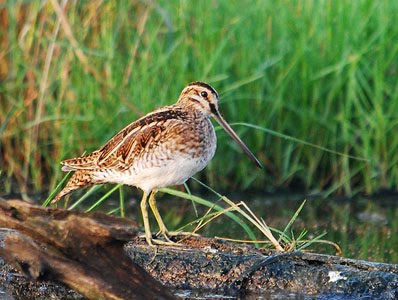
A Common Snipe foraging unobstructed by the vegetation is not something that is regularly encountered of late and deserves my undivided attention.

The White-browed Crakes were a little reluctant to forage in the open areas and remained partly hidden most of the time.

The Collared Kingfisher was the only one of the five kingfishers that I came across this morning that allowed me to take a few shots of it.

At the paddy fields in Permatang Nibong, the Asian Openbills are settling back again and have been recorded more regularly. Two of the storks still remained whiter than the rest of the flock.

Whenever I see an Aquila eagle circling in the sky, I would say a little prayer and hope to see a white pale bar cutting across the underwing. But the Steppe Eagle still remains elusive to me as another Greater Spotted Eagle gradually soared into full view.

Both the Eastern Marsh-harrier and Pied Harrier were seen hunting in the vicinity but I only managed to capture the latter. The female Pied Harrier can be a little confusing at times with the females of a few other rarer species but that was not the case today. Clear views cast away any doubts about her identity and hopes for a lifer.

The Tricoloured Munia is not that frequently encountered anymore in the field but the lighting conditions hindered my aim for obtaining better images of this species.

A confiding White-throated Kingfisher wrapped things up for my Chinese New Year birding excursions.