Pages

Showing posts with label Millipede. Show all posts

Wednesday, 27 August 2014

One can always hope...(23/08/2014)

Bukit Palong is a little-known birding site located in the rural district of Baling in Kedah. It used to be a pristine habitat for wildlife - that is until development found its way there. Disheartened, I did not visit the site for almost 2 years. A proposition by Hor Kee to check if there are any Plain-pouched Hornbills passing through the site prompted me for a long overdue revisit. Together with Choo Eng, we made the 2-hour drive from Penang in the wee hours full of anticipation and anxiety.

A substantial part of this ridge is now being replaced with secondary growth thanks to all the deforestation that took place. But there are traces of its former glory left and perhaps, there is still hope for this birding site to recover. In fact, I'm really counting on it because the number of birding sites close to home are certainly not increasing. 


Sad to say we did not see or hear a single hornbill throughout the trip. Hornbills are good indicators of what state the forest is in. A heavily disturbed forest will usually be void of these magnificent birds. So, there you have it. Screw with the balance of nature and lose its precious elements.

But we did manage to observe another family of birds renowned for the shape of their bills but on a smaller scale - broadbills. Banded Broadbills are hard to observe because they tend to keep to the cover of the canopy. Their insect-like calls are usually the only indicator of their presence. Today, however, this individual decided to let us off the hook and foraged lower than it normally does. 


I was hoping for it to wander down a little more because at this distance, all we could muster were record shots. It does not matter if it is still a young bird and the radiance of its plumage is just a little short of an adult bird's. I have been taught to always be happy with what you have. Unfortunately, I have difficulties applying that to birding compared to other things in life.


The Rufescent Prinia replaces the much commoner Yellow-bellied Prinia along the edges of forest. But these two species do occasionally overlap in habitats. Here, both species are found but once you ascend pass the foothill settlements, it is the former's thick of the woods.


The mighty Blyth's Hawk-eagles look over what is left of their domain atop a lofty perch. This pair has been breeding quite successfully over the past years and looks set for another go in the coming months despite all the disturbances. Thank God for that...


The eagles are not the ones that are in for some action. I came across this pair of millipedes in a rather compromising position…


I am not much of a flower person but I guess there are a few species out there that I can safely recognize. Since our Independence Day is just around the corner and all that, here is the Hibiscus, the national flower of Malaysia.


The flower of the wild Ginger is another easy one for me…


At the summit of the hill, we were suddenly engulfed by heavy mist. The mist certainly gave the vicinity an aura of intrigue and beauty. Who am I kidding? It’s a nightmare for any birding activity.


But even in the mist, there is no mistaking the silhouette of the world's smallest bird of prey. A flock of six Black-thighed Falconets was seen hunting from a tall bare tree next to the access road. Don't let their adorable looks fool you. They are very efficient hunters of insects and small birds. These tiny terrors on wings have been my object of admiration for as long as I can remember. I guess being a falcon gets you into my good graces by default - even if you are just the size of a sparrow. Size doesn't matter in this case. It's all about attitude.


I lamented to my companions that I never had the chance to photograph Falconets from close range the day I took up photography and one must have heard me and alighted almost overhead. All you had to do was ask, human...


In the end, a confiding falconet became the saviour of this trip. I will certainly be back again in the near future and I'm keeping my fingers crossed for the hornbills and others to return and call this place home again.

Wednesday, 21 December 2011

20/12/2011: Sungai Sedim (Kedah)


I have only gone a short way up the Gunung Bintang access road when I came across a splendid male Siberian Blue Robin foraging just up ahead and this is a species I long to have in my archives. At this early hour the lighting was terribly poor and I had an impossible time trying to focus my camera on the bird. Then something scared the living daylights out of the Robin because it suddenly dived into the undergrowth while emitting alarm notes. And I was pretty sure it wasn’t me. While I was still trying to figure out what took place, I noticed a slithery movement on the road and it was the culprit that made me miss my shot – a Variable Reed Snake. However, it was too small to possibly hunt the Robin but I guess it was a case of better be safe than sorry for the Robin.


That little episode got things rolling for this trip and what a trip it turned out to be. During my 5-hour visit, I managed to record two lifers and more than 60 species including a few very notable records. Unfortunately, the key word here is record. My first lifer, a female White-throated Rock-thrush, stayed in sight long enough for a positive identification only. I did manage to take a shot of my second lifer, the Brown-chested Jungle-flycatcher, but the image turned out to be pretty insignificant. Not only because of the poor quality but it only showed the back of the bird.

I could hardly contain my excitement when I came across a pair of foraging Chestnut-backed Scimitar-babblers. Apart from the fact that this is the first time I have seen this species here, they are truly striking birds and always a delight to observe. I guess you just have to take my word for it…


This male Orange-breasted Trogon on a slightly exposed perch was probably the best bird image of the trip.


A total of 4 Hornbills were recorded at the locality today. The Rhinoceros and Bushy-crested Hornbills were heard calling. A pair of White-crowned Hornbills flew just above overhead with the dense forest canopy between my camera and them. It has been almost 8 years since my first visit to this forest reserve and the distinctive calls of the Helmeted Hornbill can be heard on almost every visit. You can only imagine the amount of pleading and swearing that went down when I took this shot of this amazing bird.


One image did turn out quite to my liking but it was not of a bird. This beautiful Dragonfly was resting about eye level at the forest edge and the green foliage provided the prefect background.


This millipede making its way about some thickets wrapped things up for a memorable trip despite the disappointments from a photographer’s point of view.


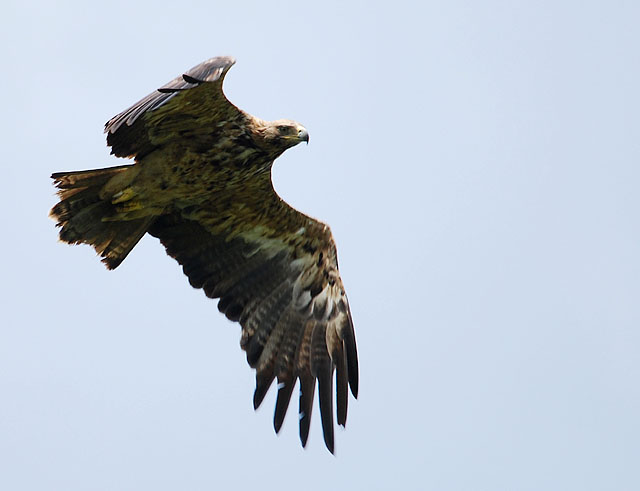
On the way home, I made a quick detour into the paddy fields at Kubang Semang to check on the Temminck’s Stints only to find the patch been completely planted with new paddy shoots. However, an immature Eastern Imperial Eagle circling over the fields put on quite a performance and unlike photographing forest birds, it is almost impossible to miss a bird as huge as this right out in the open.


Tuesday, 21 September 2010

18/09/2010: Bukit Palong (Kedah)

Choo Eng and I decided to re-visit this locality after a very promising maiden trip. Despite another a good haul in terms of birding, photography opportunities were far and few. Last trip’s encounter with the Dusky Broadbills left a lasting impression on us and this time, the Black-and-yellow Broadbill provided the only highlight for the trip. A pair of these adorable little birds took very little notice of our presence and provided a much needed boost to the trip.

Although this species is quite striking, it tends to keep to the canopy level, taking full advantage of the cover provided by the foliage. I was truly elated when they decided to move to a lower perch and willingly posed for my camera.

Quite a number of migrating Fork-tailed Swifts were seen riding on the hot air thermals as they gradually make their way south for the winter.

As the migratory season is about to reached its climax, it is no surprise we found this migratory Tiger Shrike resting in the mid level of the forest.

With the birds being rather camera-shy today, I diverted my attention towards other wildlife that was present like this Giant Millipede.

The Gibbons were rather wary this trip unlike our previous encounter with them.

We also came across a Vine Snake on the prowl. Naturally, we took the time and effort to capture some images of this beautiful and graceful specimen.

Monday, 19 October 2009

17-18/10/2009: Perlis State Park (Perlis)

A small group of us decided to take advantage of the long Deepavali weekend to visit this park that is located at the northern tip of Peninsula Malaysia. It has been 6 years since my last visit where I took part in a MNS raptor count. The park appeared to be exactly the way it was except for a bigger sign at the entrance.

After we collected the key to our chalet, we came across a rather confiding immature male Green-backed Flycatcher in the vicinity of the visitors' car park which turned out to be one of the highlights of the trip. This migratory species is not common at all here in Malaysia and we took full advantage of the situation to obtain as many shots as possible.

The park has a network of good access roads and jungle trails that cut through the pristine virgin tropical rainforest. A real birders' paradise but unfortunately for us, the birds were far and few this time round.

As we were making our way to unpack our gear in the chalet, we made a short detour to photograph a Spiny Hill Turtle that was spotted by Hor Kee and his friend while they were waiting for us to check-in. The turtle was just next to the jungle trail nearby the main access road.

My birding companions for this trip, James, Hor Kee and Choo Eng, giving the turtle its due attention.

The 2-bedroom chalet was quite comfortable but the best thing is that the back verandah is just next a small stream. I usually do not have issues with any accommodation during bird trips as long as there are birds in the vicinity. You can give me an old shed but if the vicinity is teeming birds, I will be most grateful and thankful. Anyway, this chalet is certainly not a shed. It comes equipped with air-conditioning, fridge, heater and so forth.

I spend quite some time along the stream next to the chalet especially during rest time. The stream is home to the Blue-banded Kingfisher and that explains why I am so intrigued by it. Anyway, the Kingfisher only offered me a passing glimpse once throughout my stay. And that also explains why I have so many shots of the stream in my memory card.

The Prince of Denmark Trail is home to the mythical forest jewel called the Banded Pitta. Despite all our efforts and patience, this spectacular species still remains mythical to my growing database of bird images.

I guess Choo Eng was just as disappointed as I was. A Pitta is not really a Pitta if it is easily seen. Pretty much is depended on your luck. Sorry, not pretty much but lots of it.

As the birds were not really up and about, bird photography was not as good as I hoped it to be. This female Banded Kingfisher on a high perch was one of the few memorable occasions in terms of bird photography for this trip. But the lighting conditions was a little too dim for any clear shots.

A striking male Rufous-collared Kingfisher forced us to work really hard to obtain a decent shot. Although he was not particularly shy, he remained partly hidden most of the time. An all too familiar situation when it comes to this forest Kingfisher.

But when he alighted on a fairly open perch, we were elated at being finally given a chance to photograph the bird. Although the images are not as sharp as I wanted them them to be, I can't really complain. Here's to looking at you, handsome...

A pair of foraging Moustached Babblers was a real nightmare to photograph. They were active, the lighting was bad and the foliage, dense. That' s forest bird photography in a nutshell. But when you chance upon that one reasonably clear shot, the sense of satisfaction can be quite overwhelming.

This is certainly not a very good sign if you are carrying heavy birding and photography gear...

Come on fellows...gimme a break and show yourselves. I can't be shooting signs during a birding trip...

Neither can I be shooting at mushrooms...

Some of the other birds I managed to capture included this Black-and-Yellow Broadbill. A pair of these adorable little birds was foraging high up in the canopy and they certainly brought some excitement and colours to the situation here.
A foraging Olive-winged Bulbul...

and Asian Brown Flycatcher wrapped things up for the birds during our stay in the park.

The other wildlife found here provided a little compensation for the lack of birds. This attractive juvenile Triangle Keelback was without doubt one of them. This rear-fanged snake was rather tame and we had a great photo session with it.

Being a semi-aquatic species, it feels right at home in water as well...

The Horned Tree Lizard is not something you come across everyday in the forest. This beautiful species with the elaborate spines on its back was truly quite a sight. Anyway, this male must be pretty contempt with life because...

he has not one but two beautiful females by his side.

You can't help but to be impressed with the camouflage of this Orange-bearded Gliding-lizard. It virtually "disappears" into the bark this tree.

The Sun Skink is a common species but it does not pose for the camera all too often - for mine anyway. But this particular individual seems to enjoy the attention it was getting from a couple of birder including yours truly.

This splendid little bug was seen resting just outside our chalet. The colours were very vibrant indeed. Maybe I should indulge in insect photography more often. At least they are more tolerant to human approach than birds. But then again, I doubt I will ever be standing in the middle of a swamp, feeding the leaches in order to observe and photograph a rare insect.

A Giant Millipede making its way across the access road without a worry in the world. Life in the slow lane...

Our owling excursion produced a pair of Javan Frogmouths. However, the birds remained out of sight although the calls were coming from very close by. If you think birding in the forest during the day is difficult, try it in the cover of darkness with only a few torch lights as your only help. Anyway, it was a great experience as the birds continued to call for quite a while. We even heard the call of the mysterious White-fronted Scops-owl. It may be the largest Scops-owl in Malaysia but it is certainly the rarest and the least documented.

On the other hand, the other nocturnal residents of the park gave us quite a show. This impressive Giant Forest Gecko was hunting on the outside wall of the chalet.

We also came across a couple of frogs like these common Four-lined Tree-frogs...

And this fellow which is one of the Chorus Frogs species. So named because they have a habit of congregating before they start to perform their nocturnal orchestra.

We also managed to locate 2 Hillstream Softshell Turtles in the stream next to our chalet. These ambush hunters will bury themselves in the sand while fully submerged in the water, leaving only their heads and part of their necks exposed. Any unsuspecting prey that swims within their reach will meet an unfortunate end. Once those powerful jaws catch hold of the prey, it is almost impossible to break free.

The small fishes that share this domain with the turtles have to be always on the alert. But I guess that's life. Unfortunately for the fishes, the law of the jungle applies strongly here.

However, it is not only the turtles that they have to worry about. Danger lurks in other forms as well and one of them is the Forest Snakehead - a predatory fish that will make short work of any small fish that comes its way.

On the way out of the park and back to Penang, we made a quick stop at the paddy fields in Mata Ayer. Nothing much was about. Even the images I took of the resident Rufous-bellied Swallow was a let-down because there was condensation in my lens at that time.

The Chuping Sugarcane fields is located a short driving distance from the park. A couple of seasons ago, it played host to 2 first records for Malaysia - the Long-legged Buzzard and the Asian Openbill. But there was nothing much to boast about upon our arrival at the locality.