Pages

Showing posts with label Macaque. Show all posts

Thursday, 25 August 2022

Foreseeing a lifer?


The general plan was to check out whatever remains of the peat swamp forest at Pondok Tanjung in northern Perak state. This locality used to be one my favourite forest sites but that was a long time ago before all the deforestation and road works crept in. I often tell myself there is no point holding on to the past because most of the time, what has been done towards Mother Nature cannot be undone in this lifetime nor the next. So instead of exploring this wilderness through a network of idyllic forest trails, it is now reduced to walking along the busy access road next to the forest.


There is another reason that could well be the true objective of the visit. Hor Kee recently recorded some different sounding Cream-vented Bulbuls with pale orangey irises at this location and we hope to further document these bulbuls. The Cream-eyed Bulbul is a species new to science that was discovered in Borneo a few years back. And Hor Kee, hoping to repeat the success he had with the Olive Bulbul (which was a new country record) by accumulating enough supporting evidence to show that the Cream-eyed Bulbul may not only be restricted to Borneo. A careful sweep of the area where the bulbuls were last recorded eventually produced the results we seek.


We also found a pair that was attending to a juvenile indicating that for now, these bulbuls still find sanctuary in the peat swamp forest of Pondok Tanjung.


I have recorded Cream-vented Bulbuls with darker iris before and going through my images, I found a few that I have taken at Sungai Sedim in the state of Kedah back in 2015 and 2010 respectively.


When it comes to birding, I like to keep things simple and trying to separate two almost identical brown bulbuls is anything but simple. Just to be clear, there is nothing conclusive in this post. These “Cream-vented” Bulbuls do call differently and have subtle physical differences from the typical. And for the time being, I will leave it at that.


A lone Buff-vented Bulbul momentarily distracted me from our objective a one point. It is undeniable all these brownish bulbuls look quite similar at a glance. Upon further scrutiny one can usually determine their identifications unlike some other family of birds like for example the dreaded leaf-warblers.


Once we were done with the bulbuls, we started to pay attention to the other species that were obviously present. In fact, we found ourselves surrounded by an array of bird calls since dawn and one family of birds stood out from the rest – the babblers. As we are all well aware, babblers usually offer nothing more than glimpses as they move about in the cover of the forest. Sometimes, we can be fortunate enough to experience a little more than that and a pair of Fluffy-backed Tit-Babblers mesmerized us with their charisma on this occasion. This species is known to be confiding at times and this is certainly one of those times.


The forest undergrowth may save you the agony of straining your neck looking upwards but your patience will be tested as you wait for photographic opportunities that may never come. I was almost outdone by this sneaky little Fluffy-backed Tit-Babbler but a gap among the vegetation caught the babbler off-guard and frustration instantly became exhilaration for me. Gotcha!


The haunting territorial call of the Sooty-capped Babbler has always been a prominent feature here. I do not get to see this skulker as often as I would like and on this beautiful Saturday morning, the prolonged visual encounter obtained was certainly one of the highlights of the trip.


The Sooty-capped Babbler is not that striking a bird but the obliging nature of this individual overwhelmed my senses. I frequently lament about the frustrations of forest birding but when everything comes together perfectly, it is utter bliss. And all those hours spent wandering aimlessly will make sense to you again.


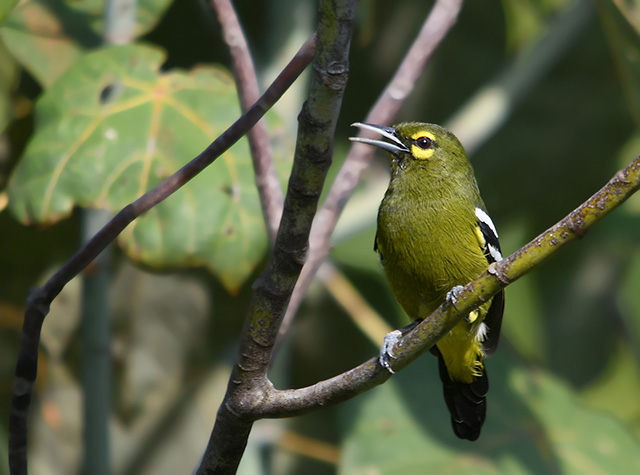
Often obscured from view by the dense foliage of the canopy, the Green Iora is one of the many denizens that call the forest home. The soft but persistent song is usually the only indication of its presence and once learnt, you will find that the Green Iora is not that uncommon at all. The male is exceptionally striking and our good fortune today continued with cracking views of an individual that wandered much lower down than usual. The late morning sun was unforgivingly harsh but there was no undermining the beauty of this species especially from such a close proximity.


Unlike the Iora, the Rufous-tailed Tailorbirds were shy and uncooperative today. It is another attractive resident of this locality but prefers the lower levels of the forest rather than the canopy. A brief view enabled me to squeeze the shutter a few times but the distance and lighting conditions were just a little too much for my photographic gear.


As we were making our way out, a troop of Pig-tailed Macaques loitering about the roadside halted our journey. The monkeys here are accustomed to human handouts and have grown exceedingly bold as a result. The alpha male is seriously intimidating and this brute of an animal provided the perfect ending for our visit here.


Before calling it a day, we made one last stop at the ponds next to the landfill of Pulau Burung. As expected only the resident species and overwhelming stench were present. But one species of water fowl in particular had our full attention. It has been quite a while since I last recorded such a big number of Lesser Whistling-Ducks. This location is a known stronghold for them and all two hundred strong were relatively unperturbed by the sudden presence of two human observers.
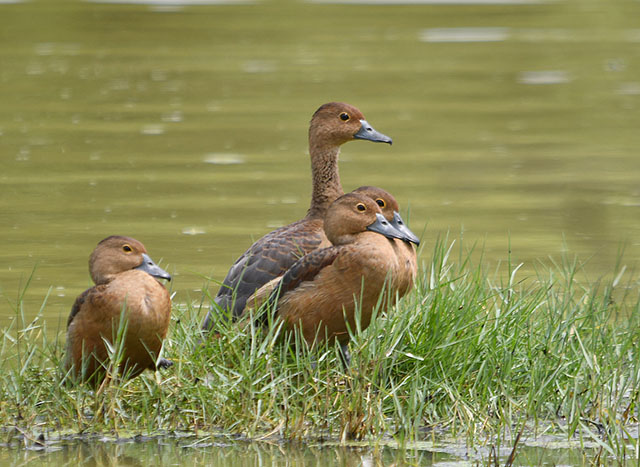


Hindered by the glaring midday lighting, the confiding nature of some of ducks enjoying their siesta could not produce the type of images I was hoping for. Regardless, I am still delighted to be greeted by this small spectacle at a locality that has also lost much of its lustre in recent years.


Thursday, 23 January 2020

Where is the damn duck?


The weather here in northern Peninsular Malaysia has been unforgiving of late. With the Chinese New Year just around the corner, this hot spell is pretty much expected. I take comfort in the fact that for a birder like me, it is rain that I dread for the heat never really bother me anyway. My first destination for this 2-day birding adventure with an American guest started off at the foothill of Bukit Larut. However here at Rain Town, the sun rises later than usual even when a scorching day is in expectation.


There is no better way to start off a tour than with a pitta. The sun had barely pierced through the lush vegetation of the rain forest when a migratory Hooded Pitta hopped into view. Typical of pittas, it was an absolute stunner. Vibrantly coloured and full of character, the Hooded Pitta set the pace for our visit here and my guest was in for one hell of a ride.


The male Chestnut-naped Forktail floated into the trip with such poise, it was impossible to ignore his presence. Another terrestrial bird but with a preference for a semi-aquatic lifestyle, this striking forest gem is usually shy. And for the time being, this stakeout is the best spot in the country to appreciate the true splendour of the Chestnut-naped Forktail.


When the king finally arrived, all eyes were on him. There is no denying that the Rufous-collared Kingfisher is a spectacular species of the lowland forest. Forest kingfishers are in a class of its own and those species that occur in more open habitats just simply lack the X factor.


This is not Bob’s first visit to Malaysia and I have hosted him before. Inevitably, lifers do not come that easily to him now and the Rufous-collared Kingfisher appeared to be the most exhilarating one for him here. I do not blame him for when the sun illuminated both locality and bird, we were momentarily transported to a secret birding wonderland and enjoying every second of it.


I cannot help but to feel sorry for the Green-backed Flycatcher. Size does matter at this birding hotspot and the little guy only made brief appearances to avoid confrontations with the bigger birds.


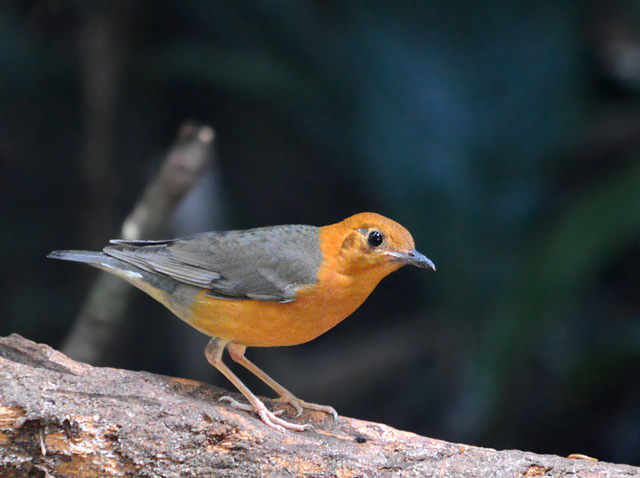
Today, the Orange-headed Thrush appeared somewhat restless. And it was aggressive towards one of the birds present. High speed chases was a regular feature and gradually, I realized the reason for the exceptional aggression.


It was another male Orange-headed Thrush and clearly, the two were not good bedfellows. There is a difference in the facial plumage of the birds. Clear enough for an amateur like me to tell them apart. The thrush is another striking species at this spot and both guest and guide were well contented.


We took a leisurely walk later around the foothill and managed to obtain a few more species. A pair of Scarlet Minivets frolicking about the highest canopy levels had our undivided attention. The male, with his contrasting black and red colouration, was mesmerizing especially when the sunlight catches him in mid-flight. Unfortunately, he did not wander close enough for anything more than record shots.


A deserted Indian Shrine now houses wildlife and a pair of Zebra Doves have certainly made themselves right at home...


I had mixed feelings when I saw a troop of Pig-tailed Macaques gorging on what appears to be handouts. Somehow when the alpha male was stuffing his face with human food, he loses his usual imposing stature in my eyes. At the end of the day, it is all about survival and I should not pass judgement on him.


I am not sure if these young ones were waiting for their turn at the ‘table’ or they have had their fill…


Migratory ducks are scarce here in Peninsular Malaysia but recently 3 species were seen together at the marshlands surrounding the Pulau Burung Landfill. And that is almost an unbelievable occurrence. We swung by the locality on the way back north but to my dismay, only the pair of Garganeys were present and they were resting miles away (or seemed that way to me). I did one last desperate sweep at the flocks of Lesser Whistling Ducks just make sure I did not overlook the Tufted Duck or, God forgive me, the Eurasian Wigeon which would have been a Malaysian lifer for me.


The common resident Lesser Whistling Ducks provided ample photographic opportunities. And I would not expect anything less. Birding will always go according to plan – said no birder ever.


At the paddy fields of Permatang Pauh, our luck did not improve much. With the phenomenal influx of Asian Openbills to the country this season, inevitably it was the only species worth photographing here today.


The last destination of the day was the Air Hitam Dalam Educational Forest. Once again, the Asian Openbill prevailed and provided some photographic opportunities.


Along coastal areas like these, the Collared Kingfisher is the predominant species. A confiding individual gave a good reason for us to halt our search for birds. Often taken for granted due to its common status, the Collared Kingfisher is nevertheless loud and beautiful.


Odd enough, there was a brief shower as we entered the borders of the park but it did not last long enough to have any impact on the surroundings. So, this drenched Square-tailed Drongo-Cuckoo found relief from the heat via another source.


Normally after a day of birding, I look forward to the comforts of home. Today, something held me back from this simple pleasure in life. As soon as I stepped out of my parked vehicle, a pair of White-bellied Sea-eagles greeted my arrival home by circling in the sky above. Upon further scrutiny, one of the eagles was an immature bird. The plot thickened when I noticed that the other bird, an adult, had a fish in its grasp.


I do not consider myself to be an expert. I am just a bloke with a thing for birds. In my humble opinion, I would presume that the immature was trying to obtain a free meal. Anyway as soon as the majestic raptors disappeared from sight, I hastened my walk home to a much anticipated shower and rest. For another day of birding awaits tomorrow and that will be covered in my next post.


Thursday, 20 October 2016

Winged Orca...

I took Tom out on two birding excursions last year and the birds must have made quite an impression on him because I receive an email from this American birder again enquiring about a third trip. There is only one problem. He is a very experienced birder with several trips to this region including the ones to Penang. It will be quite a task to keep his third visit interesting and the torrential rain forecasted for that day did not help lessen my burden one bit. He has a preference for forest birds and naturally, we found ourselves at the best forest site you can find around Penang at the break of dawn – the Sungai Sedim Recreational Forest in Kedah. The first bird to greet us was a male Grey-rumped Treeswift getting ready for the day ahead together with dozens of his compatriots at the ‘Treeswift Tree’.


As we were making our way up the Gunung Bintang access trail, the warm rays of the sun slipped through the rain-drenched foliage of the forest. A sunny morning is a rare sight this week and it was a much welcomed change. The cheerful call of the Grey-headed Babblers echoed through the forest undergrowth followed by a brief appearance. And my guest celebrated his first lifer of the trip.


Despite the good weather, things were rather slow at Sungai Sedim. The overnight downpour could be the reason behind this. However, a second lifer for my guest flew into view and it was a juvenile Red-naped Trogon. There was not much opportunities for photography during the encounter but at least we managed to obtain a record shot. It was more than I can say about a handsome adult male that decided to show himself later. Looks like Murphy is back in town again…


A change of location might change our fortune just like what it did for my last excursion. It was certainly worth a try. At the car park just before we reach our vehicle, a Malayan Birdwing floating about a flowering plant prolonged our stay at this recreational forest. It was an impressive male, told by the yellow marking on his upperparts, and he did not take much notice of our presence. Just in case you are wondering, you can find out just about everything nowadays as long as you ask Goggle nicely and I still know squat about moths and butterflies. I guess the absence of feathers makes a whole lot of difference for me. But species like the Malayan Birdwing when seen up close, the intensity of the colours and intricacy of the patterns can be mesmerizing.


We made our way to the paddy planting district of mainland Penang as open country birds and waterfowls do not shun away during the hottest time of the day and that made it the best location to visit. There were quite a number of recently ploughed areas. The combination of shallow water and mud is like a magnet for water birds and birders alike. The Grey-headed Lapwing is new to neither of us but this attractive wader still received its due admiration. About 50 birds were present throughout the vicinity but are difficult to approach as always - even by car.


Apparently, the Wood Sandpiper is a rarity in America which is definitely not the case here in Malaysia. It is probably the commonest wader in freshwater habitats and paddy fields like these are its preferred wintering ground. I guess it was a little puzzled as to why these birders are showing it so much love...


This young female Brown Shrike was exceptionally confiding and could well be a recent arrival. The steel post that she chose to be her vantage point may not compliment the photo much but that is how it is sometimes. Anyway, she was too busy hunting for food to be bothered by our presence and we decided to spend a little more time with this common migrant. 


Eventually, something on the ground caught her eye and it was a grasshopper. The kill was quick and deadly. My gear could not keep up with the action. By the time I finally muster a shot, the prey was well within her digestive system.


From the paddy fields, we headed towards Air Hitam Dalam which was to be the final destination of the day. The ambassadors of the site, the Mangrove Blue Flycatcher, gave a warm welcome to my American guest. He remembered this species well from his previous trip with me. The flycatchers here have a tendency for that.


Mother Nature’s version of the Thinker. A Long-tailed Macaque in deep thought...

Call me paranoid but there is always a cause of concern when I see something like this spring at one of my favourite birding haunts. If it is one of those build and then left to rot facilities, so be it. But if they are planning to upgrade the place or something else, then I will be very concern. But I do sincerely hope that for once, they do not fuck things up and kill off another great birding location.


A big flock of 30 Black Kites circling the sky above the swamp forest was quite a sight and naturally caught our attention. These migratory raptors are just back from their wintering grounds up north and are enjoying the commencement of their annual tropical holiday. Little did they know that their fun in the sun was about to come to an abrupt stop and the threat came from an unlikely source – a juvenile White-bellied Sea-Eagle. You can see the eagle at the bottom left of the photo, stalking the flock. I was not expecting anything from it initially and from the looks of it, neither did the kites.


I have always considered the majestic White-bellied Sea-eagle to be a gentle giant that is often harrassed by smaller birds. Well, there is nothing gentle about the intentions of this juvenile. It was almost sinister. The black and white colouration and predatory movements somehow reminded me of the deadly Orca closing in on a school of dolphins. I was transfixed on the big raptor and eagerly waited for the spectacle to unfold. One thing is for sure, I will never see the White-bellied Sea-eagle in the same light again.


It was bright and sunny and that was good thing. In this condition, I managed to capture some of the action shots reasonably well. The kites were too agile for the eagle to do any real harm to them. It appeared like the presence of this big flock of kites did not go down well with the eagle and the latter was just venting out its anger. The eagle chased after several individual. It would twist and turn after the kites but was unable to make any physical contact throughout the entire episode. The Black Kites winter here annually in big numbers and the White-bellied Sea-eagle, a permanent resident. These two species have crossed paths many times before. I just cannot figure out what triggered this violent behaviour from the eagle. Well whatever the reason may be, it was a memorable experience.


When the eagle has had enough, it flew off to a nearby tree to rest. Feathers were ruffled but peace was finally restored. And the graceful kites flew about in leisure once again but in smaller numbers. I guess the eagle somewhat got its way in the end.


Being the smallest raptor in the world does not come without its bad points and frame filling shots of the Black-thighed Falconet remains a privilege most bird photographers have yet to enjoy.


On the way out of Air Hitam Dalam, we came across a flock of resting Asian Openbills on some isolated trees in the middle of the paddy fields. Although I have seen them in bigger flocks, the numbers here were sufficient to capture the interest of my guest. It was a relief to see these storks frequenting back at their usual spots and this encounter was a great way to end another rewarding birding excursion in this part of Peninsular Malaysia.