Pages

Showing posts with label Stork. Show all posts

Wednesday, 18 March 2026

Quest for the Holy Grail


At the break of dawn on the second day of our tour, we were enjoying a simple breakfast and a glorious sunrise at the vast expense of salt ponds in the Khok Kham conservation area. And what can be found in such a habitat you may ask. Allow me to enlighten you. This is the wintering ground for a remarkable and rare little wader known as the Spoon-billed Sandpiper or more affectionately called the Spoonie.


Birds leaving roosting sites to forage in first light can be breath-taking. And it is no different here. I was especially drawn to the flocks of Painted Storks making their way towards the coast. There is no denying I have a soft spot for large water birds. Even more so if they are uncommon to me.


When there was finally enough light to begin our exploration of this important bird area, we carefully walked into the salt farm along the bunds. Flocks of waders that started to congregate in the shallow ponds were an indication of things to come and I could hardly contain the excitement building inside of me.


Now finding a Spoonie among the thousands of other peeps was not going to be easy. But we had help. A local guide that goes by the name of Tee weaved his magic scope and after about thirty minutes, we were staring at the unique bill of this critically endangered species.


In order to obtain any decent images, we had to rely on our field craft to reduce the distance. Here is Tee giving us some pointers on how not to be lumbering visiting birders and spook the subject away...


The observation did not last as long as I would have wanted when the entire flock of waders in that pond took flight and vanished. To be honest, I was still elated with this encounter as it was the closest and longest I have ever been with a Spoonie.


With the target in the bag, we began to open up to the other species that find sanctuary here. I do not encounter the Black-bellied Plover quite often and a lone individual resting along the outer edge of one the ponds was a welcomed sight.


A wary Pacific Golden-Plover did not provide any opportunity for an improvement shot.


I am a simple man and I tend to keep things simple in my life. Thus, I miss the days when Lesser Sand-plovers have not undergone the split. Having said that, here are some images of what should be Tibetan Sand-Plovers.


The Khok Kham conservation would be a good place to scan through the hundreds of confiding Sand-Plovers present here for the almost identical, Thailand’s first Siberian Sand-Plover but that task would be above my ‘bird’ grade.


The Curlew Sandpipers are rather confiding today as well. I took a keen interest in these common migrants for any stumpy-looking individuals or even better, have blackish bellies for the possibility of the rarer Dunlin. From this blog post, I am sure you know how it worked out.


Black-winged Stilts, especially the male bird, is the definition of elegance in the wader world.


The Marsh Sandpiper is another wader that oozes with poise and grace.


Here is a Pond-Heron in non-breeding plumage doing what Pond-Herons do. Next please...


The scenery at the salt ponds is actually quite lovely. Naturally, it took a while for me to realize that. Once I am in full birding mode, everything else becomes secondary.


We then sat down along a bund to take a breather and recuperate from the heat.  I always emphasize that successful birding is very much luck as well. A flock of waders suddenly alighted in the pond right in front of us and our man Tee triumphantly alerted us from a distance. I could hardly believe it when my eyes picked up the now-familiar jizz of a Spoon-billed Sandpiper. Point most certainly proven...


I could not be sure if this second bird is a different individual but it was a lot more confiding. I think we managed to crawl and slide our way to as close as possible without overstepping our boundaries.


The superstar appeared relax and was constantly feeding which at times, made it difficult to obtain images without the bill submerged in water.


Please forgive me if this post contains a high number of Spoon-billed Sandpiper images. It is not a new bird to me. In all my years of birding, I have recorded it twice before. But nothing like this. This is heaven-sent for a water bird lover like me and I took full advantage of what I have been given. The Spoon-billed Sandpiper is often considered the holy grail of wader watching in this part of the world. After this prolonged and intimate encounter, I can see why. It was a true privilege indeed.


The radiating tropical sun on our backs and a confiding Spoonie in front of our lenses. It does not get any better than this.


Once I have obtained more than enough images, I was able to let myself occasionally swap the camera with the binos and made this incredible encounter complete. And here is one final image of the Spoon-billed Sandpiper for good measure.


When the exhilaration of the Spoonie subsided, I started to take notice of the other waders present in the same pond. And a mixed flock of Great and Red Knots resting nearby was hard to ignore now.


The problem with roosting or resting waders is that you sometimes cannot isolate a single bird out for photography. For the knots, despite all my best efforts, I could only obtain images of a Great Knot alone.


Smaller peeps require some scrutiny to ascertain their identities. Red-necked Stints, due to their similarities to a Spoon-billed Sandpiper, provided some suspense on this beautiful, sunny morning. This image depicts the two species almost side to side. Hide the bill and most mortals would be in trouble.


Broad-billed Sandpipers sport distinct facial markings that make them slightly easier to identify. And they performed well for our photographic efforts. This wader site provided an incredible morning of memorable experiences and that is something I have been missing in recent years. It is sad but there are simply no wader sites left in my home state that can even come close.


For those unfortunate souls who dipped out on the Spoonie, there is a larger-than-life statue of the bird at the visitor centre that could perhaps provide some solace.


And from here, we took a long drive into the wild interiors of central Thailand. Kaeng Krachang National Park is the largest national park in the country and it was the next destination in out itinerary. Will our lucky streak continue? The answer to that will be in my next post.


Checklist of the birds recorded at Khok Kham: https://ebird.org/checklist/S307844600

Wednesday, 27 March 2019

Cambodia: Land of the Ibis King (Part 2)


This was to be our final day at Kulen Promtep Wildlife Sanctuary and also our last day of birding in Cambodia for we fly back home first thing tomorrow morning. We travelled further for this morning’s birding and the forest at this end of the sanctuary looked more like home with its lush and tall vegetation. We headed towards a river where the majestic Black-necked Stork is known to occur here on rare occasions. Upon arrival, a big black and white bird took flight and Mardy, our guide, reigned me back to reality before my imagination got the better of me. The bird turned out to be a Woolly-necked Stork and when it alighted further down the river, it provided us with our first view of this species grounded.


The stork did not linger in the vicinity for long and would not have been Cambodia if it did. Anyway, this lookout point was productive with several species recorded. But the majority of them were distant observations. A few familiar species were recorded like this striking Black-crested Bulbul basking in the morning sun.


A Chestnut-headed Bee-eater decided to hunt near our position and it was welcomed by my companions who reside beyond the range of this lovely species.


We were also presented with front row seats to an aerial performance courtesy of a pair of Green-billed Malkohas. Twisting and turning in mid-air with their long tails in toll, these cuckoos revealed a side to them that I did not know existing. Before I could react, the performance was all but over and the malkohas were casually gliding across the river.


It was no doubt hot and sunny throughout our stay in Cambodia but the lighting has been exceptional most of the time. Today was no different and I even attempted shooting Crested Treeswifts that were patrolling the area.


This is probably the worst photo you will ever see of a Heart-spotted Woodpecker. With a name like that, you know the bird will be nothing less than spectacular. And it was. You just have to trust me on this.


I would have been elated if I had not encountered the Brown Fish-Owl back home just last year. The one we came across today was more for the birder in me due to the distanced and obscured view.


Another short lived encounter with the White-shouldered Ibis took place near a grassy area within the forest. It may not be sufficient compensation but a Golden-headed Cisticola added yet another lifer to the trip.


A group of lumbering birders sent this Brown Prinia up a tree for cover which was not an unusual course of action even for a grassland bird.


We headed back to the lodge for one last meal before we checked out. The lodge may appear to be a modest type of accommodations but the meals provided throughout our stay deserves some praise. I am not particular with food when I am out birding but to have something that not only fills you up is an added bonus.


This map gives you a rough idea of what you can expect to see...

While waiting for lunch to be served, a Rufous-winged Buzzard made an unexpected appearance just outside our chalet. I was in perfect position but the chosen perch had several obstructing branches. It was unfortunate and frustrating. And the buzzard was having none of my desperate attempt to creep round the branches and took flight almost immediately.


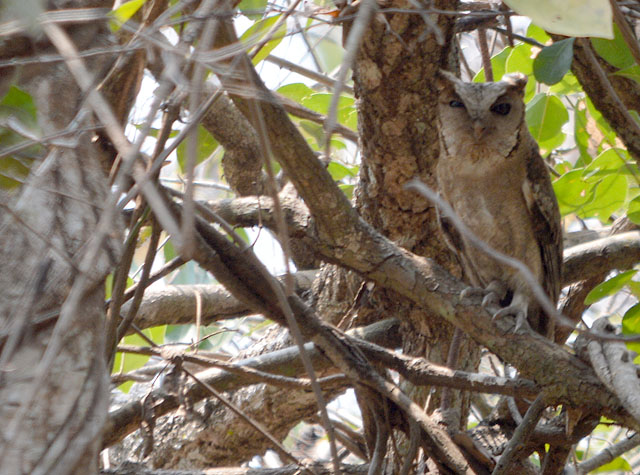
A roosting Collared Scops-Owl was a nice addition to our Cambodian list. However, the midday lighting was harsh and the apparent heatwave further hampered our photographic attempts.


There was one encounter today within the grounds of the lodge that left me near the state of ecstasy. Woodpeckers certainly provided much colours and excitement to our trip so far but none really provided any excellent photographic opportunities. Not until a White-bellied Woodpecker came knocking when I was seated inside a permanent hide next to our chalet. This striking species also occurs in Malaysia but all my previous encounters are incomparable to this one.


It was a handsome male and his confiding nature blew me away. I am sure he was aware of my presence in the hide because it was difficult to contain one’s excitement when you have a White-bellied Woodpecker in all its glory perched no more than a stone’s throw away. Much to my delight, he was unperturbed. This is one piece of memory from Cambodia that I am definitely taking home with me.


Birding here has certainly being memorable especially in the dry dipterocarp forest. It was a new and interesting experience for me. The dry and dusty condition was another aspect that made the trip memorable as it is very much a part of this testing terrain.


Because of the intense heat, drinking water never tasted this good…


There was one last plan to execute before we depart from this location and it was to the ibis pond for one last shot at the Giant Ibis. I know we had great views of this extraordinary species yesterday and we ought to be grateful. But we travelled a long distance for the Giant Ibis and since we still have a fighting chance for something more, we decided to take it. We approached the hide with utmost caution. Then all of a sudden, all hell broke loose and a number of large water birds departed from the pond with much haste including the Giant Ibis. I had to pick my heart up from the dusty forest ground. It certainly looked like a lost cause now because the chances of the Giant Ibis returning were slim. It was likely that we will be spending our last few hours here observing less significant species like this Vinous-breasted Starling.


A pair of Green Bee-eaters tried their best to brighten up the occasion. I have been birding long enough to know that things do not always go according to plan and luck, above all, determines your fate. If this is how things will come to end for our Cambodian trip, then this is how it will end. We just have to accept it and be thankful for all the wonderful moments we have enjoyed so far.


I tried my best to conceal my disappointment as minutes turned into hour. I felt my life force regenerated when a pair of Woolly-necked Storks alighted on the 'significant' dead tree. It was a torture to refrain myself from immediately photographing the storks but we learnt our lesson well from our encounter with the Giant Ibis yesterday. It was not too long of a wait and we soon found ourselves admiring this fascinating species hunting frogs at the pond.


It was our last hour at this site and the Woolly-necked Stork may not be the main reason behind the long wait. But it was still a memorable and exhilarating encounter. The Woolly-necked Storks somehow reminded me of ladies sporting fur scarfs (not that I agree with this fashion apparel) with their downy neck feathers and slender appearance. There is even a tinge of red at the tip of the bill much like lipstick. And just like any lovely ladies, they certainly knew how to gain your undivided attention.  


The arrival of the storks attracted a number of Pond-Herons that seemed to appear out of thin air. It was most likely that they were here all this while but I was just too focused on the task at hand.


It was an amazing sight as the pair of Woolly-necked Storks hunted in leisure and provided one of the main highlights for our Cambodian trip. In fact, it was a good enough finale for this 5-day birding adventure.


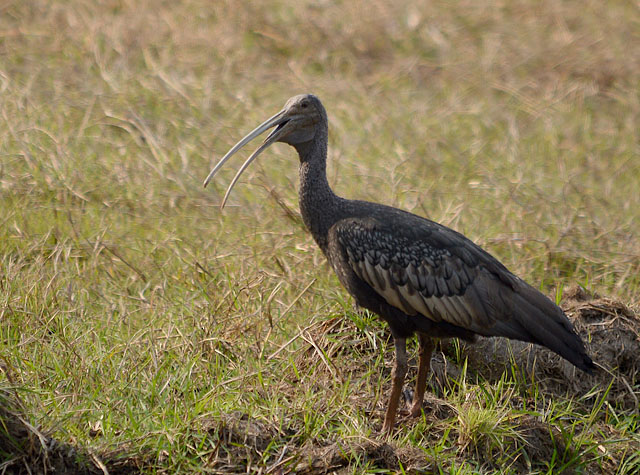
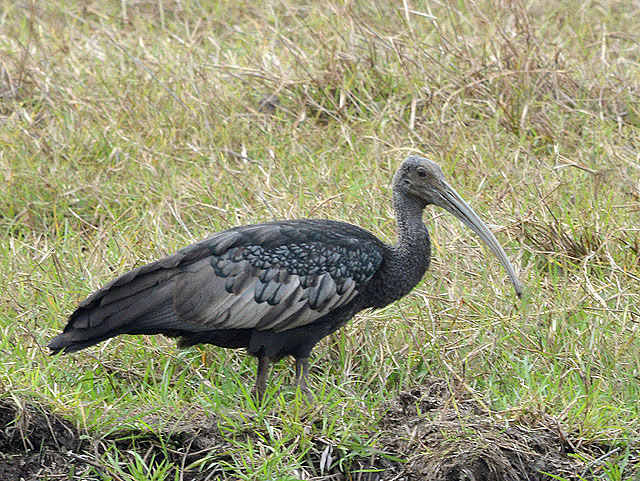
But Cambodia and its amazing fauna weaved its magic one last time for our group of four. A large dark water bird alighted just beyond the open area of the ibis pond. I froze and hushed my fellow companions. The Giant Ibis was back and it was almost too good to be true. It remained hidden from view for a good half hour and if not for Mardy who also caught sight of its arrival, I would have seriously considered that it was my imagination playing a cruel trick on me. I held my breath when the enormous ibis cautiously walked towards the pond. I thought fighting my urge to shoot for the Woolly-necked Storks was difficult but this was really killing me. When the ibis finally settled down and started to forage, I started documenting one of the most testing and intriguing encounters for my trip to the Kingdom of Wonder.


The lighting may not be flattering and the distance from the bird was at the borderline of my modest photography setup’s comfort zone. But I was enjoying every moment of the encounter. The Ibis King went about searching for food in total ease now and I got down on my knees in the presence of this magnificent animal and tried to shoot from the lowest angle possible.


Human birders were not the only ones excited with the arrival of the Giant Ibis. The Pond-herons, as expected, were up to their passive pirating behaviour again.


What was not expected was the sudden formation of clouds that helped diffused the harsh lighting of mid-afternoon. How can I, a mere mortal, now doubt the existence of a greater power when I am here experiencing a series of miracles unfolding before my very eyes?


From utter disappointment to unbridled jubilant, the Giant Ibis of Tmatboey toyed with my emotions and sanity before presenting me with an experience of a lifetime. After all this is its domain and we were just guests or if you want to be crude, intruders to this harsh but surprising bird-rich land. We could just as easily ended up with nothing but a fleeting glimpse of a retreating Giant Ibis. And for that, no words can describe my gratitude.


Now, more than 2 weeks since my return to homeland, I can finally conclude my blog postings of this incredible trip. I am in awe of the bird life in Cambodia and the memories will forever be cherished. No doubt the birds especially the large and rare water birds were the main highlights for me. In the end, I94 species of birds were recorded of which 54 were lifers. But the country, the landscape and the people also played a role to make this trip complete. Rugged and rustic, the village of Tmatboey may not be everyone’s idea destination for a dream vacation but it houses of some of the most enigmatic bird species on the planet. To me, that is heaven on Earth.


Finally, there are my companions Nigel, Jimmy, Kok Siong and of course Mardy (our outstanding guide) all whom I got to share this awesome chapter of my birding life with. Well, until my next birding adventure abroad. The Penang Birder signing out for now.


Checklist of the birds recorded