Pages

Showing posts with label Garganey. Show all posts

Friday, 22 December 2023

A Manchurian for Christmas


It is common knowledge that our forests are under threat but the devastation does not end there. Wetland habitats suffer a similar fate. In my home state of Penang, I am running out of wetlands to visit. And for someone with a soft spot for water birds, it is utterly depressing. The marshlands at Batu Kawan would have been my saviour if it has not been slated for development in the near future. At the break dawn, my companions and I plodded along the soft laterite access road cutting through a construction site. It may not sound much like a birding trip but that is what one has to endure in order to reach the said wetlands. Sad but true...


I may not speak for everyone but the sight of a congregation of large water birds never ceases to amaze. Flock by flock of water birds arrive at this feeding ground from their roosts in the surrounding vicinity. For the record, this location probably has the highest density of Purple Herons and Grey Herons in Penang and the numbers are incredible. I opted to observe rather than photograph because that is where the true value lies and this image of a lone Grey Heron may not be able to fully convey the moment.


The advancement in digital cameras of late is undeniable but they do not come cheap. So, for the time being I still rely on pressing the shutter and pray for at least one frame to turn out decent. However, there is a limit to how much one can achieve through prayers especially for a flight shot in dim lighting like this taunting Cinnamon Bittern making its way to breakfast.


One has to be observant to pick out the small but adorable Long-toed Stint from all the blobs of mud, debris and vegetation present in the wetlands. The distance may have robbed me of some of the joy but the Long-toed Stints have their way to gain my affections.


A trio of drabber looking stints dashed across our field of view haphazardly and alighted on a distant sandbank. Our initial guess was spot on when they turned out to be Temminck’s Stints in the end. This species is an uncommon winter visitor to our land and more than capable to excite even the most seasoned birder.


My encounter with the rare Common Ringed Plover here last season left much to be desired. Naturally, all Little Ringed Plovers were scrutinized for a possible re-occurrence of the former but I could not attain the closure I seek.


The Black-winged Stilts graced the location in good numbers with their elegant presence. The new generation of birders and bird photographers may not be aware that this bird was once a rarity in Malaysia but I certainly do. Decades may have passed. Exhilaration may have been reduced. One of my all-time favourites, the bird remains.


They are conspicuous not only because of their contrasting colouration but vocal nature as well. More often than not, they drown out most other species that share their watery domain. This temporary sanctuary will host the Black-winged Stilts and the rest for at least one more season. I am no soothsayer but unless a miracle takes place, the demise of this locality is just a matter of time.


It is safe to say it is no longer unusual to record Little Cormorants in the northern half of the peninsular. A big flock resting together after a morning’s hunt is an impressive sight. One that I am still trying to get used to.


Garganeys, on the other hand, are unusual with sporadic winter records throughout the years. And to have four individuals together at a single spot close to home should be my early Christmas judging on how slow things have been for this year.


Apparently, the Lesser Whistling Ducks have had enough of the overwhelming stench and toxic at the marshland next to the Pulau Burung landfill and are now taking refuge here. I wish there was a way I could warn them not to get too comfortable because the good life they are now enjoying is not going to last.


There is a good reason behind the name of the Greater Painted-Snipe. The female bird (yes, female bird) is vibrantly coloured and stunning. There is also a reason why she seldom reveals her true beauty for evolution has made her particularly elusive.


Wetland habitats are not without their dangers. Raptors are always on the lookout for prey and today, a male Eastern Marsh Harrier was on the hunt. Harriers are generally uncommon at this location but this individual seemed to have decided on his wintering ground this season. His malicious presence will not be welcomed by other wildlife but it certainly added value to our excursion.


Executing a mid-flight scratch to get rid of an annoying itch…


The Zebra Dove is about bite-size for the Eastern Marsh Harrier and its tendency to perch in the open can be hazardous to its health.


The Long-tailed Shrike is predatory as well but on a smaller scale. This is one of the few places in Penang where this beautiful species resides and has been recorded regularly.


It is normally a shy bird despite occurring in scrub and open country habitats. Today, a pair was being more confiding than usual perhaps due to the approaching breeding season. Whatever the reason may be, I do not come across the Long-tailed Shrike often enough not be thrilled by their performance.


There was a significant change to the taxonomy of birds recently. More splits and renaming – as usual. Inevitably, I try my best to keep myself updated for Malaysian species. Among the changes, the Intermediate Egret is now called the Medium Egret which I cannot help but to chuckle when I first found out. I do not know how to put it but it just sounds odd. Will the Little Egret and Great Egret be renamed as to go with the flow?  Anyway here is the bird, with no regards that it is now probably the most joked-about bird wherever it occurs, looking all so poised at our second location of the day which is the Permatang Pauh paddy fields.


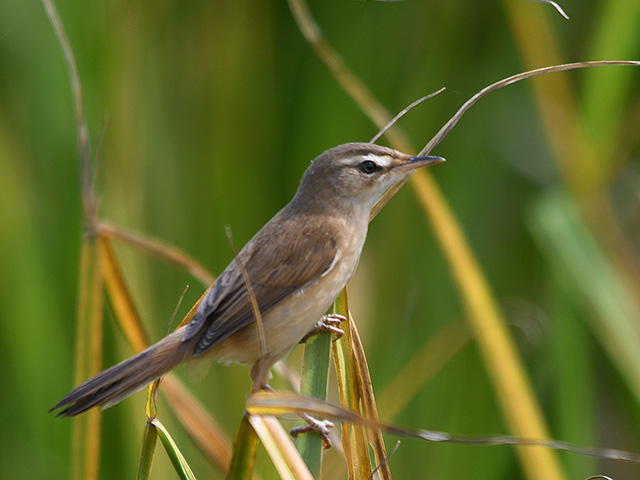
Searching for a little brown job in dense vegetation is not every one’s cup of tea. I will usually give it a pass but my companions convinced me otherwise. A lot of thought and strategy was put into the approach this time and we managed to persuade two Manchurian Reed-warblers to settle into a small clump of reeds. In fact, the smallest clump in the vicinity and just next to the access road. I could almost taste success when these globally vulnerable migrants put the human observers in their place and reminded them just how difficult reed-warblers can be if they choose to be.


When the vegetation finally gave way to a less obstructed view, it was the lighting’s turn to dampened our photographic efforts. Murphy's Law at work again.


However, birders can be exceedingly stubborn and determine especially with failure looming. An unexpected turn of luck eventually had the Manchurian Reed-warbler alighting on a relatively open perch with decent lighting. If this is not proof of the existence of a higher being, I do not know what is. As we were enjoying our moment of triumph, the reed-loving warblers gradually made their way out of sight but not out of memory. A fitting end to a rewarding outing and I am relieve there is no negative conclusion to this posting for a change. Perhaps, it is the magic of Christmas at work.

Speaking of which, MERRY CHRISTMAS & HAPPY NEW YEAR to everyone!

Thursday, 23 January 2020

Where is the damn duck?


The weather here in northern Peninsular Malaysia has been unforgiving of late. With the Chinese New Year just around the corner, this hot spell is pretty much expected. I take comfort in the fact that for a birder like me, it is rain that I dread for the heat never really bother me anyway. My first destination for this 2-day birding adventure with an American guest started off at the foothill of Bukit Larut. However here at Rain Town, the sun rises later than usual even when a scorching day is in expectation.


There is no better way to start off a tour than with a pitta. The sun had barely pierced through the lush vegetation of the rain forest when a migratory Hooded Pitta hopped into view. Typical of pittas, it was an absolute stunner. Vibrantly coloured and full of character, the Hooded Pitta set the pace for our visit here and my guest was in for one hell of a ride.


The male Chestnut-naped Forktail floated into the trip with such poise, it was impossible to ignore his presence. Another terrestrial bird but with a preference for a semi-aquatic lifestyle, this striking forest gem is usually shy. And for the time being, this stakeout is the best spot in the country to appreciate the true splendour of the Chestnut-naped Forktail.


When the king finally arrived, all eyes were on him. There is no denying that the Rufous-collared Kingfisher is a spectacular species of the lowland forest. Forest kingfishers are in a class of its own and those species that occur in more open habitats just simply lack the X factor.


This is not Bob’s first visit to Malaysia and I have hosted him before. Inevitably, lifers do not come that easily to him now and the Rufous-collared Kingfisher appeared to be the most exhilarating one for him here. I do not blame him for when the sun illuminated both locality and bird, we were momentarily transported to a secret birding wonderland and enjoying every second of it.


I cannot help but to feel sorry for the Green-backed Flycatcher. Size does matter at this birding hotspot and the little guy only made brief appearances to avoid confrontations with the bigger birds.


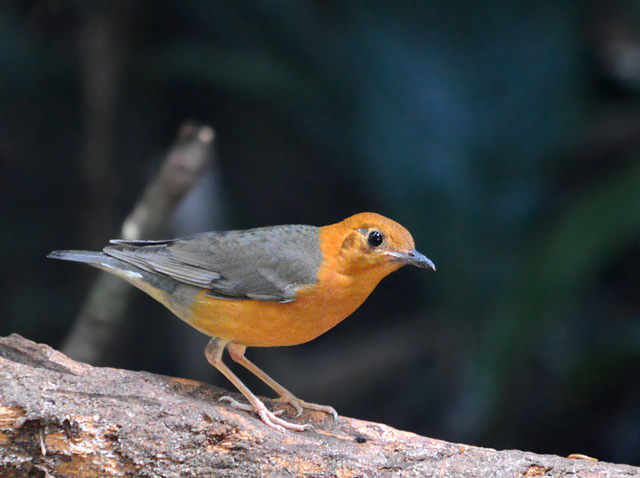
Today, the Orange-headed Thrush appeared somewhat restless. And it was aggressive towards one of the birds present. High speed chases was a regular feature and gradually, I realized the reason for the exceptional aggression.


It was another male Orange-headed Thrush and clearly, the two were not good bedfellows. There is a difference in the facial plumage of the birds. Clear enough for an amateur like me to tell them apart. The thrush is another striking species at this spot and both guest and guide were well contented.


We took a leisurely walk later around the foothill and managed to obtain a few more species. A pair of Scarlet Minivets frolicking about the highest canopy levels had our undivided attention. The male, with his contrasting black and red colouration, was mesmerizing especially when the sunlight catches him in mid-flight. Unfortunately, he did not wander close enough for anything more than record shots.


A deserted Indian Shrine now houses wildlife and a pair of Zebra Doves have certainly made themselves right at home...


I had mixed feelings when I saw a troop of Pig-tailed Macaques gorging on what appears to be handouts. Somehow when the alpha male was stuffing his face with human food, he loses his usual imposing stature in my eyes. At the end of the day, it is all about survival and I should not pass judgement on him.


I am not sure if these young ones were waiting for their turn at the ‘table’ or they have had their fill…


Migratory ducks are scarce here in Peninsular Malaysia but recently 3 species were seen together at the marshlands surrounding the Pulau Burung Landfill. And that is almost an unbelievable occurrence. We swung by the locality on the way back north but to my dismay, only the pair of Garganeys were present and they were resting miles away (or seemed that way to me). I did one last desperate sweep at the flocks of Lesser Whistling Ducks just make sure I did not overlook the Tufted Duck or, God forgive me, the Eurasian Wigeon which would have been a Malaysian lifer for me.


The common resident Lesser Whistling Ducks provided ample photographic opportunities. And I would not expect anything less. Birding will always go according to plan – said no birder ever.


At the paddy fields of Permatang Pauh, our luck did not improve much. With the phenomenal influx of Asian Openbills to the country this season, inevitably it was the only species worth photographing here today.


The last destination of the day was the Air Hitam Dalam Educational Forest. Once again, the Asian Openbill prevailed and provided some photographic opportunities.


Along coastal areas like these, the Collared Kingfisher is the predominant species. A confiding individual gave a good reason for us to halt our search for birds. Often taken for granted due to its common status, the Collared Kingfisher is nevertheless loud and beautiful.


Odd enough, there was a brief shower as we entered the borders of the park but it did not last long enough to have any impact on the surroundings. So, this drenched Square-tailed Drongo-Cuckoo found relief from the heat via another source.


Normally after a day of birding, I look forward to the comforts of home. Today, something held me back from this simple pleasure in life. As soon as I stepped out of my parked vehicle, a pair of White-bellied Sea-eagles greeted my arrival home by circling in the sky above. Upon further scrutiny, one of the eagles was an immature bird. The plot thickened when I noticed that the other bird, an adult, had a fish in its grasp.


I do not consider myself to be an expert. I am just a bloke with a thing for birds. In my humble opinion, I would presume that the immature was trying to obtain a free meal. Anyway as soon as the majestic raptors disappeared from sight, I hastened my walk home to a much anticipated shower and rest. For another day of birding awaits tomorrow and that will be covered in my next post.


Wednesday, 18 November 2015

It ain't over till the fat lady sings (14/11/2015)

One of the things that I fear the most when leading a guided tour is the absence of birds - naturally. Kumar and Sujatha's first day of tour did not start off well. This couple from Chennai dipped out on the roosting Barred Eagle-owls at Kulim that I normally show guests. And I should have heeded the warning. We were greeted by the dawn chorus and clear blue skies at the Sungai Sedim car park. However, apart from the Treeswifts at their usual morning perch and a teasing Scarlet-rumped trogon, there was nothing much about that I could actually show. Three hours had passed and still nothing. It was as though the forest had swallowed every single bird. The stress and anxiety was killing me. I was half expecting Kumar to walk up to me and ask me if there will be birds in my guided bird tour.


Thankfully, that did not happen. Out of desperation, I took my guests on a trail less trodden and at the end of that trail, my prayers were answered - a fruiting tree that was alive with bird activity. At that moment, I could safely say my job was done. With my composure and confidence back to normal, I started to point out the birds starting with this Cream-vented Bulbul.


With only the eye colouration being the most distinct difference between the Red-eyed Bulbul and Cream-vented Bulbul, a confiding Red-eyed Bulbul would probably be the best way I could show my guest the differences. Ask and you shall receive…


A total of nine different bulbuls were recorded at the tree and apart from the sulking Yellow-bellied Bulbul, we managed to photograph all of them. This Hairy-backed Bulbul was almost as difficult and provided very few shots.


By the time the Finsch's Bulbul decided to drop in, the bulbuls at this fruiting tree really had me singing for my supper as I had to differentiate all of them to my client. I could imagine how confusing all these bulbuls are to visiting birders. When not seen well, bulbuls can be confusing to me as well.


The Grey-cheeked Bulbul was being itself today - bulky, vocal and robust. It was certainly hard to overlook it despite the presence of so many other bulbuls.


There are some Bulbuls that certainly do not require much effort to differentiate them from the rest like this splendid Grey-bellied Bulbul.


A pair of Ashy Bulbuls announced their arrival to the fruiting tree with their nasal and persistent calls. This strikingly marked bulbul made our observation at this fruiting all so rewarding.


One of the most photogenic of the bulbuls present today was the Streaked Bulbul. Being slightly more uncommon than the rest, it had our attention the moment it alighted on the fruiting tree. It may lack the colours of some of the other bulbuls but it always projects a sense a grace with its sleek body contour.


The fruiting tree also produced a few species of Leafbirds, Flowerpeckers and Sunbirds. Witnessing such a feast of colours and variety certainly build up our appetites and lunch came soon after that. Our next destination was the paddy fields of Kubang Semang. I drove straight to the spot where the wintering waders were performing well and sure enough, about 40 Grey-headed Lapwings were resting on a flooded field.


As my guests were enjoying their lapwing lifer, I scanned the vicinity for anything else. My senses went into overdrive when I spotted 3 ducks among the lapwings. I could hardly contain my emotions and for the first time today, it was the guide who was quivering with excitement and not his guests. Ducks winter in the hundreds where my guests call home and it will take a whole lot more than three for them to have the same reaction. 


Anyway, upon further scrutiny, the ducks turned out to Garganeys. I felt I needed to justify myself by explaining how uncommon this species is here and that the ones we were looking at was my fourth record in all my years of birding.


Show-off!


Our last destination for the day was the Air Hitam Dalam Educational Forest. Like clockwork, we were greeted by the usual species upon our arrival at the rear car park. Unfortunately, things did not quite pick up after that and this Black Kite was probably the highlight for me at this site. Despite the initial hiccup at the beginning of the tour, we did have a good outing at the end of the day. And it is all thanks to some blind luck and a fruiting tree.