Pages

Showing posts with label Oriole. Show all posts

Thursday, 16 December 2021

A world record holder


The morning was bright and beautiful as I made my way across the Straits of Malacca. Initially, I just wanted to do some casual birding on the island but not a single locality came to mind. Utterly fatigued from the insane work load of my fulltime occupation, to make a long trip today was simply out of the question. The next best thing was to visit a local patch in mainland Penang and since choice is never a luxury there as well, I found myself wandering about the network of concrete boardwalks at Air Hitam Dalam again.


Perched conspicuously at the edge of the freshwater swamp forest was a Brown Shrike on the hunt. This common migrant can hardly be considered a sought-after species but the composition was so inviting and the bird, exceptionally obliging.  


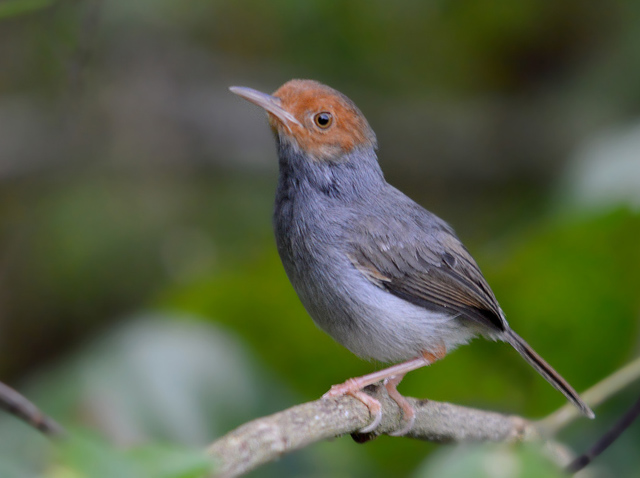
I found the forest eerily quiet today. This birding haunt has lost much of its luster of late – just like most other sites I frequently visit. As my footsteps grew heavier, my thoughts started to drift until a vocalizing Ashy Tailorbird shattered the silence. It took some effort and patience before I found the bird and it turned out to be a handsome male. It is amazing that a small bird like the Ashy Tailorbird can cause such a ruckus. He certainly had the place all to himself this morning and that indirectly increased the decibel of his persistent territorial call.


The Air Hitam Dalam Educational Forest is a small site and with absolutely no relevance at all, it is also home to the tiny but deadly Black-thighed Falconets. The top of this particular dead tree is not exactly ideal to capture the smallest bird of prey in the world due to its height but it is one of their favourite perches. And sure enough, I could just make out a single bird present with my naked eye upon my approach.


It was joined later by another of its kin and judging from the amount of public affection exhibited, they are most likely a breeding pair. Like all raptors, the larger bird is most likely the fairer sex. There is no denying the stunning beauty of Black-thighed Falconets and naturally, I found it hard to pull myself away from the lovebirds.


However, do not be fooled by the adorable appearance of the Black-thighed Falconet. It is an accomplished predator in its own right and this unfortunate dragonfly found that out a little too late.


At this site, a congregation of raptors leisurely soaring about can only be the wintering Black Kites. I quickly repositioned myself in order to have the lighting in my favour. About a dozen of these raptors were present today and a few of them circled exhilaratingly close overhead.

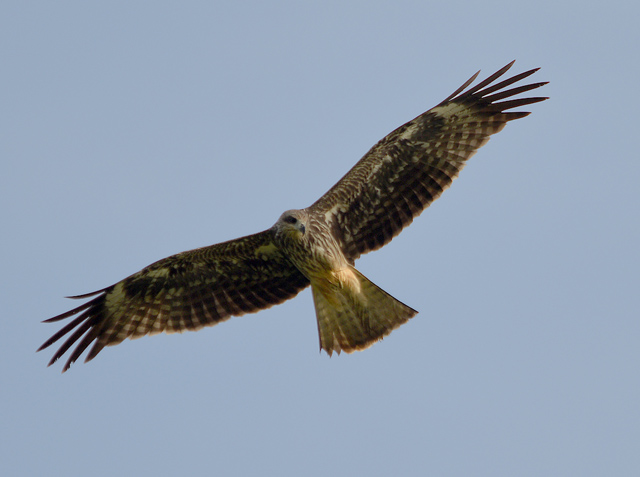


Sleek and elegant, the Black Kites floated and swerved their way to become one of the main highlights of this short trip. The sunny condition aided my photographic efforts. And the number of images shared here in this post will be able to accurately illustrate my feelings during the encounter.


One last photograph for good measure...


Unlike the winter visitors, there is only one resident pair of Brahminy Kites here and the rising temperature set them soaring about the vicinity as well. Although they are more vibrantly coloured, the Brahminy Kites did not provide much opportunity for this quality to be admired as they were skittish as usual.


Raptors are one of my favourite birds and I am sure I do not speak for myself. Their ferocity and majesty are often incomparable. When the piercing call of the Crested Serpent-Eagle filled the vicinity, I could hardly contain my excitement. The presence of so many raptors in such a short time can be overwhelming to say the least and I intently watched this eagle with a taste for cold-blooded prey conduct an aerial patrol of its domain.


Although it is not a bird of prey, the Asian Openbill casts a familiar silhouette in the sky during this time of day. This stork that can sometimes number up to a hundred strong, soars effortlessly on its immense wings and is quite a sight to behold.


Like the Asian Openbill, the Little Cormorant is also a recent colonizer to Peninsular Malaysia that is settling in well indeed. This lone bird, presumably taking a breather after raiding the commercial fish ponds, drew my gaze back to ground level. Big flocks are not commonly encountered in my home state and more often than not, it is particularly wary of human presence. Luckily, there was a lot of objects to help hide my human form as I stalked this skilled hunter.


Egrets of all shape and sizes also loiter around the ponds with the same intentions. Like the name implies, the Great Egret is by far the largest and undeniably regal.
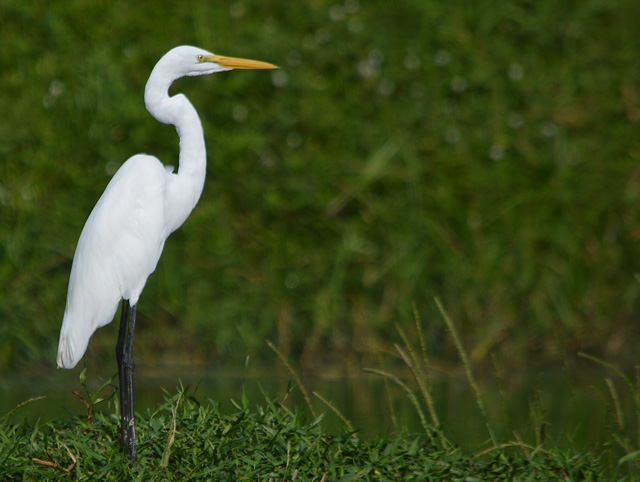


The Little Egret may not be the smallest by it is still dwarfed by the presence of the Great Egret.


An adult Purple Heron tried its best to remain inconspicuous while resting at the edge of the fish farm but its plumage colouration was just too attractive not to take notice.


Decades of birding should have made me an observant man and yet, I did not realize there was an adult Grey Heron in the vicinity until it took flight set off no doubt by my intrusion. It alighted on a nearby tree and this lucky shot of the landing turned out better than I had anticipated.


Some movement among a patch of long grass turned out to be a pair of White-rumped Munias feeding on grass seeds. The availability of food made them reasonably confiding and I took the time to observe the feast. Munias are considered to pests by the agricultural industry but to me, they are just living things trying to survive in this hostile world.


Due to its abundant nature, the Pacific Swallow is usually ignored. That is a real shame because when seen in good light, this aerial specialist is strikingly beautiful and streamlined to perfection.


I have had enough share of leech bites to know when I have fallen victim again to this blood-sucking parasite. It may have been a long time since the last time but there was no mistaking the squishy feeling between my toes. As I was about to attend to this little inconvenience, the cheerful song of the Black-naped Oriole distracted me from the task at hand. The leech bite can wait but this stunning bird will not. Although it even occurs in residential areas, I find it difficult to obtain decent images. And here, along the line of tall riverine trees, it is not any easier.


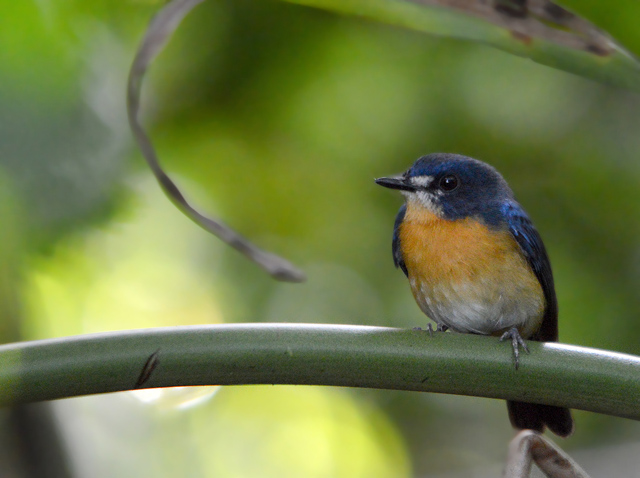
I would have walked past this female Mangrove Blue-Flycatcher on the way to my parked car if not for her short burst of song. The forest undergrowth can sometimes be a challenging environment for photography and my modest gear could not capture her true beauty on this occasion. This species is not as prominent here as it used to be and that is disheartening. But her presence today meant that there is still hope and what better to end a birding excursion than on a positive note.


Wednesday, 23 December 2020

The case of missing Mugimakis


I have been constantly kept away from birding of late and it was rejuvenating to finally get to venture out into the field again even if it was only for a couple of hours. This time last year, the Penang Botanic Gardens surprisingly became the centre of attention for birders throughout the country because of the presence of Asian Emerald Cuckoos. A few notable migrants started showing well again in the form of a Taiga Flycatcher and Mugimaki Flycatchers. Their aesthetic appeal and charisma are not quite in the same league of that of the cuckoos and naturally, did not caused that much of a ripple in the birding community. Thus, I found myself alone as I searched for the flycatchers on this wet and gloomy morning.


The overcast sky cloaked the vicinity with an extended state of dawn lighting and undeniable evidence of last night’s heavy downpour made me ponder if it would have been wiser for me to sleep in late instead of birding in such a challenging condition. The Crimson Sunbird is not much of a singer but its call is quite distinctive to my ears. And one was certainly present nearby. This location is one the best site I know for Crimson Sunbirds and it did not take long for me to start ogling at a handsome male satisfying his sugar craving on a low flowering bush. It was a close and prolonged encounter and all thoughts of comfortably curling up in bed ceased to taunt me.


The lighting may have dampened my efforts to digitally capture his splendour but in real life, his vivid colouration pierced through the gloom like a fiery torch.


I come across Black-naped Orioles frequently in my housing estate and they are undoubtedly one of the prettiest garden birds in Malaysia. It may be a common bird but I do not have as many photographic opportunities with the Black-naped Oriole as I would like to. The striking beauty of the bird helped to brighten up the morning’s excursion.


The Penang Botanic Gardens has long been a stronghold for the Crested Myna and here, it outnumbers every other myna species. Somewhat of a Penang speciality, this species continues to thrive throughout the Pearl of the Orient.


As I wandered about this popular recreational location, I unintentionally flushed a pair of foraging Spotted Doves. The birds here are certainly accustomed to human presence and were hardly perturbed by my intrusion. They alighted just a few feet away and carried on with their foraging.


There was a fruiting tree in the vicinity but the fruits were almost depleted. Although there was hardly any bird activities, a pair of Olive-winged Bulbuls still came for whatever that is left.


They stayed for quite a considerable amount of time and me, having nothing else to keep me occupied, accompanied them until they moved on.


The search for the migratory flycatchers proved to be more difficult than I had anticipated. Except for a brief glimpse of a female, the Mugimaki Flycatchers were nowhere to be seen. That is a real shame for the male is an absolute stunner and one of the deciding factors why I chose this landscaped garden for my birding excursion this time. A little brown flycatcher hawking for insects did not evoke much excitement for I have not seen a Taiga Flycatcher hunt this way before here in Malaysia. As expected, it turned out to be an Asian Brown Flycatcher and no amount of scrutiny can change it into anything more notable – I tried.


A short while later, I came across another little brown flycatcher. Foraging about the lower level of a bamboo clump, it exhibited a more typical behaviour of the Taiga Flycatcher. When it started cocking its tail, the identity was no longer in doubt despite the distance. With a little perseverance, I managed to reduce that distance and obtained some decent images of this scarce migrant.


The Taiga Flycatcher may lack the bright colouration of the male Mugimaki Flycatcher but I am grateful to be able to spend time with it. It is way much better than missing out on both species – that is for sure.


A hunting Square-tailed Drongo-Cuckoo brought back memories of last year’s Asian Emerald Cuckoo because it was doing the exact same thing – gorging on caterpillars. This species tend to be quite tolerant of human presence and I managed to approach it without much effort.


The cuckoo’s hunt lasted several minutes and that was more than I could I have asked for. While it focused on satisfying its seemingly insatiable appetite, I took full advantage of the situation to obtain images of this sleek bird.


It was momentarily joined by another individual but sharing appeared not to be in their nature. Hostility ensued and one of them left the vicinity soon after. I can only presumed this was the second bird as the tails feathers appeared tidier. Anyway, it was just as confiding and continued to provide good photographic opportunities. Some Christmas magic after all...


In terms of birding, there is nothing much for me to shout about this year. Christmas did not come early for me nor will it be late. A Little Egret nicely moulting into breeding plumage is my Christmas angel this year. One thing about the pandemic that the world is still facing is that it has reminded us well to be grateful for what we have or have been given. To all those celebrating, I wish you a blessed Christmas.


Monday, 1 June 2020

Enjoy the little things


I awoke to a Saturday morning that was simply too beautiful not to be out in the field. It has been a while since my last visit to Sungai Burung – a local patch located at the south-western corner of Penang Island. The scenic drive that cuts through the central hilly region to get to the site is now marred with the massive construction of an elevated highway. Luckily, the site itself remained pretty much the same as I last left it. In fact, I found the rural landscape to be more captivating than usual today. Or perhaps it is because I have been away for far too long.


The Black-naped Oriole is one of the most attractive birds that occurs within human settlements. I came across one resting on an electrical cable and it appeared to be in no particular hurry to start off the day and neither was I. Besides, I could use some colours in my life right now and the radiant plumage of the Black-naped Oriole will certainly do.


Feral species usually do not do it for me but Barbary Doves are still relatively uncommon here in Penang. Two pairs were seen perched suspiciously just outside a village house. The doves could well be free flying pets as they exhibited very little fear of my approach.


One pair had no intentions to conceal their feelings for each other. And I guess in no time, Barbary Doves will be a regular sight here but hopefully, not the entire island. We have more than enough Feral Pigeons flying about everywhere as it is.


An immature Blue-tailed Bee-eater was also making full use of the electrical cables. Unlike the doves, the youngster was using this man made structure to hunt for breakfast rather than procreation.


Along the access road next to the mangroves, the resident Collared Kingfishers were certainly out and about. Most have paired up for the breeding season and their raucous calls constantly broke the serenity of the surroundings.


There were fewer White-throated Kingfishers present which is expected of this location. In birding, it is sometimes about quality rather than quantity and this one White-throated Kingfisher provided the best photo out of all the kingfishers I came across today.


There was a big downpour the night before but it still does not explain why this Dollarbird is looking so miserable and wet. Not when other birds are looking prime and proper.


Despite having to endure human trappers, both the Zebra Dove and its bigger cousin the Spotted Dove are doing surprisingly well. While birding along the edge of the mangroves, I came across numerous individuals of both species. And one exceptionally tame Zebra Dove managed to convince me to stop for a photoshoot. While enjoying some sunshine on the rocky divider between the access trail and the mangroves, the little guy literally ignored my approaching vehicle. With the lighting condition ideal and the subject at eye level, it was almost too good (and easy) to be true.


The doves might be enjoying the good life here but they better not let down their guard too often. In this healthy ecosystem, predators lurk. The Crested Serpent-Eagle generally prefer a reptilian diet but who is to say if it suddenly acquires a taste for avian meat.


Brahminy Kites are aplenty today and the majority of them were juveniles. It is a scavenger by nature but will take life prey when the opportunity presents itself and small birds are certainly part of its diet.


The Purple Heron has little to fear from these raptors as it is simply too big for them to overpower. It enjoys its time in the sun with very little worries. At this location, the only species that poses any real threat to it would be humans. But not this human for he has nothing but admiration the heron’s stately presence.


At the nearby estuary, Striated Herons are abundant and it has been that way for as long as I could remember. Immature birds lack the lovely plumage colouration of the matured birds.


An adult Striated Heron is an attractive water bird that most birders and bird photographers often take for granted. But today, I was not on tour nor was I on any twitching mission. Today’s excursion was a relaxed outing to a local patch just to catch up with all the birding I was deprived of by the government’s partial lockdown order. And I intend to enjoy the little things like giving the Striated Heron the attention it truly deserves.


Even the Pacific Swallow managed to grab hold of my attention today and that does not happen often.


This is one of the few locations on the island where the Large-billed Crow can still be seen regularly. There is no doubt they are losing out to the marauding House Crows and that is a shame. I like the Large-billed Crow more or maybe I am just biased towards the House Crows for all the misdeeds they are capable of doing.


I kept a look out for Javan Mynas as they have been recorded from the island as well. However, there were not many mynas around today and those few Jungle Mynas that came my way did not produce any surprises.


As I was driving next to the river, I was surprise to see five Grey Herons at a single spot each perched on a different but adjacent tree. It appeared to be like a small heronry and in all of years of birding here in the Pearl of the Orient, this is my biggest count to date.


Another notable personal count for the island was a group of six Red-wattled Lapwings. Long before I could see them, I could hear their loud call as I approached the paddy fields. I have seen Red-wattled Lapwings at this site irregularly through the years but always lone birds. This species is doing so well throughout the peninsular nowadays and there is really no reason for them not to thrive here as well.


A few all too familiar silhouettes glided across the sky before alighted on a flooded patch of the paddy fields. It was not unexpected but to finally know I share my island home with Asian Openbills was definitely the highlight of the trip. I do not think this is the first confirmed sighting from Penang Island but it does not really matter. These unique storks have settled in well just across the narrow straits that separate the island from the mainland. It was just a matter of time before a few decide to opt for an island life. Unlike the invasive Javan Mynas, these storks certainly have my welcome.