Pages

Showing posts with label Whistler. Show all posts

Wednesday, 20 June 2018

Life in the mangroves


It has been quite some time since my last birding excursion. Heavy schedule at work and the absence of tour bookings were some of the contributing factors. A last minute booking for a half-day trip was accepted with much enthusiasm. My guest this time is originally from Australia but now based in Hong Kong as an insect researcher. The predawn thunderstorm was some cause for concern. Gloomy skies greeted us as we arrived at the mangroves of Sungai Batu in Kedah state but at least the rains had stopped by then. For that, we were truly grateful. A flash of colours darted through the undergrowth of the swamp forest as soon as we stepped into this muddy domain. It was the resident Mangrove Pitta and after all this time, the mere sight of this pitta still makes my heart skip a beat. The radiance of the sun may be absent but in its stead, the vibrant beauty of this terrestrial denizen.


The White-breasted Waterhen is probably the most encountered rail in Malaysia due to its confiding nature and common status but it is still fascinating to observe. The striking colouration also made it one of the highlights of the trip for my guest.


While we are at the subject of colouration, the resident pair of Mangrove Blue-Flycatchers flaunted their way into this birding excursion and their presence certainly did not go unnoticed.


Beauty is not the only trait that makes birds such remarkable creatures. Sometimes, it is talent and ability. The Mangrove Whistler, as the name applies, is an accomplished vocalist. The distinct whip lash note of its song can be heard not only in mangroves but other suitable habitats as well. It is a species I seldom see but to be totally honest, there is nothing much there to see. Its dull colouration may help it blend in with its surroundings but it is its powerful song that makes it exceptional.


The confiding nature of this individual resulted in one of my best images of this species to date. It is also the first time I have recorded the Mangrove Whistler at this location despite countless visits in the past. The mangroves are a vital ecosystem and on this day, it provided immensely for a couple of birders on a quest to observe the alluring bird life here.


A lone Dollarbird decided to use this dead tree as a vantage point to launch its aerial assaults for winged morsels. Shooting against a gloomy sky will hardly bring out the true colours of the subject. However, nothing much can conceal that conspicuous red bill though.


Red Collared-Doves are regulars at this locality and a small flock foraging along the edge of the access road had our attention – naturally. The shooting conditions were again challenging and my images did no justice to the sultry splendour of these doves.


There are always exceptions to the rules of the animal kingdom. Among birds, a few species have their females more strikingly coloured than their male counterparts and even their roles are reversed. The Barred Buttonquail is one such bird. Anyway typical of small gamebirds, the Barred Buttonquail can be difficult to encounter despite being a common species. And a striking female standing right out in the open deserves to be posted regardless of the quality of the image.


My Australian guest enjoying the antics of a pair of Common Flamebacks...


The next and final destination of the trip was the swamp forest of Air Hitam Dalam. Bird-wise, the locality did not meet expectations and it was a relatively slow visit. Some of the regular residents were on hand to ensure we do leave empty handed. A female Common Iora resting among the foliage offered one of the few photographic opportunities during our visit here. The varied and pleasant song of her mate was what caught our attention initially but he remained hidden throughout the observation.


Most foreign birders are fond of kingfishers here in Malaysia because of the birds’ character and appeal. The Collared Kingfisher is the commonest one at this birding spot and one pair of was in the process of increasing the local population. Crabs form a major part of their diet and this parent bird was bringing food back to the nest located somewhere within the swamp forest. I certainly have had better birding days at this local patch but it still felt great to be able to get out into the field again.


The acquisition of a new motorcycle helped eased my suffering during the non-birding period. Bikes have always been an integral part of my life. They are to me more than just a means of transport. My new bike may not be top of the line automobile technology but it is sufficient to inject a dose of excitement to my daily commuting and weekend escapes. It also serves as a good subject for a genre of photography that I am now beginning to explore.


Monday, 21 September 2015

My Bornean birding adventure - Day 3 & 4 (13-16/09/2015)

On our second day at Kinabalu Park, we left the warmth and comfort of our chalets room well before dawn. A short pre-dawn birding yielded only a heard record of the Mountain Scops-Owl. We headed towards Timpohon Gate again because we were hoping for a repeat performance of yesterday's events. On the way up, we stopped and offered a British birder that we met yesterday at the gate (I never caught the man's name). He has been here nearly a week and for the past few days, he has only one bird on his mind - the Friendly Bush-Warbler. So, the man walks at 4:30am from Kundasang (a small town just outside the park) to Timpohon Gate which is easily a 10km uphill journey just to see a little brown job. And people say that I'm insane...

At Timpohon Gate, the forest came alive with the sweet serenade of bird calls after the mist and darkness lifted. Upon first light, we got our first birds for the day. A flock of Sunda Laughingthrushes has also learned to forage for scraps at the car park area but the lighting condition was challenging for any form of photography.


The Chestnut-hooded Laughingthrushes are regulars to the gate every dawn to feed off the insects attracted by the lights at night. This laughingthrush is the commonest of them all here in Kinabalu Park and we recorded them every day.


Although my target for this trip is to see as many endemics as possible, a pair of Mountain Imperial Pigeons resting on a roadside tree was too good a photographic opportunity to pass. This pigeon is not uncommon in montane forests throughout Malaysia but I have had very few opportunities like this.


One thing I have learned from my years if birding is never to take anything for granted and I took a number of shots of this stately pigeon before we moved on.


How hard can it be to photograph something big, loud and usually occurs in flocks? It should be a walk in the park or so I thought. But in the natural world, not everything is always what it seems. The Bornean Treepies have been terribly shy despite their size and has successfully eluded my camera's sensor for the past couple days. When my one and only good opportunity presented itself, I had to make sure I did not squander it...


The birding has been exceptional at Kinabalu Park. I managed to obtain quite a high number of lifers including some extraordinary endemics. But if I were to name one species that stood out slightly more than the rest, it would be the Whitehead's Broadbill. Named after the scientist who first discovered it, this broadbill is like a bigger version of the Green Broadbill and naturally, a Bornean endemic. As impossible as it may sound, the Whitehead's Broadbill is more strikingly plumaged than the Green Broadbill which is already a jewel of the forest itself. I can throw in all kinds of bombastic words to describe the beauty of the Whitehead's Broadbill and all the emotions it has conjured from deep inside my soul when I first laid eyes on it but it will still do very little justice to the bird. And neither will my photos...


Apart from the broadbill, there are two other endemics named after the man - Whitehead's Trogon and Whitehead's Spiderhunter. I dipped out miserably on these two but I should count my blessings for not being denied of all three. The encounter remains so vivid in my thoughts although it is now nearly a week since my return from Borneo. I guess some memories are meant to last a lifetime.


Having lost the battle to the partridges yesterday, we were determined not to let it happen again today as we moved into the forest trails by mid-morning. Barely 50 meters into the trails, my ears picked up the far-carrying cries of a Crested Serpent-Eagle but it sounded strange. Peering through whatever small gaps in the canopy, I could make out two raptors circling overhead and my initial guess of the call was correct. They were indeed Mountain Serpent-Eagles. I have been looking up in the skies for this endemic raptor since the very first day we arrived at Kinabalu Park. Of all times, it decided to show itself when I am almost enclosed by the forest vegetation if the trail. Instinctively, I ran out of the trail as fast as I could. Unfortunately, human legs tend to be slower than the mighty wings of an eagle and by the time I got out into the open again, this was all I have to show for the encounter.


After catching my breath, it was back to the trails - again. Some movement among the undergrowth caught my immediate attention and I was left breathless again. A pair of Mountain Wren-Babblers was on the hunt and I was directly in their path. The undergrowth was a difficult place to obtain good views let alone photographs. At the end I managed a few record shots but it was another exciting encounter. Just in case you are wondering, the partridges got the better of me - again.


Unlike yesterday, the trails provided several noteworthy moments and bumping into this inquisitive Eyebrowed Jungle-Flycatcher was certainly one of them. This little brown job reminded me of the Rufous-browed Flycatcher of the peninsular. Frequenting the under storey of the forest, this flycatcher sometimes behaved more like a babbler than a flycatcher. It was confiding and seemed to ignore my presence as it went about its daily routine. But I found it difficult to capture it well.


In life, sometimes you just have to be patient and wait for your time to come. Before disappearing further into the undergrowth, the flycatcher alighted momentarily in front of me in full view. That, ladies and gentlemen, is the magic of Kinabalu Park. My only regret is that why did I wait more than two decades to finally make a visit to this side of my country.


A birdwave combing through the edge of the forest trail brought in the usual birds. There was a Bornean Whistler in the wave and I did not manage to photograph it yesterday when we saw it in a birdwave as well. But today, the whistler made up for yesterday's arrogance and I, for one, will not be holding any grudges.


On one occasion it came very close to my position. Unfortunately, the light was coming from the wrong direction but that is wildlife photography. You just have to roll with the punches. But even the strong backlight could not deny the Bornean Whistler for the beautiful bird that it is. It definitely deserves all the admiration it received from me and I am betting, from other birders as well.


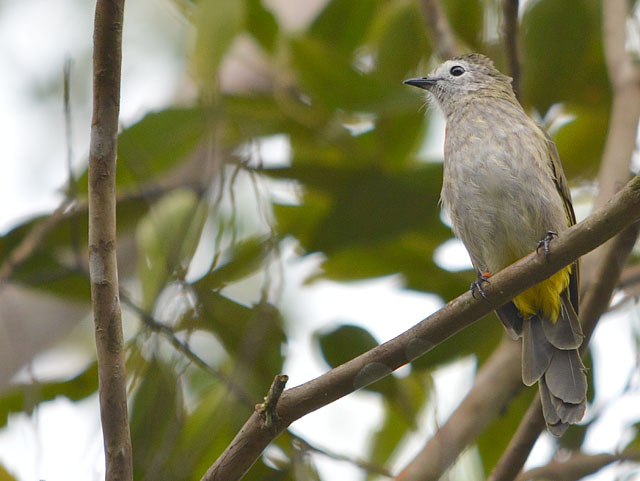
We were so grateful and thankful for the good weather yesterday because by mid-afternoon today, the sky darken with rain clouds and the bird activity dropped significantly. This Flavescent Bulbul was the last species we recorded before the skies finally gave way to the surging rain.


We took shelter from the rain back at our accommodations, J Residence. I usually do not babble much on the accommodations during my birding trips but I think I will make an exception here. J Residence is located about 300 meters from the entrance to Kinabalu Park. From the front gate, you descend steeply to the office/reception building.


Further down the slope are about 8 semi-detached chalets with verandahs that come complete with coffee tables. Some of the chalets have full length glass panels on the front and the side with breathtaking views of the surroundings. Nigel made the right choice by choosing this place over the others and he even managed to get the chalets with the best views!


But the true reason why I love this temporary home is because of the birds. It is always the birds for me. While waiting out the rain at our verandah, I managed to obtain an additional three more endemic lifers! The Pygmy White-eye and the Bornean Spiderhunter just would not stay still long enough for their images to be taken. The only reason I managed to photograph this Chestnut-crested Yuhina is because it came in a big flock. Better odds…


Imagine waking up to a Bornean Treepie in all its glory just outside your verandah. If this is not living the good life, I do not know what is.


I always have a soft spot for puppies especially those with mischief written all over their faces. These two adorable rascals belong to one of the staff at J Residence. I made it a point to play them for a while at the end of each day and they are partly responsible why this trip such a memorable one.


The resident cat also received a fair share of my affections. I do sympathise her because living with the pups can be a little stressful at times. But she still puts up with them patiently and let them have their way most of the time. That's a good girl...


On the fourth and final day, we decided to head to Kota Kinabalu before dawn and do a couple of hours of birding before catching our flight home. At first light, we reached the entrance to the Kota Kinabalu Wetland Center (KKWC) only to find the gates close. A closer look at the signboard says that it will only be open at 8am and that will be an hour-long wait for us. Maybe it is just me but if you are running a wildlife reserve, shouldn't it be open at the time when the wildlife is most active and easily seen? Lady Luck has blessed us throughout the trip and just outside the boundaries of the center, a flock of Green Imperial Pigeon were only starting to stir on a tall dead. This species is scarce back home in the peninsular and to see a flock here at the outskirts of the capital city of Sabah was a privilege to me.


I guess these majestic pigeons are not uncommon here judging on how used they are to human presence. And they certainly helped past the time while we waited for the center to open. 


This may not be the best image of the Bornean race of the Oriental Magpie-Robin but it was the best that I could do. I find the Bornean race to be more attractive than the race found in the peninsular. The Bornean birders probably feel the way about the peninsular race. That is only human nature.


We even helped ourselves to another lifer in the form of a Rufous Night-Heron. Although the one that provided us the best views was a juvenile bird, it was still a lifer nevertheless.


We thought about trying our luck further north along the coast but to our horror, Randy's truck just will not start. It was a case of a flat battery. While Randy waited for assistance to arrive, the rest of us paid the tickets and went into the KKWC. I guess we were meant to visit the center. The boardwalks that cut through the mangroves were very scenic but there were hardly any birds. Even the observation hide yielded only some Pacific Golden Plovers and a juvenile Changeable Hawk-Eagle. All was not lost when we managed to obtain one last lifer for our trip to Borneo - the Bold-striped Tit-Babbler. Another recent split from the Pin-striped Tit-Babbler (formerly known as just the Striped Tit-Babbler); it was just a little too active for any photographic attempts. But it was a great way to wind down for a fantastic trip. As I bid farewell to Borneo, the numerous lifers that we obtained are destined to become reflections of wings and inspiration for a long time to come.


Here is the list of lifers from our trip. Bornean endemics are indicated with an asterisk.
1.  Brown Barbet* - Rafflesia Forest Reserve, Tambunan
2.  Bornean Treepie* - Rafflesia Forest Reserve, Tambunan
3.  Mountain Barbet* - Rafflesia Forest Reserve, Tambunan
4.  Bornean Leadbird* - Rafflesia Forest Reserve, Tambunan
5.  Chestnut-hooded Laughingthrush* - Rafflesia Forest Reserve, Tambunan
6.  Black-capped White-eye* - Rafflesia Forest Reserve, Tambunan
7.  Golden-naped Barbet* - Kinabalu Park
8.  Flavescent Bulbul* - Kinabalu Park
9.  Hair-crested Drongo - Kinabalu Park
10. Sunda Laughingthrush - Kinabalu Park
11. Bornean Whistling-thrush* - Kinabalu Park
12. Sunda Bush-Warbler - Kinabalu Park
13. Indigo Flycatcher - Kinabalu Park
14. Bornean Whistler* - Kinabalu Park
15. Black-sided Flowerpecker* - Kinabalu Park
16. Mountain Serpent-Eagle* - Kinabalu Park
17. Whitehead's Broadbill* - Kinabalu Park
18. Mountain Wren-Babbler* - Kinabalu Park
19. Mountain Black-eye* - Kinabalu Park
20. Eyebrowed Jungle-Flycatcher* - Kinabalu Park
21. Chestnut-crested Yuhina* - J Residence, Kundasang
22. Bornean Spiderhunter* - J Residence, Kundasang
23. Pygmy White-eye* - J Residence, Kundasang
24. Rufous Night-Heron – Kota Kinabalu Wetlands Center
25. Bold-striped Tit-Babbler* - Kota Kinabalu Wetlands Center

Thursday, 5 March 2015

So close and yet so far...(28/02/15)

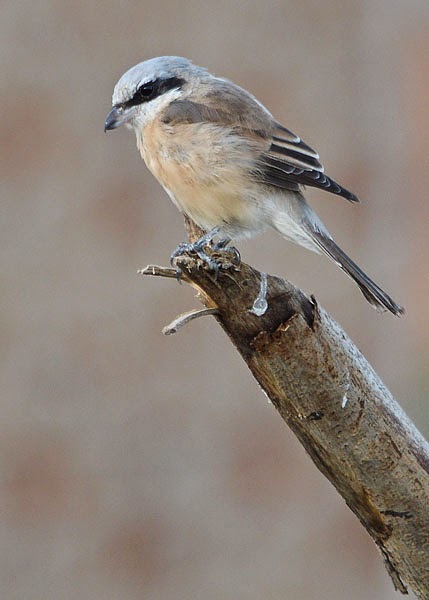
Perlis may be the smallest state in Peninsula Malaysia but it is certainly not short of surprises in terms of birding. Recently, more than a handful of Malaysia’s first records were discovered here in this northernmost state and it now has a reputation of being a twitcher’s paradise. The Universiti Malaysia Perlis Guest House is a small resort located in a particularly unknown area called Kurong Tegar and it was here that a Thai birder, Piyapong Chotipuntu, discovered what looked like Malaysia’s first Red-backed Shrike. Immediately, plans were made and strategies formed to try and relocate this vagrant the following weekend. And together with Dave, I made my way to my first twitch of the year.  


At first light, we started the search and it did not take long for us to come face to face with Malaysia’s first Red-backed Shrike. As it is a first record, I have no field experience with this species before but lucky for me, I had Dave and he was not truly convinced. The plumage was odd for a male Red-backed Shrike and this species is no stranger to hybridization which only made matters worse. So, we took as many shots as possible hoping that they will be enough to confirm his identity later. We needed a shot of its tail fanned out but the shrike had no intentions of making things that easy for us. Once we got back home, Dave studied the photos and did the research. I, mostly seek help from birding friends and experts. At the time of writing, the true identity of the shrike is yet to be confirmed but it is almost certain to be a hybrid because there are just too many inconsistencies for it to be a pure Red-backed Shrike.


There is a particular heap of cut branches that has become his favorite vantage point. We decided to spend quite some time there as the shrike will frequently return to this perch. Here, we managed to obtain the best images of this rare visitor.


When the sun was finally up, the shrike retreated into the compound of the resort and continued his morning hunt. We were allowed to enter the resort compound and we continued our efforts to obtain more photographs.


Eventually, we left the shrike in peace and proceeded to check out the surrounding areas especially the adjacent estuary. As made our way through the scrub, there were quite a number of Streak-eared Bulbuls present. Here in northern Peninsula Malaysia, this species is just as common as the Yellow-vented Bulbuls and both species seems to be doing well living next to each other.


When you are in Perlis, you should not take any species for granted. Not even the ever-abundant Eurasian Tree Sparrows because the similar-looking House Sparrow could be the next species to go into the Malaysian checklist. But nothing out of the ordinary about this Eurasian Tree Sparrow though. Except maybe the fact that it a little too close to the mudflats and risk getting stuck…


There were a number of waterbirds present on the small patch of mudflats next to the river mouth. Even at this distance, I could make out that some of the Pond-herons here were Javan Pond-herons. As we got closer, we counted 10 of these scarce migrants foraging at this locality and that figure alone was an exciting record.


We noticed a few egrets foraging at the water's edge and Dave commented that this habitat looks good for a Chinese Egret. And just like that, a partial breeding plumage Chinese Egret strolled into his field of view. I immediately diverted my attention to this globally endangered egret. It was unfortunate that it was not in full breeding plumage because this species is truly a sight to behold.


Chinese Egrets in all stages of non-breeding plumage is not easy to identify. They look very similar to the white-phased Pacific Reef-egret and it will take a discerning eye to tell them apart. Little Egrets sometimes sport a pale lower mandible, much like the non-breeding Chinese Egret and confusions arise when the legs and toes of the former are discoloured by mud or hidden from sight. Anyway, here is a comparison shot depicting the slight difference of their body structures with the Chinese Egret on the right.


And the rarities did not end there. Remarkably, this small patch of mudflats also had a Little Stint and a Swinhoe’s Plover – both rare migrants to Malaysia. As the rare peeps were a little to far away for my camera, I decided to turn my attention to a flock of Kentish Plovers. Some of the males are in their breeding plumages and look absolutely stunning.


Seeing that we were on a roll, we flogged the adjacent mangroves for other rarities that might be lurking. I guess expecting a Brown-winged Kingfisher or even a Black-hooded Oriole was pushing it a little. Although this part of Perlis is probably the closest you can get to the Langkawi Islands by land, it is still a very long shot as there is very little or no evidence of these two species occurring anywhere else in Malaysia except Langkawi. Nevertheless, we were rewarded with a brief view of the sexy blue back of a Ruddy Kingfisher as it darted past us and disappeared into the mangroves. In the end, we had to settle for an easier subject which was a confiding Mangrove Whistler. The whiplash calls of this species are usually the only telltale signs of its presence. Good views are hard to obtain and unobstructed photographs, even harder. So, it will do…


Since we have traveled all the way here from Penang, it only made sense to do a quick round of the other birding hotpots here in Perlis. Timah Tasoh was our next destination as the lake and surrounding scrublands can sometimes hold little surprises that can brightened up any birder’s day. However, nothing much of real interest was present today. Our only consolation was superb views of a pair of Bronzed Drongos. In good light, the iridescent markings do make this little drongo an object of admiration.


The grassland at Chuping was scorching and dusty. But it would be a sin to give this site a miss as we were just a few kilometers away. So, we decided to make it the last leg of our Perlis excursion. It was a decision that we certainly did not live to regret. A small flock of Oriental Pratincoles finally gave us a reason to stop and do some birding instead of trawling along the grasslands that was almost void of bird life.


It was a very warm and bright afternoon. Not the sort of lighting condition that you wish for in a photo shoot. But despite it, we managed to capture some really good images of this enigmatic wader. The confiding nature of the flock no doubt played a big role for the result of this encounter.


During our last trip here, we flushed a sandpiper from one of the ponds that had Dave, because of the brief view we were given, reluctantly dismiss a Green Sandpiper for the commoner Wood Sandpiper in the end. A visit to the same pond was inevitable and again, a slightly dark sandpiper was flushed. But this time it landed on the far end of the pond instead of doing a disappearing act like the last time. It was a Green Sandpiper after all – just as we had suspected. The Green Sandpiper may not be much of a looker but its rare status was enough to garner our admiration. We left the ponds some time after because the sandpiper showed no sign that we can improve on our images. Both of us thought the Green Sandpiper is a great way to end a truly rewarding trip. So we thought…


A quick scan on the towering pylons over the grassland produced something that made me feel a little light headed. It has been many years since the last I saw this raptor in real life and now, I finally have a chance to capture its images. The Short-toed Eagle has been sporadically recorded here in Chuping over the past two seasons but somehow, it has always managed to elude me.


I cannot believe that our last bird for the trip turned out to be another rarity. Unlike the earlier rarities, this was a magnificent bird of prey. We were running a little late as I have a family dinner later that evening but I was enjoying a Short-toed Eagle and that was a strong enough reason to risk the wrath of my better half. When it took flight, it circled back twice before flying away – much to our delight. It could be making up for all those times that it let me down in the past. Or it just wanted to have a better look at those humans standing under the hot sun covered with dust but with a wide grin on their faces.


So, here concludes our birding adventure to the beloved state of Perlis. One last shot of the Short-toed Eagle to wrap things up this time. With one “first” record for Malaysia, a handful of rare migrants and just enough time to make it back for a family dinner, this trip is certainly up there among the best for me.