Pages

Tuesday, 19 April 2022

Better late than never


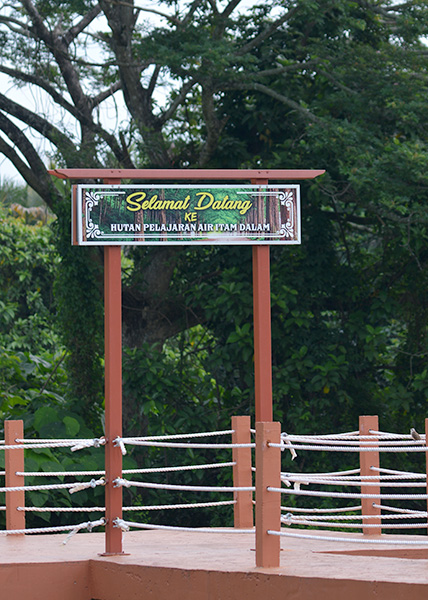
There was only one reason I found myself at the swamp forest of Air Hitam Dalam in mainland Penang for the second consecutive time and it was to attempt for the rare migratory Slaty-legged Crake again. In fact, it could well be my final try as spring migration will draw to a close soon. This species would be a significant addition to my life list and naturally, anxiety was high despite my calm appearance. After all birding is about luck and lady luck has been unkind to me so far.


As I patiently waited for the distinguished visitor to reveal itself, I tried my best not to be distracted by other species present in the vicinity. But a little brown job flitting about the foliage of the forest could not be taken lightly especially at this time of the year. During passage, one has no idea what might decide to make a stopover at one of the few remaining forests in mainland Penang. Upon further scrutiny, it turned out to be an Asian Brown Flycatcher. It may be a common migrant to this part of the world but a confiding individual like this deserves some attention.


The resident pair of Mangrove Blue Flycatchers serenaded the locality with their pleasant territorial calls. The striking colouration possessed by these birds also helped to pass the time during my tedious wait for the Slaty-legged Crake.


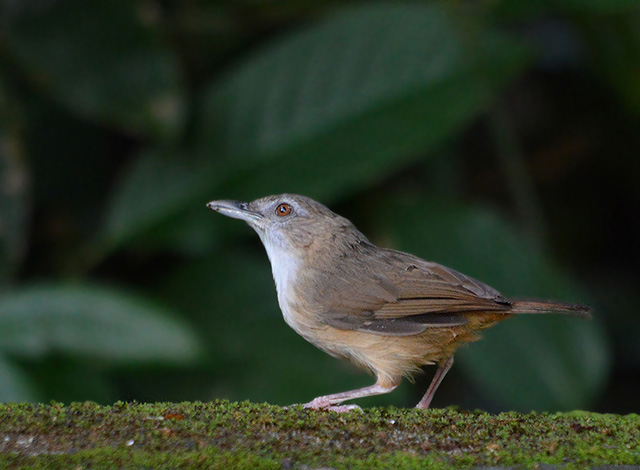
There is not much aesthetic appeal to be found on the Abbott’s Babbler but an adult bird with a recently fledged juvenile in tow indicated yet another successful breeding season for this robust undergrowth dweller.


A Blue-winged Pitta in full view would have normally made my day because pittas are such amazing creatures. However, I was a man on a mission today and the stunning beauty of the Blue-winged Pitta did not have the usual influence over my emotions.


I sighed in relief when the Slaty-legged Crake finally strolled into view. It was a young bird as it lacks the colour intensity of the adult birds. Not that it mattered. I was transfixed on the rhythmic gait of the crake. The exhilaration was intense and I struggled to keep my hands steady as I accumulated digital memories of the encounter.


Almost as soon as it appeared, the rare migrant disappeared back into the swampy undergrowth and the performance was over. I managed to obtain the images I wanted but most importantly, acquired a lifer which is a rare thing for me nowadays.


My companion and I decided the explore the surrounding areas but by then, the temperature had started to soar. A lone Dollarbird seemed unperturbed by the scorching heat and took no effort to seek some shade. Inevitably, the harsh lighting made photography of this attractive bird difficult.


April is the best time to catch the Pond-Herons in their breeding plumages before they undergo the journey back north to breed. We recorded all three species on this trip but unfortunately, none were confiding enough for any memorable photographs. This mediocre image of an Indian Pond-Heron foraging in a sea of paddy stalks still managed to wriggle its way into this blog post. Being the rarest of them all has got absolutely nothing whatsoever to do with it.


The scrubland habitat was ideal for Red-wattled Lapwings and we found several individuals in the vicinity. The absence of any other notable species cut short our exploration here and we turned our attention to the coast.


The timing of our arrival at Kota Kuala Muda was ideal with the rising tide pushing the waders and other water fowl to the high tide roost. However, it was a case of so close and yet so far. There was no safe walking access to the roost and inevitably, we made our way as far as the sandy beach was willing to take us.


We had some consolation in the form of Common Terns. A few of these graceful coastal terns decided to roost on the beach and they provided the best photographic opportunities here.


One of them has a deformed lower mandible but judging from its overall appearance, life goes on as normal for this determined individual.


Some waders were also found roosting close to shore but the heat wave was too overwhelming for any decent photographs. Nevertheless, the sight and sounds of thousands of roosting water birds is always a breath-taking affair. As Hor Kee did a final sweep of the roosting flocks for any surprises with his scope, I took the time to enjoy the spectacle before we wrapped things up for the day.


Friday, 11 March 2022

Breeding season is here


Heavy work schedule, illogical access restrictions to my usual birding haunts, the ongoing coronavirus situation and perhaps even age have been keeping me away from the field. My love for birding is not fading. That is certain or I would not have found myself wandering about the all-too-familiar river trail in Air Hitam Dalam on my birthday. Spending some time rejuvenating my soul in the morning and a quiet dinner with my dearest in the evening. That is celebration enough for me.


A lone Black-thighed Falconet brooding over whatever it is that the smallest raptor in the world broods about was the first bird to gain my attention.


Among the canopy of the swamp forest, a male Asian Koel prepared himself to defend his territory – a daily routine now as it is the height of the breeding season for this parasitic cuckoo. As expected, his loud and persistent vocalization soon echoed throughout the locality.


Almost rivalling the intensity of the Asian Koel was a pair of Collared Kingfishers. No doubt fuelled by the approaching breeding season, the pair was confiding and courted among the foliage of the riverine trees. And I took a moment to appreciate the performance.


The Common Iora possess quite a range of calls and songs. It did not take me long to locate a pair that was moving about the edge of the forest as they were calling persistently. The striking male did not appreciate my intrusion and retreated into the forest. His mate, startled by his sudden departure, veered through a gap among the foliage at the reason behind the chaos and provided me a brief window of opportunity to capture her image.


As I made my way further along the access road, a pair of pipits scooted away from me and alighted. Now, this family of birds are not the easiest to identify. Come to think of it, near impossible for some species. However, only one will pair up and breed here on Malaysian soil and that is the Paddyfield Pipit.


My attention soon drifted from ground to the nearby bushes as another common resident was preparing for the breeding season. The Yellow-bellied Prinia is a vocal bird and during the breeding season, even more so. And it tends to be bolder and regularly showing off its lovely plumage from exposed perches near the top of the bushes.


A Brahminy Kite on the hunt sent the prinia diving for cover. Although this raptor is rarely a threat to small birds, the sinister shape of a soaring raptor is enough to cause an abrupt end to the prinia’s vocal performance.


It was a colourful conclusion to this short excursion as the last bird I encountered was a pair of Common Flamebacks. The striking couple was foraging at the car park area and I delayed my departure from this local patch of mine – naturally. And to wrap things up for this time is a decent capture of the male with his flaming red crest reminding me just how good it can get when you spend time in the field.


Friday, 25 February 2022

Koel, koel, koel...


The Chinese New Year is a festive time indeed. There are a few sounds that comes to mind during this time of the year like firecrackers, lion dances and, the territorial call of the Asian Koel. The breeding season of this parasitic cuckoo usually coincides and outlasts the celebrations and that is when they really let it rip. For the benefit of those who are not familiar with the vocal abilities of the Asian Koel, the call is loud and unbelievably persistent. Since it parasites on House Crows, it occurs in residential areas where the hosts thrive. It is not unknown for overly enthusiastic males to call right into the dead night to the extend of being labelled a public nuisance. But for me, the Asian Koel’s call (did I mentioned it was loud) and how it is delivered is something to marvel at.


For the past week, I noticed one of the resident male Asian Koels frequenting a young tree just outside the perimeter fencing of my humble residence. He was not exactly being discreet about his location as his territorial call echoed in the vicinity throughout the day. 


His presence gradually got me going against my better judgement and I found myself braving the usual stares when birding near or around other humans. Anyway once the neighbours finally figured out what I was after, I could then document this handsome Asian Koel in peace.


Over the weekend, my casual observation revealed some interesting behaviour. The tree was used as his regular calling point and he guarded this commodity with much aggression. Any bird so much as look in the direction of the tree will taste his wrath and lucky for me, it does not apply to birders. I have seen him chasing off Yellow-vented Bulbuls, Black-naped Orioles and Asian Glossy Starlings that did not know any better.


Like any story, there will always be a girl. All the effort and determination exhibited by the male Asian Koel is to attract a mate for the breeding season. And one finally gave in to his resounding vocals. As soon as she alighted on the tree, he started his game plan.


He repeatedly flew to an adjacent plant, plucked a fruit and offered it to his lady love. All this in one swift and smooth motion. I am quite sure he must have planned this all along. The calling point next to a food source was a good strategy. Heck, he may have even practiced the execution when not bursting out his territorial call. Anyway, I now have even greater admiration for this common but intriguing garden bird.


This male Asian Koel’s courtship was near perfect. I left the love birds to themselves when the evening light began to fail. The next day, he was back at the calling point – alone. I could not be certain now if the outcome was in his favour. At the time of writing, I could still hear his persistent territorial call and occasionally, a female’s as well. Although there is no closure to this tale, I am elated to be given the chance to momentarily wander into the life of these Asian Koels and further enrich my own with the experience.


Friday, 31 December 2021

Ending the year with some Christmas cheer


Christmas - that special time of the year when anything is possible or so they say. And what better time to set out for not one but two lifers than on Christmas Day itself. It has been nearly 15 months since I last increase my life list. Undoubtedly, this is the longest I have ever gone without a lifer and it is courtesy of the ongoing pandemic and all the travel restrictions. I had a little appetizer before the main course which was slated for the afternoon. Unfortunately, the Black Bittern that was showing well for others at the Penang Botanic Gardens was no where to be seen. It was not a good sign especially before a major twitching trip and a striking Blue-tailed Bee-eater did not possess enough finesse to lift my spirits. So much for the magic of Christmas so far.


The Pied Stilt looks very much like some variances of the Black-winged Stilt and this graceful wader was my first twitch of the trip. It is a recent colonizer from the south to Peninsular Malaysia and a few finally made their way up to Penang state as predicted. The paddy planting district of mainland Penang houses hundreds of wintering Black-winged Stilts. Relying on the information others have provided and faith, I scanned through the flocks looking for the odd ones out. Luckily, I had James’s help for this tedious task as he accompanied me on this excursion. It was a hot and sunny day and the heatwave was almost unbearable. And then among a flock of 50 or so, I noticed one sporting a distinctive black mane. It was far and the paddy stalks, tall. Upon further strenuous scrutiny, it was beyond doubt I was squinting at my first Pied Stilt.


I carefully trod onto the muddy bund with the hope of obtaining better images. The paddy field is not a place where one can easily sneak up to a bird and the magic of Christmas, like everything else in life, has its limits.


Time was of the essence on this occasion and as I was about to leave for my next destination, the Pied Stilt strolled into full view. It was still a dreadful effort but then again, I could have just as easily missed the bird among the sea of stilts and stalks. Thus, always be grateful of what you have being given.


We arrived at the jetty along the Penaga River just in time to join the rest to search for Malaysia’s second Black-faced Spoonbill by boat. There is not much I can add that Google cannot provide about this unique and globally endangered species except that it presses all the right buttons for me – a water bird that is big, beautiful and rare.


We found the Black-faced Spoonbill at the river mouth where it frequents. However, all the excitement and anticipation built up to this moment drowned away because the distinguished visitor was foraging at a spot where the possibility of reducing the distance was non-existence.


The only thing left to do was to wait and hope for the Black-faced Spoonbill to wander closer and it was a long and taxing wait. A juvenile White-bellied Sea-Eagle gilded in and momentarily distracted us from the depressing situation we were in. It may sound like I am contradicting myself. I got my double lifers, didn’t I? It really should not matter that I only managed record shots for this lifer as well. But I was really looking forward to a memorable experience with the spoonbill and a distant observation is not exactly what I had in mind.


Anyway, back to the eagle. A sudden change of pace caught everyone by surprise and I almost missed the opportunity of capturing this majestic raptor dive successfully for what appeared to be a snake. On any other given day, this would have left me on cloud nine. But the disappointment with the spoonbill could not be that easily forgotten.


Even the appearance of a juvenile Brahminy Kite soaring effortlessly in the clear blue sky did very little to brightened up the trip. Not when now that the Black-faced Spoonbill had gone hidden from sight as it rested behind a line of mangrove trees.


At that point in time, we decided to venture elsewhere and to return here again before the day is over. A Collared Kingfisher was also taking shelter from the scorching heat and perched among the foliage of the mangroves.


The Black-capped Kingfisher is one difficult bird to photograph because of its shy nature. I found out today that it is more tolerant to approach by boat than car and this individual continued to rest in the shade despite our intrusion. This common but striking migrant did reposition itself during our observation and the encounter gave us to courage to hope for better things to come before the end of the day.


It was the moment of truth and the boat circled back for one more attempt with the Black-faced Spoonbill. On a wing and a prayer, we are hoping that the receding tide will draw it out from hiding and forage along the water’s edge. Just like this Great Egret.


Even from a distance, there is no mistaking the foraging technique of the spoonbill as it sweeps for aquatic invertebrates. We cautiously approach and now at least, we can truly admire the unique and enigmatic Black-faced Spoonbill.


Before the trip, I gawked at some of the images that were posted on social media. Although my own efforts do not even come close but I am happy. Two lifers in one day is a rare feat for me and given the unprecedented period I had to endure without lifers, this is one of my best Christmas Days in a long time. I suppose every birder wishes for easily attained lifers. However, sometimes the drawbacks and drama in a way add value to the experience. There was certainly no shortage of that today.


Little did I know the Black-faced Spoonbill saved the best for last. As the last light of day gradually slid back into the horizon, we found our main target of this boat trip basking in the golden light of the setting sun. And I, just took a deep breath and soak in the view. From utter disappointment to total bliss. The magic of Christmas? You bet it is. At the time of writing, this vagrant has not been seen in two days. All the more reason to be grateful.


When we returned to the jetty, a few Black-crowned Night-Herons have emerged from their roost. As our day comes to a close, theirs have just only begun. These common nocturnal water birds wrapped things up for the day and what a day it has been. The Pied Stilt will most probably get commoner here in Malaysia but for now, it is certainly a significant record. The Black-faced Spoonbill was just amazing and I may not have another chance to see this rarity again in my homeland. 2021 may not have been an eventful year but the appearance of these two species in the final weeks of the year has now made it otherwise.